Hospitals
What Causes Fetal Distress? Clinical Insights for Maternal Care
Jun 12 • 6 min read

Table of Content
What are the Causes of Fetal Distress?
Pregnancy is a deal. It is exciting and hopeful but at the same time parents also have a lot of questions. One thing that worries parents and doctors is distress. What is fetal distress? It is when a baby has trouble inside the womb or during birth. Sometimes the baby is not getting enough oxygen to breathe.
The good thing is that if doctors find out about distress early they can help the mother and the baby. Fetal distress happens when a baby is struggling. This means the baby may not be getting what it needs to be healthy. If doctors catch it early and do something about it the mother and the baby will be okay.
This is about knowing what is going on. If people understand what causes distress and know what to look for they can make a difference. They can ask doctors the questions and speak up if something is wrong.
No one should be alone when they are worried about their baby. The more people know the better they can handle things. If families know what to do they can be ready. Being ready is important. Fetal distress and pregnancy can be scary but with the right people and right knowledge this can be a very calm journey.
What are the Causes of Fetal Distress?
Several medical and pregnancy-related factors can cause fetal distress in pregnancy. These include:
1. Placental Insufficiency
This is a condition where the placenta cannot deliver enough oxygen and nutrients to the baby. The placenta is like a lifeline for the baby during pregnancy. If it is not working properly the baby may not get oxygen.
Some common reasons, for this include:
Blood pressure
Preeclampsia
Diabetes
Smoking
Post-term pregnancy
The World Health Organisation and the American College of Obstetricians and Gynecologists say that placental problems are a significant cause of fetal distress and growth-related complications. Fetal distress is a critical issue that needs more care and attention.
2. Umbilical Cord Compression
When the umbilical cord gets squeezed it can temporarily cut off blood flow and oxygen to the baby.
This can happen if:
Sometimes the cord is wrapped around the baby's neck
There is no enough amniotic fluid
The cord prolapses
The baby frequently moves and changes position
If blood flow is restricted doctors may see problems with the baby's heart rate on the monitor.
3. Fetal Hypoxia
Fetal hypoxia in happens when the baby does not get oxygen. This is a concern because the baby needs oxygen to develop properly.
Some reasons for hypoxia are:
The placenta is not functioning enough
Umbilical cord compression
The mother has anemia
The uterus is contracting more
Regular fetal heart rate monitoring can help healthcare providers detect signs of fetal hypoxia and intervene when necessary. If not noticed earlier this can lead to critical complications.
4. Maternal Health Conditions
The mothers health plays an important role in the baby's health.
Some conditions that can cause distress are:
High blood pressure
Diabetes
Heart disease
Dehydration
Infections
Autoimmune disorders
Doctors often recommend antenatal check-ups for expecting mothers with high-risk pregnancies monitoring and assist at the earliest. In some cases, healthcare providers may recommend an NST test to assess the baby's well-being and monitor fetal heart rate patterns.
5. Prolonged or Difficult Labour
Labour that goes on for long or is really tough can cause problems for the baby.
This happens when distress during labour occurs because the labour is taking longer than it should or the contractions are coming fast. The problems with distress during labour are that it can lead to some big issues.
These issues with distress during labour include:
Reduced oxygen delivery between contractions for the baby
Increased stress on the baby during labour
Fetal heart rate patterns for the baby may vary
When a woman is in a high-risk labour situation with Fetal distress during labour doctors usually want to keep a close eye on her and the baby. So they often recommend monitoring during high-risk labour situations, with distress during labour.
Signs of Fetal Distress
Parents often wonder how to tell if their baby is in trouble. Some signs mean the baby needs help right away.
Signs for the causes of Fetal Distress During Pregnancy
Reduced movement of the baby
Changes in the baby movement
Alarming results from prenatal check-ups
Signs of Fetal Distress During Labour
The baby's heart rate is not normal
Fetal bradycardia - The baby's heart rate is too slow
Fetal tachycardia - The baby's heart rate is too fast
The baby's heart rate keeps slowing down continuously
Understanding Fetal Heart Rate Abnormalities
Healthcare providers often use CTG monitoring to evaluate fetal heart rate patterns and identify signs of fetal distress.
Healthcare providers monitor:
Finding | Possible Meaning |
Normal heart rate pattern | Baby is likely coping well |
Fetal bradycardia | Possible oxygen shortage |
Fetal tachycardia | Infection, fever, or stress |
Variable decelerations | Possible umbilical cord compression |
Late decelerations | Possible placental insufficiency |
These patterns help clinicians assess whether further intervention is necessary.
How Is Fetal Distress Diagnosed?
Healthcare providers use ways to check for fetal distress symptoms. They use these methods to see if the baby is okay.
Common ways to assess distress:
Ultrasound examination
Doppler blood flow studies
Checking fetal movement
Evaluating the mothers health
Understanding the Causes of Fetal distress and Its CTG Warning Signs
CTG is a test that records the baby's heart rate and the mothers contractions.
CTG signs of hypoxia may include:
A slow and steady decrease in the baby's heart rate
Reduced variability in the baby's heart rate
Repeated late decelerations
Decelerations
The NHS and ACOG say that CTG findings should be looked at carefully alongside the overall health of the mother and baby.
The Role of Continuous Fetal Monitoring
Fetal monitoring systems help healthcare teams spot problems earlier.
Continuous fetal monitoring can:
Track the baby's heart rate in time
Detect heart rates early
Help with high-risk pregnancies
Support better clinical decisions
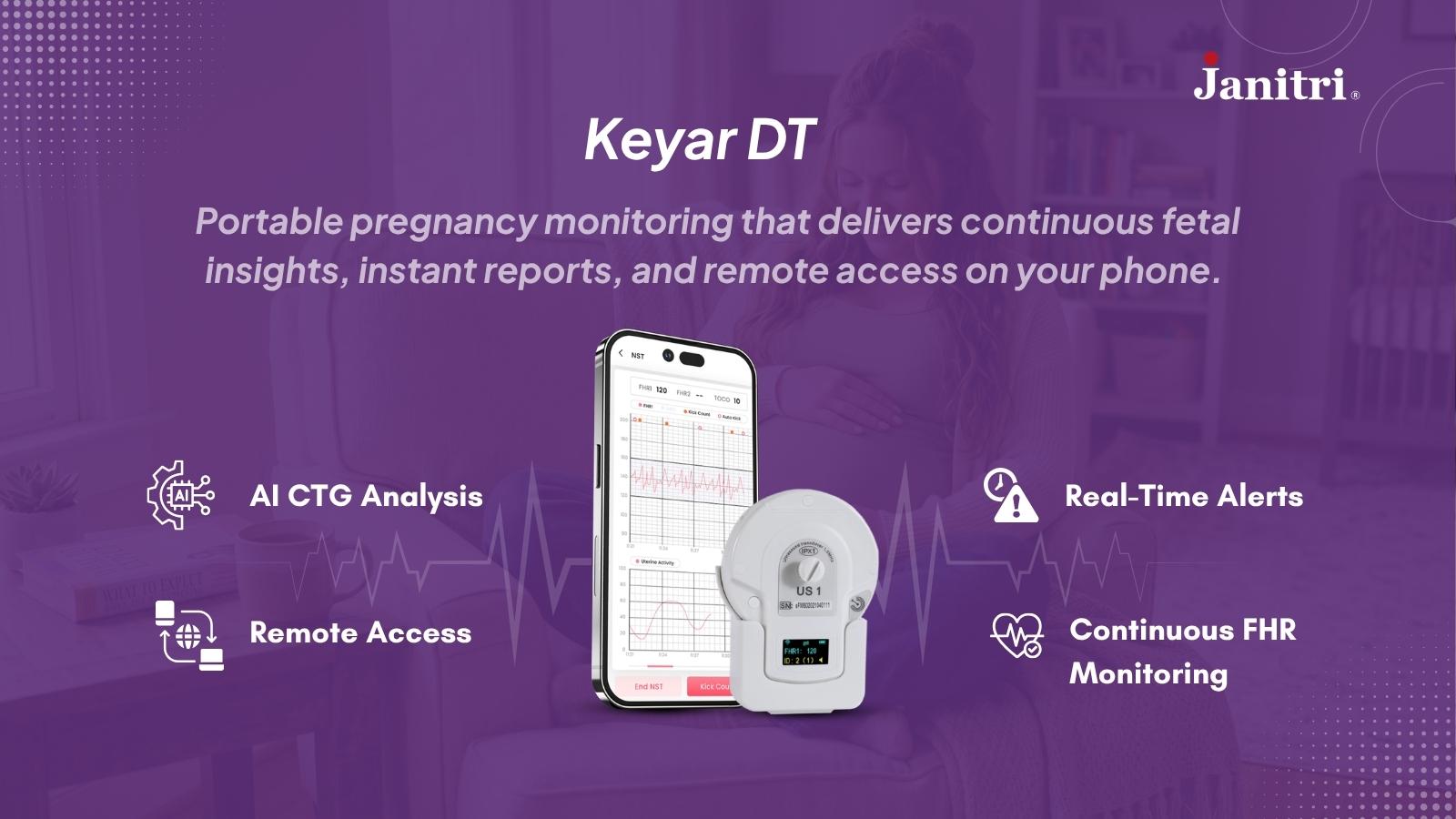
Hospitals are using advanced CTG monitoring systems to help make quick decisions. Some companies, like Janitri, offer maternal and fetal monitoring solutions. These solutions help healthcare providers keep an eye on the mother and baby's health. This helps them make decisions throughout pregnancy and labour. Remote Pregnancy monitoring is also being used in some clinics to keep an eye on women outside of the hospital.
When Should Parents Seek Help?
If you notice Slow fetal movements during pregnancy, contact your healthcare provider immediately for further evaluation.
Call your healthcare provider right away if you notice:
Sudden changes in the baby's movement
Bleeding
Severe stomach pain
It's always better to be safe and get checked out early if you're worried.
Conclusion
Understanding why babies get distressed helps parents and doctors see problems early. Some common reasons include the placenta not working properly, the umbilical cord getting squished, not enough oxygen for the baby and mother, health issues and problems during labour. You can often tell when the baby's movements change or their heart rate isn't normal.
Modern baby monitoring systems, like CTG Monitoring systems help find problems before they get worse . By doing check-ups, monitoring properly and getting medical help when needed doctors can better help mom, the baby and newborn care and make sure the birth goes well.
Keep in mind monitoring at home can help you notice things. It doesn't replace a doctor's check-up, diagnosis or treatment. Wireless fetal monitoring technology has come a long way, giving healthcare providers powerful tools to track a baby's wellbeing continuously during labour all while keeping mothers comfortable and free to move. Discover how these modern solutions are changing the face of maternity care in our guide to wireless fetal monitoring.
Frequently Asked Questions (FAQs)
What causes babies/fetuses to get distressed?
Babies/fetuses get distressed because of oxygen, the placenta not working right, the umbilical cord getting compressed, moms health issues or problems during labour.
What are the signs of baby distress?
Signs include movement and abnormal heart rates like a slow or fast heart rate.
Can babies get distressed during pregnancy?
Yes babies can get distressed, during pregnancy or labour if they're not getting oxygen or food.
How do doctors diagnose baby distress?
Doctors use heart rate monitoring, CTG monitoring, ultrasound and checking mom and baby to see if there's distress.
How does continuous baby monitoring help?
Continuous monitoring helps find heart rate problems so doctors can help right away and take better care of mom and the baby.