Hospitals
What Is a CTG Machine? Complete Guide to Cardiotocography Monitoring
Apr 6 • 5 min read
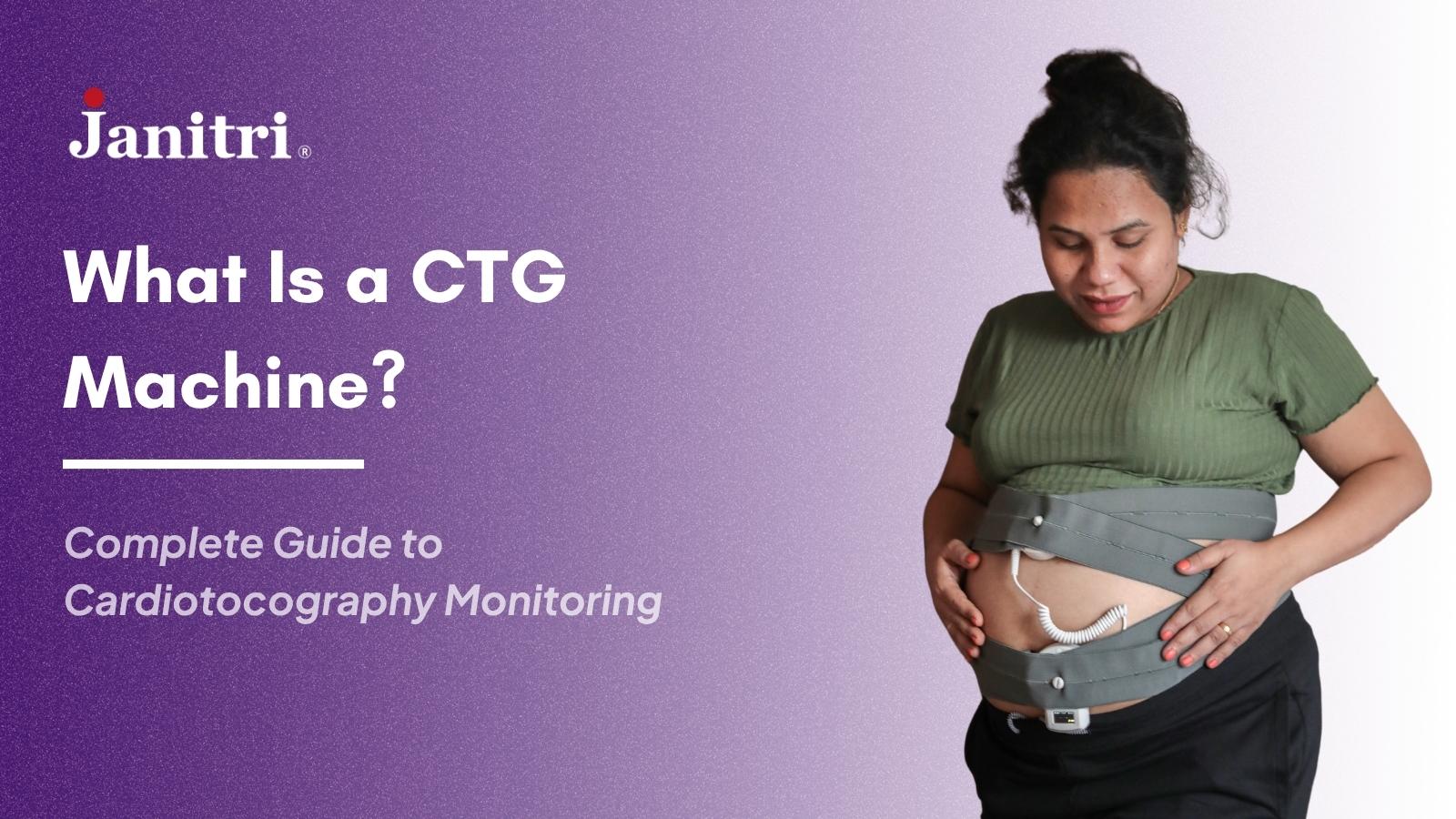
Table of Content
CTG machines are used across a spectrum of healthcare settings:
Data flow:
Who Performs and Interprets CTG Monitoring?
How to Read a CTG Trace: Key Parameters
CTG Machine Steps (Modern NST/CTG – A4 Report + Mobile App)
CTG Monitoring Machine vs. Fetal Monitor: Key Differences
Types of CTG Machines
By Monitoring Channel
CTG Machine Price in India (2025)
Janitri Keyar DT
What Is the Keyar DT?
Key Features
Who Is It Designed For?
Frequently Asked Questions About CTG Machines
What Is a CTG Machine?
A CTG machine, or cardiotocography machine, is a clinical device that simultaneously records:
Fetal Heart Rate (FHR): The baby's heartbeat, measured in beats per minute (bpm)
Uterine Contractions (UC): The frequency, duration, and intensity of contractions
The output is a dual-channel printed or digital trace called a cardiotocogram (CTG trace), which obstetricians and midwives interpret to evaluate fetal well-being; both during labor and in the antepartum (pre-labor) period.
Why CTG monitoring matters: According to the WHO, intrapartum fetal distress is one of the leading causes of neonatal morbidity and mortality globally. CTG monitoring is the most widely used method to detect early signs of fetal compromise and prevent adverse birth outcomes.
CTG machines are used across a spectrum of healthcare settings:
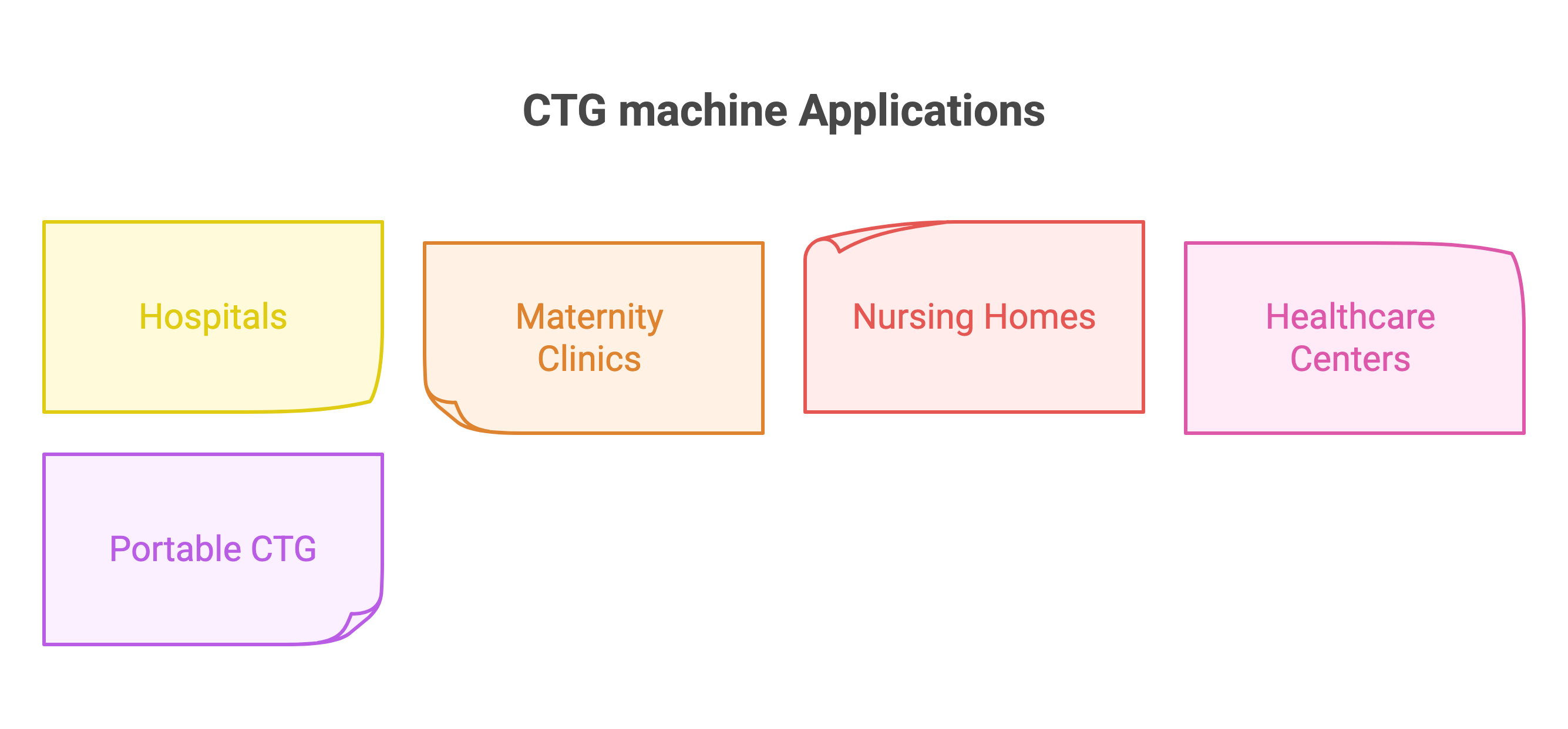
Cardiotocography machine for hospitals — high-volume, multi-bed setups with central monitoring
Cardiotocography machine for clinics and maternity clinics — compact, single-patient units
CTG machine for nursing homes — affordable, easy-to-operate models with essential features
CTG machine for healthcare centres — portable or mid-range models suited for primary care
A CTG monitoring machine uses two primary transducers placed on the mother's abdomen:
Transducer | What It Measures | Technology Used |
Ultrasound transducer | Fetal heart rate | Doppler ultrasound |
Tocodynamometer (TOCO) | Uterine contractions | Pressure-sensitive sensor |
Data flow:
Sensors capture real-time signals from the mother's abdomen
The machine processes the analog signals into digital waveforms
The output is printed on CTG machine paper (thermal roll) or displayed on a screen
Clinicians analyze patterns such as baseline FHR, variability, accelerations, and decelerations
Normal fetal heart rate range: 110–160 bpm. Patterns outside this range, or the absence of accelerations, may indicate fetal compromise and require immediate clinical review.
Who Performs and Interprets CTG Monitoring?
CTG monitoring is performed by trained midwives, nurses, or obstetricians in hospital labor wards, maternity clinics, and antepartum assessment units. Interpretation follows standardized guidelines such as those from FIGO (International Federation of Gynaecology and Obstetrics) and NICE (UK). In India, the National Health Mission (NHM) guidelines recommend CTG monitoring for all high-risk pregnancies at district and tertiary hospitals.
How to Read a CTG Trace: Key Parameters
A CTG trace is evaluated on five core parameters:
Parameter | What It Means | Normal Range |
Baseline FHR | Average fetal heart rate over 10 minutes | 110–160 bpm |
Variability | Beat-to-beat fluctuations in FHR | 5–25 bpm |
Accelerations | Transient FHR increases | ≥15 bpm for ≥15 seconds |
Decelerations | Transient FHR decreases | Classified as early, late, or variable |
Uterine contractions | Frequency and duration of contractions | ≤5 in 10 minutes (normal) |
Clinicians classify a CTG trace as normal, suspicious, or pathological based on these parameters, following FIGO or NICE guidelines. A normal (reactive) CTG trace with good variability and accelerations typically indicates fetal well-being.
CTG Machine Steps (Modern NST/CTG – A4 Report + Mobile App)
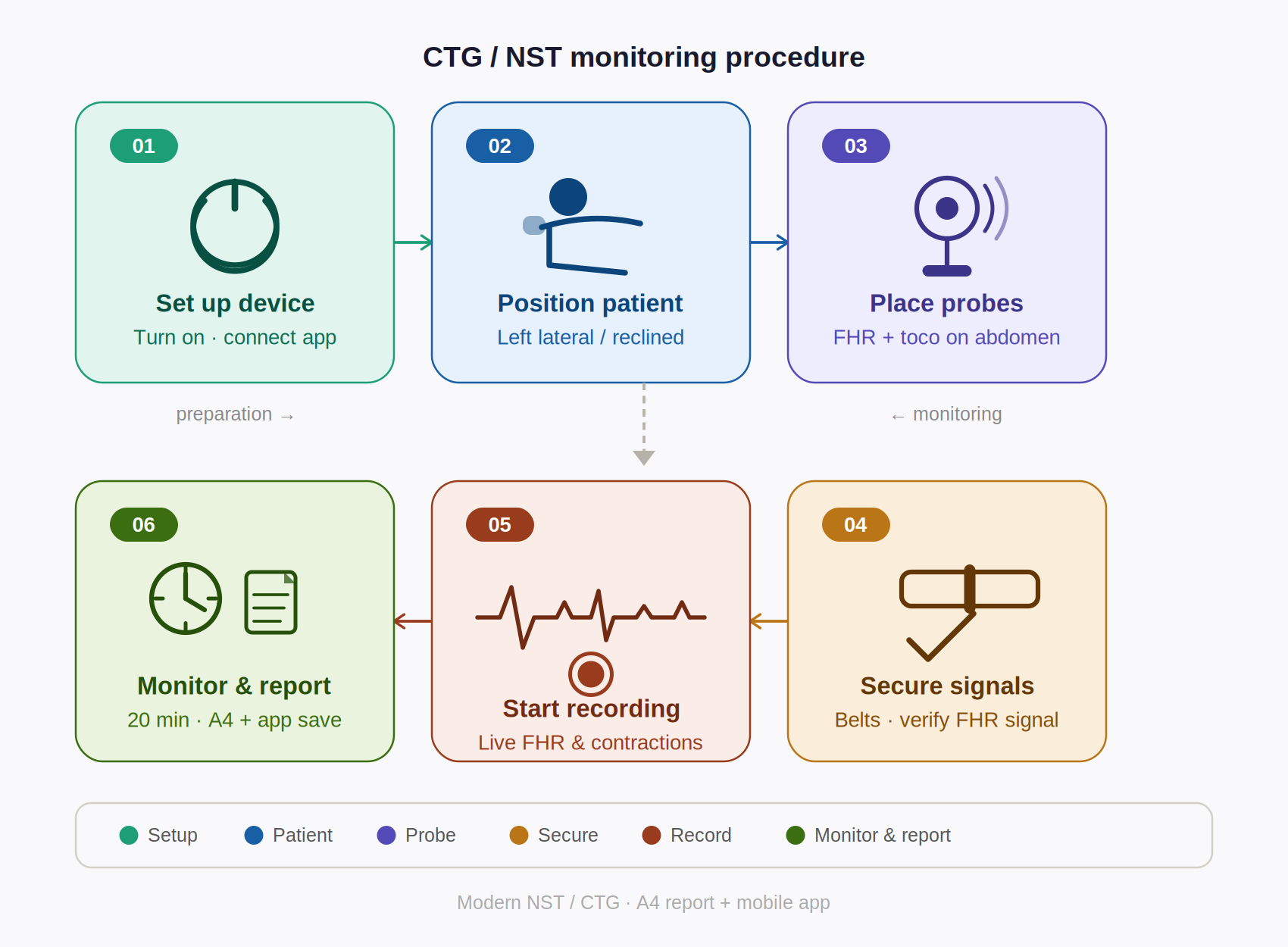
Set up the CTG device — Turn on the machine and connect it to the mobile app for real-time monitoring.
Position the patient correctly — Keep the mother in a semi-reclining or left lateral position for accurate readings.
Place CTG probes — Attach the fetal heart rate probe and contraction (toco) probe on the abdomen.
Secure and check signals — Fix probes with belts and ensure a clear, continuous fetal heart rate signal.
Start NST/CTG recording — Begin the test and monitor fetal heart rate and uterine contractions live on the app.
Monitor for 20 minutes — Observe patterns, variability, and movements during the test duration.
Generate A4 report & save digitally — Download/print the CTG report on an A4 sheet and store it in the mobile app for easy tracking and long-term records.
CTG Monitoring Machine vs. Fetal Monitor: Key Differences
These terms are often used interchangeably, but there are subtle distinctions:
Feature | CTG Monitoring Machine | Basic Fetal Doppler Monitor |
What it records | FHR + uterine contractions | FHR only |
Output | Printed trace + digital display | Audio/digital display only |
Clinical use | Labor ward, antepartum assessment | Quick spot checks in OPD |
Cost | ₹40,000 – ₹5,00,000+ | ₹3,000 – ₹25,000 |
Setting | Hospitals, maternity clinics | Primary clinics, home use |
A fetal monitor CTG machine is the correct term when the device combines both Doppler FHR monitoring and tocometry (contraction monitoring) in a single unit, which is the standard definition of a CTG machine.
Types of CTG Machines
By Monitoring Channel
Type | Description | Best For |
Single-fetal CTG machine | Monitors one baby at a time | Standard clinics, nursing homes |
Twin-fetal CTG machine | Simultaneous monitoring of two fetuses | Twin pregnancies, high-risk units |
Multi-bed CTG system | Central station + 4–12 bedside units | Labor wards in hospitals |
CTG Machine Price in India (2025)
Category | Price Range (INR) | Best For |
Basic portable CTG machine | ₹40,000 – ₹80,000 | Nursing homes, primary clinics |
Mid-range wireless CTG | ₹80,000 – ₹2,00,000 | Maternity clinics, healthcare centers |
Advanced multi-bed system | ₹2,00,000 – ₹5,00,000+ | Hospital labor wards, central monitoring |
Prices vary by features, brand, and procurement model (outright purchase vs. subscription). Government and NHM empanelled institutions may be eligible for subsidized pricing.
Janitri Keyar DT Best Wireless & Portable CTG Machine
For clinicians looking for the best CTG machine that combines wireless freedom, portability, and smart digital features, the Janitri Keyar DT stands out as a leading Indian-made solution.
What Is the Keyar DT?
The Keyar DT is a wireless and portable fetal monitor developed by Janitri, a Bengaluru-based maternal health technology company backed by UNICEF, AIIMS, and the Government of India. It uses familiar Doppler and TOCO probes in a wireless avatar, making it suitable for both prenatal NST monitoring and electronic fetal monitoring (EFM) during labor.
Key Features
Feature | Details |
Wireless probes | Doppler + TOCO — no cables, full patient mobility |
Remote monitoring | Live graphs accessible on the doctor's mobile app, anytime |
Auto-interpreted reports | Baseline, acceleration, STV, and other CTG parameters analyzed automatically |
Twin monitoring | Monitors both fetuses simultaneously |
Digital partograph | Automated WHO-guideline partograph plotting during labor |
Cloud storage | Past reports stored and retrievable on demand |
Central monitoring | Connect multiple devices to a central nursing station |
Portable & compact | Designed for easy transport across wards and facilities |
Price | ₹5,990 (current listed price on Janitri website) |
Who Is It Designed For?
The Keyar DT is purpose-built for:
Cardiotocography machine for hospitals — ward-wide or centralized wireless monitoring
Cardiotocography machine for maternity clinics — active labor support with patient mobility
CTG machine for nursing homes — affordable, easy to operate with minimal training
CTG machine for healthcare centers and medical clinics — smart digital reporting without heavy infrastructure
Portable CTG machine for hospitals — movement between beds, HDU, emergency departments
Frequently Asked Questions About CTG Machines
What is the normal fetal heart rate on a CTG machine?
The normal fetal heart rate range is 110–160 beats per minute (bpm). Values consistently below 110 bpm (bradycardia) or above 160 bpm (tachycardia) may indicate fetal distress and require immediate clinical assessment.
How long does a CTG test take?
A standard NST/CTG test takes 20–40 minutes. If the baby is inactive or results are non-reactive, the test may be extended to 60 minutes or repeated.
What is the difference between NST and CTG?
NST (Non-Stress Test) is a type of CTG monitoring performed before labor to assess fetal well-being without inducing contractions. CTG (cardiotocography) is the broader term that includes both antepartum NST and intrapartum (during-labor) monitoring.
Is CTG monitoring safe for the baby?
Yes. CTG uses external Doppler ultrasound and pressure sensors — no radiation is involved. It is a non-invasive procedure considered safe for both mother and baby.
When is CTG monitoring recommended?
CTG is typically recommended from 28 weeks of pregnancy onward, particularly for high-risk pregnancies (diabetes, hypertension, IUGR), post-term pregnancies, and during active labor.
What is a reactive CTG result?
A reactive (normal) NST shows at least two fetal heart rate accelerations of 15 bpm above baseline, each lasting 15 seconds or more, within a 20-minute window. A non-reactive result warrants further evaluation.