Mothers
Signs of Low Oxygen in Babies: How to Spot Hypoxia Before It Becomes an Emergency
Mar 23 • 7 min read
Table of Content
What Is Hypoxia in Babies and Why Does It Happen?
Common Causes of Hypoxia in Newborns
Quick-Reference: 6 Key Symptoms at a Glance
1. Cyanosis: Blue or Grey Skin
2. Fast or Laboured Breathing
3. Chest Retractions
4. Limpness, Weak Cry, or Poor Feeding
5. Pale or Mottled Skin
6. Rapid Heart Rate
7. Irritability or Reduced Responsiveness
Respiratory Distress in Newborns: When Breathing Problems Signal Hypoxia
Signs That Breathing Is Compromised
Signs of Hypoxia in Premature and At-Risk Babies
Take Action: Protect Your Baby's Health
There’s a kind of fear that doesn’t shout; it whispers.
It’s when your baby seems a little quieter than usual. When feeding takes longer. When their breathing doesn’t feel quite right, but you can’t explain why. You find yourself watching their chest rise and fall, just to be sure… again and again.
Low oxygen levels, or hypoxia, in babies often don’t begin with dramatic signs. They can start quietly, which is easy to miss. And that’s what makes it so important for parents to know what to look for before it turns into something urgent.
Because when it comes to your baby’s oxygen levels, early recognition isn’t just helpful; it can make all the difference.
In this blog, we’ll walk through the early signs of hypoxia in babies, when to worry, and how timely monitoring can help you act before it becomes an emergency.
What Is Hypoxia in Babies and Why Does It Happen?
Hypoxia in Newborns Neonatal hypoxia is a condition in which a baby's body tissues receive insufficient oxygen. It differs from hypoxaemia, which refers specifically to low oxygen in the blood, though both often occur together. Hypoxia in newborns can develop at birth or in the days that follow, and may be acute (sudden) or chronic (gradual). |
Common Causes of Hypoxia in Newborns
• Birth complications: umbilical cord compression, prolonged labour, or placental abruption
• Respiratory conditions: underdeveloped lungs, meconium aspiration syndrome, or congenital pneumonia
• Congenital heart defects: structural problems that prevent normal oxygenated blood circulation
• Infection or sepsis: systemic infections that suppress breathing
• Premature birth: preterm babies often lack surfactant, which keeps lung air sacs open
Research context: A 2020 study in PLOS ONE found that birth asphyxia, a primary cause of neonatal hypoxia, affects approximately 4 per 1,000 live births in high-income countries, and significantly more in low-resource settings (PubMed PMID: 32053611).
Recognising symptoms of low oxygen in babies early is critical. These signs may appear alone or together. When multiple symptoms occur at once, the situation is more urgent.
Quick-Reference: 6 Key Symptoms at a Glance
1. Cyanosis Blue/grey skin, lips or tongue. Central cyanosis (face/lips) = call 108 now. |
| 2. Fast Breathing >60 breaths/min. Grunting, nostril flaring, or stridor. |
| ||
3. Chest Retractions Ribs or sternum pull inward with each breath. The baby is working too hard to breathe. |
| 4. Limpness / Weak Cry Floppy tone, poor feeding, absent or muffled cry. |
| ||
5. Rapid Heart Rate Resting heart rate >160 bpm alongside breathing changes. |
| 6. Mottled Skin Patchy, blotchy colouring signals poor circulation. |
1. Cyanosis: Blue or Grey Skin
Cyanosis in babies is one of the most visible signs of low oxygen. The skin, lips, or tongue turns blue, purple, or greyish. Central cyanosis refers to blueness around the mouth, tongue, or trunk. This is always a medical emergency.
Acrocyanosis (blue hands and feet only) is common in the first 24–48 hours. If blueness spreads to the face or lips, call emergency services immediately.
2. Fast or Laboured Breathing
Fast breathing in a newborn (tachypnoea) means more than 60 breaths per minute. A healthy newborn breathes 40 to 60 times per minute. Watch for nostril flaring, end-of-breath grunting, and high-pitched stridor. These are all signs of neonatal respiratory distress.
3. Chest Retractions
Chest retractions in babies occur when muscles between or below the ribs pull inward with each breath. Subcostal, intercostal, or sternal retractions all indicate the baby is working too hard to breathe and require immediate review.
4. Limpness, Weak Cry, or Poor Feeding
A baby with low oxygen may appear floppy, have reduced muscle tone, or struggle to latch and feed. A weak or absent cry is a significant red flag in newborns. It suggests the brain and muscles are not receiving adequate oxygen.
5. Pale or Mottled Skin
Pallor or a mottled, blotchy pattern indicates poor circulation driven by low oxygen. This typically appears alongside other symptoms rather than in isolation.
6. Rapid Heart Rate
The heart compensates for low oxygen by beating faster. A resting heart rate above 160 bpm in a newborn, especially when paired with breathing changes, may indicate hypoxia in an infant and requires evaluation.
7. Irritability or Reduced Responsiveness
In older infants, hypoxia affects brain alertness. Signs include unusual irritability, difficulty waking, or failure to respond to stimulation. This suggests the brain is under oxygen stress.
Understanding Oxygen Saturation Levels in Babies
Oxygen saturation levels in babies (SpO₂) measure the percentage of haemoglobin carrying oxygen. A pulse oximeter clips gently onto the baby's finger or toe and delivers a reading within seconds. Choosing the right device matters, as not all oximeters are designed for newborn skin and movement. See our complete guide to selecting the best baby oximeter for a full breakdown of what to look for.
Age / Stage | Normal SpO₂ Range |
First 10 minutes of life | 60–85% (rising gradually) |
After 10 minutes of birth | ≥90% |
After 24 hours | 95–100% |
Infants and beyond | 95–100% |
Dangerous threshold | Below 90%: seek help now |
Critical emergency | Below 80% |
What is a normal oxygen level for a newborn? In the first 10 minutes of life, a newborn's SpO₂ ranges from 60–85% as circulation transitions. After 1 hour, SpO₂ should reach ≥95%. Consistently below 95% after 24 hours warrants clinical assessment. Below 90% at any age is dangerous and requires immediate medical attention. |
You can check oxygen levels at home using a paediatric pulse oximeter. Home readings are a useful supplement to clinical assessment. They do not replace it. If your baby shows any of the symptoms above, do not rely on a home device alone.
Respiratory Distress in Newborns: When Breathing Problems Signal Hypoxia
Respiratory distress in newborns is one of the most common presentations of neonatal hypoxia. It covers a range of breathing problems that reduce oxygen delivery to tissues.
Signs That Breathing Is Compromised
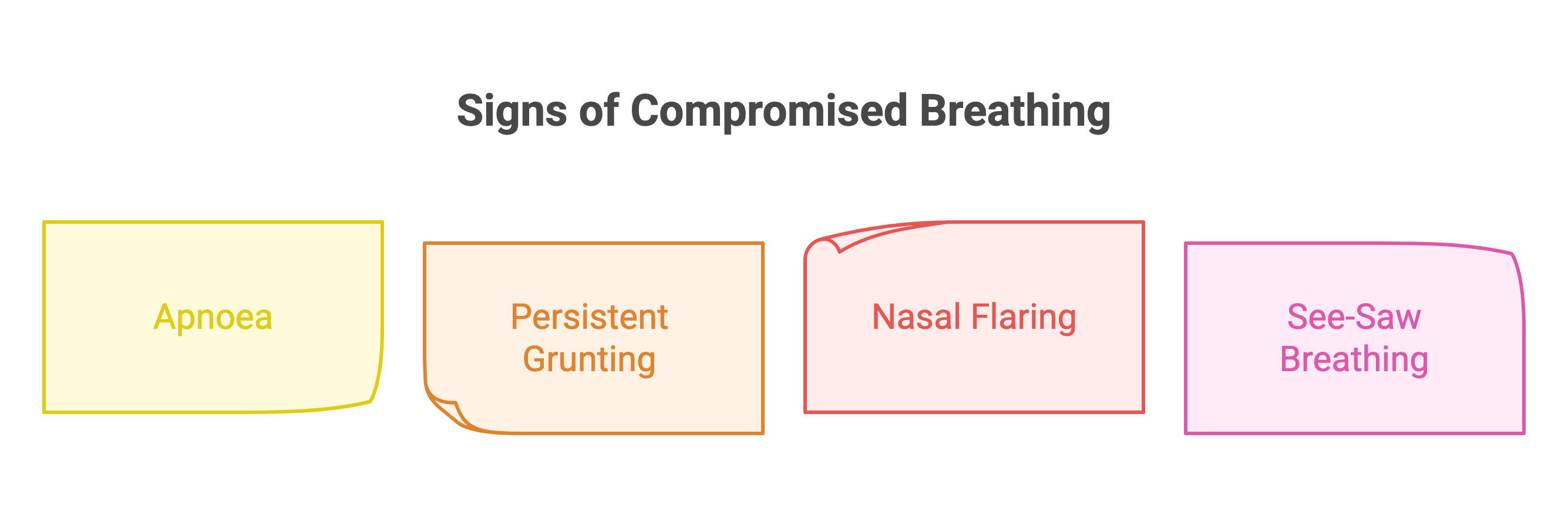
• Apnoea: Pauses longer than 20 seconds, or shorter pauses with colour change or a drop in heart rate
• Persistent grunting: The baby is trying to keep the airways open at the end of each breath
• Nasal flaring: Nostrils widen on every breath in an attempt to increase airflow
• See-saw breathing: Chest falls as abdomen rises. This is a sign of respiratory muscle fatigue
Clinical evidence: A review in the Journal of Perinatology (2019) confirms that early recognition of neonatal respiratory distress with prompt oxygen supplementation significantly improves outcomes (PubMed PMID: 30867551).
Signs of Hypoxia in Premature and At-Risk Babies
Premature babies face a higher risk of low oxygen levels in newborns due to underdeveloped lungs and immature respiratory control.
Higher-Risk Conditions in Premature Babies Respiratory Distress Syndrome (RDS): caused by surfactant deficiency in lungs born before 34 weeks. Bronchopulmonary Dysplasia (BPD): chronic lung disease that develops in some preterm infants after RDS. Apnoea of Prematurity: irregular breathing from an immature brainstem, common before 34 weeks. |
Babies born before 37 weeks, those with low birth weight, and infants with congenital heart conditions need closer monitoring for baby oxygen level symptoms. Many of these babies are initially cared for in a neonatal intensive care unit (NICU). Parents of at-risk infants should use a purpose-built device. Our baby oximeter guide for newborns explains the specific features to look for, including infant-specific sensors, CDSCO certification, and motion-tolerant accuracy, so you can choose with confidence.
When to Call Emergency Services Immediately
Some symptoms demand an emergency call without delay. Do not wait to see if it improves.
Call Emergency Services (108) Immediately If Your Baby Shows: • Blue, grey, or white skin, especially around the lips or tongue • Stopped breathing or pauses lasting more than 20 seconds • Cannot be woken or is unresponsive to stimulation • Severe chest retractions (ribs or sternum visibly pulling in) • SpO₂ below 90% on a pulse oximeter • Sudden colour change combined with limpness or weak cry
Even if the baby appears to recover, seek same-day medical review. |
How to Check Your Baby's Oxygen Level at Home
A paediatric pulse oximeter lets you monitor SpO₂ and heart rate without a hospital visit. Adult fingertip oximeters are not suitable for newborns. They are designed for larger fingers and give inaccurate readings on infant skin. For a detailed comparison of what to look for, including sensor design, alarm reliability, and price tiers, read our guide to choosing the best baby oximeter for your newborn
Using a Baby Oximeter: Quick Tips
• Always use an infant-specific or neonatal pulse oximeter. Never use an adult device
• Place the sensor on your baby's foot or hand as directed by the manufacturer
• A single low reading can be caused by movement. Observe for trends over time, not just single data points
• Normal SpO₂ for babies beyond the first hour of life is 95–100%
• If SpO₂ stays below 95% consistently, or drops below 90%, seek medical attention
Pulse oximetry is supported by peer-reviewed clinical research confirming it as a non-invasive and accurate method for continuous oxygen monitoring in infants. For guidance on reading results and understanding what triggers a doctor's call, see our Full newborn oxygen monitoring guide.
Take Action: Protect Your Baby's Health
Knowing the signs of low oxygen in babies means you are better equipped than most parents to act in a critical moment. Do not second-guess your instincts. If something feels wrong with your baby's breathing or colour, seek help immediately.
For at-risk babies or parents who want added reassurance at home, a dedicated newborn pulse oximeter is a practical tool. Just make sure it is designed specifically for infant use. Generic adult devices give inaccurate readings in newborns.
FAQ: Signs of Low Oxygen in Babies
Q: What are normal oxygen levels for babies?
After the first hour of life, a healthy baby's SpO₂ should consistently sit between 95% and 100%. In the first 10 minutes after birth, values of 60–85% are expected. Anything below 95% after 24 hours should be reviewed by a clinician. A reading below 90% at any age requires prompt medical attention.