Hospitals
How Do Wireless CTG Machines Work Compared to Traditional CTG Machines?
Feb 19 • 5 min read
Table of Content
What Is a CTG Monitoring System?
A CTG Monitoring system (
CTG Machine
Limitations of Traditional
How Wireless Fetal Monitoring Works
Step-by-step: Wireless CTG Machine Working
Traditional vs Wireless CTG: Key Differences
Understanding CTG Interpretation & Normal Values
Clinicians Evaluate
How wireless and Remote Fetal Monitoring Is Changing Prenatal Care
Conclusion
The transition from traditional CTG systems to wireless CTG machines represents a meaningful step forward in maternal care. Wireless technology enables real-time fetal heart rate and uterine contraction monitoring, faster interpretation, and improved coordination through remote and central monitoring capabilities.
Disclaimer
FAQ’s
Fetal monitoring has evolved significantly over the last decade. What once required bulky bedside equipment and continuous physical supervision can now be done using a wireless CTG machine that transmits real-time data across departments or even across locations.
In this blog, we’ll break down:
How a traditional CTG monitoring system works
How a wireless fetal monitoring machine differs
The role of wireless fetal monitoring technology in modern hospitals
Safety, accuracy, and key features to look for
What Is a CTG Monitoring System?
A CTG monitoring system is the foundation of modern maternal care. It combines a fetal heart rate monitoring device with uterine contraction monitoring to give clinicians a clear picture of fetal well-being. As part of a hospital fetal monitoring system, it supports accurate CTG interpretation and early detection of complications.
A CTG Monitoring system (Cardiotocography system ) is used to monitor
Fetal heart rate monitoring device output (baby’s heartbeat)
Uterine contraction monitoring (mother’s contractions)
It is widely used during:

Third-trimester checkups
Non-Stress Tests (NST)
High-risk pregnancies
Labor and delivery
The CTG produces a graphical trace that clinicians use for CTG interpretation.
CTG Machine Working: Traditional Systems
Understanding CTG machine working helps clarify how traditional systems operate. A conventional CTG monitoring system relies on wired sensors and bedside observation. While accurate, these systems lack wireless fetal monitoring technology and remote CTG monitoring machine capabilities found in modern setups.
A traditional CTG machine works using two external sensors:
Ultrasound transducer → Detects fetal heart rate
Tocodynamometer (TOCO) → Measures uterine contractions
These sensors are strapped to the mother’s abdomen. The signals are processed and printed on thermal paper strips.
How It Functions:
Captures fetal heart rate continuously
Records contraction frequency and duration
Displays waveform on screen
Prints data for clinical review
Limitations of Traditional CTG Machine:
Wired connections restrict movement
Bedside-only access
No remote viewing
Manual documentation
Paper-based records prone to damage
How Wireless Fetal Monitoring Works
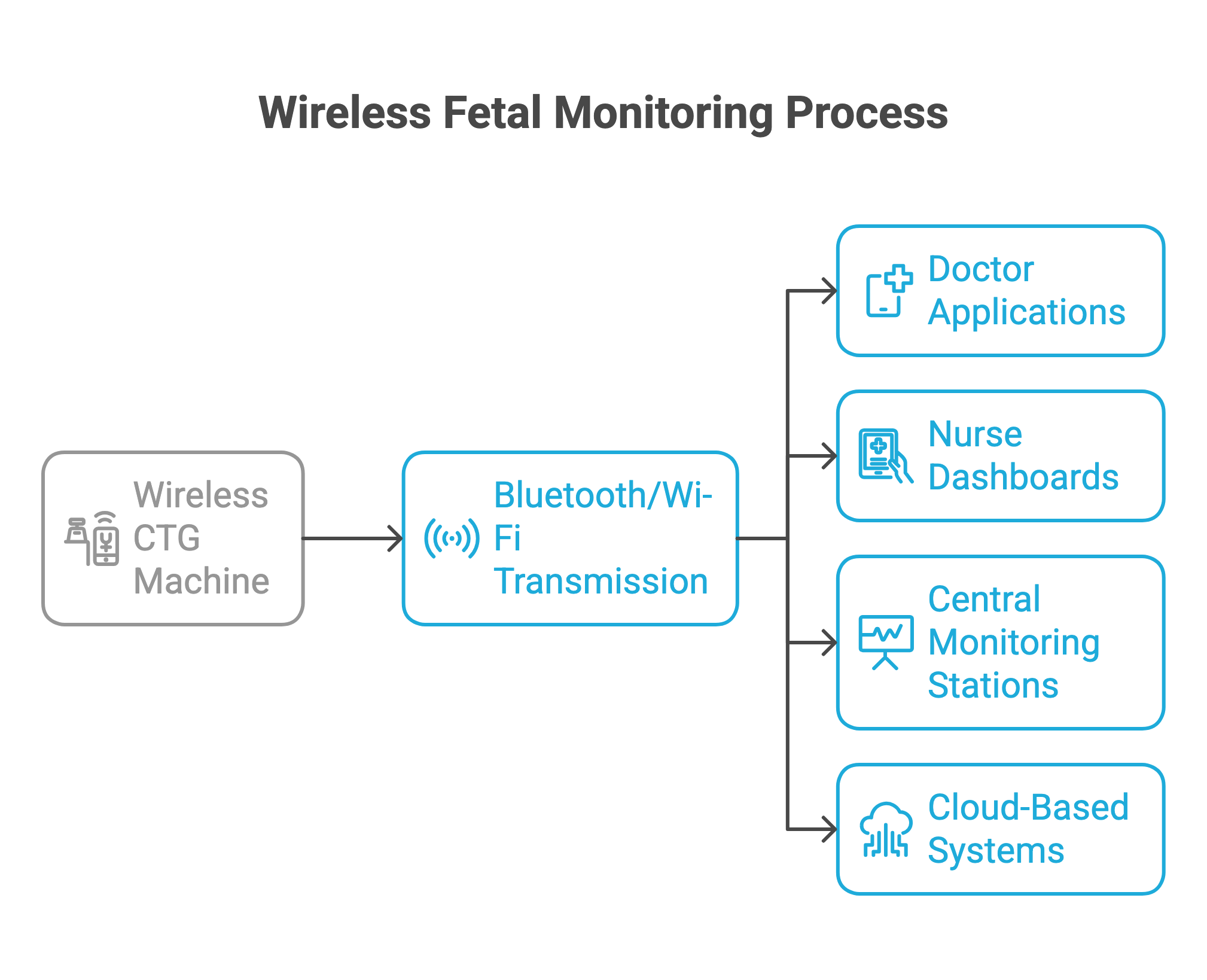
A wireless CTG machine modernizes fetal monitoring by using wireless fetal monitoring technology to transmit data in real time. Unlike wired systems, a wireless cardiotocography machine enables mobility and centralized review through a remote CTG monitoring machine dashboard.
A wireless cardiotocography machine uses advanced sensors combined with Bluetooth or Wi-Fi to transmit data to a central dashboard.
Instead of being tethered to a bedside monitor, a portable wireless CTG machine allows mobility while securely sending real-time data to:
Doctor applications
Nurse dashboards
Central monitoring stations
Cloud-based hospital fetal monitoring systems
Step-by-step: Wireless CTG Machine Working
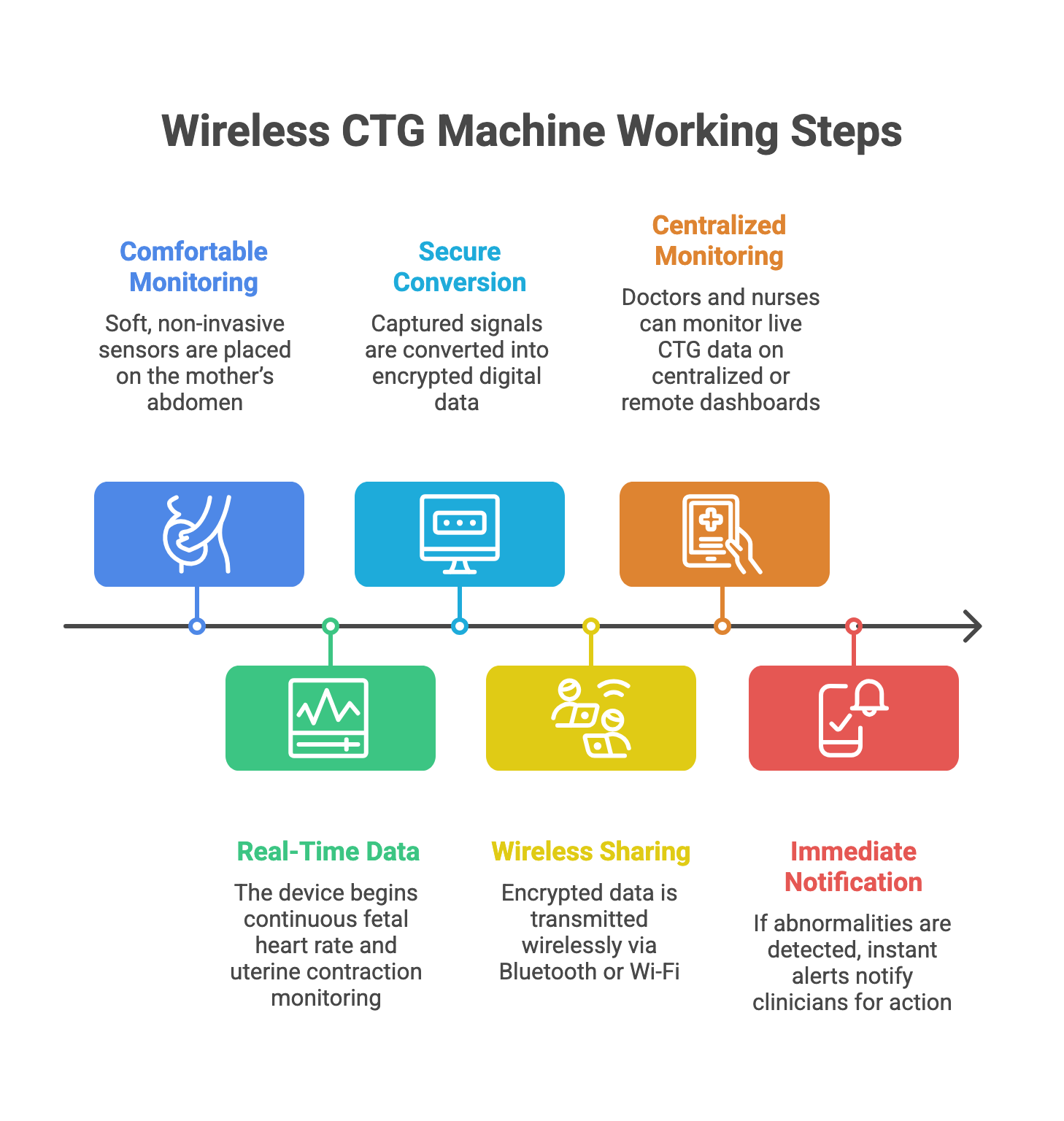
The wireless CTG machine working process integrates digital accuracy with clinical efficiency. A digital wireless CTG machine captures signals, converts them securely, and shares them instantly through a hospital fetal monitoring system, enabling faster CTG interpretation and improved response times.
Sensor Placement
Soft, non-invasive sensors are placed on the mother’s abdomen to detect fetal heart rate and uterine activity accurately and comfortably.Signal Capture
The device begins continuous fetal heart rate and uterine contraction monitoring, recording real-time physiological signals.Digital Processing
Captured signals are converted into encrypted digital data, ensuring accuracy, security, and seamless integration into hospital systems.Data Transmission
The encrypted data is transmitted wirelessly via Bluetooth or Wi-Fi to connected dashboards without restricting patient mobility.Remote Viewing
Doctors and nurses can monitor live CTG data on centralized or remote dashboards, enabling timely clinical decisions.Automated Alerts
If abnormal fetal heart patterns or contraction irregularities are detected, instant alerts notify clinicians for immediate action.
Traditional vs Wireless CTG: Key Differences
The difference between a traditional CTG monitoring system and a portable wireless CTG machine lies in connectivity and scalability. Wireless CTG machines enable centralized monitoring, digital storage, and remote CTG monitoring machine access, strengthening the hospital fetal monitoring system
Feature | Traditional CTG | Wireless CTG Machine |
Connectivity | Wired | Bluetooth / Wi-Fi |
Mobility | Restricted | Fully mobile |
Monitoring | Bedside only | Remote + Central monitoring |
Data Storage | Paper-based | Cloud-based |
Alerts | Manual review | Automated alerts |
Scalability | Limited | Central monitoring across wards |
A mobile CTG machine or wireless NST CTG machine enables Non-Stress Tests without confining the patient to a fixed station.
Understanding CTG Interpretation & Normal Values
Accurate CTG interpretation requires understanding CTG normal values and clinical context. Whether using a traditional system or a wireless NST CTG machine, clinicians assess fetal heart rate patterns carefully to ensure safe and timely decision-making.
Clinicians Evaluate
Baseline fetal heart rate: 110–160 bpm (CTG normal values)
Variability: Moderate variability indicates good oxygenation
Accelerations: Reassuring sign
Decelerations: May require further evaluation
Proper CTG interpretation requires clinical expertise and contextual understanding of maternal history.
How wireless and Remote Fetal Monitoring Is Changing Prenatal Care
Wireless fetal monitoring is transforming prenatal and intrapartum care by moving CTG beyond the bedside into a connected clinical network.
With a remote CTG monitoring system, clinicians can view live fetal heart rate and uterine contraction data directly on their phones or tablets. They do not need to be physically present in the labor room. Through secure applications, doctors and nurses can access real-time CTG traces while moving across wards or even across facilities.
This mobility enables faster clinical decisions, especially in high-risk cases where timely intervention is critical.
Central monitoring strengthens this further. Multiple CTG devices across wards or hospitals are connected to a central monitoring hub. From a single system, teams can observe several patients at once, review trends, and receive alerts for abnormal patterns. This reduces response time during fetal distress and improves documentation through secure digital records.
Wireless systems also extend monitoring beyond traditional labor rooms. Patients in step-down wards, peripheral centers, or during referral transport can remain under continuous supervision. This ensures continuity of care and reduces delays in escalation.
A strong example is Assam’s statewide intrapartum central monitoring initiative launched by NHM Assam on February 1, 2026. Powered by Janitri, 82 computerized CTG devices were deployed across 41 government hospitals and connected to a central hub at the NHM office in Guwahati. Six Central Monitoring System units enable real-time monitoring of multiple devices simultaneously across the state.
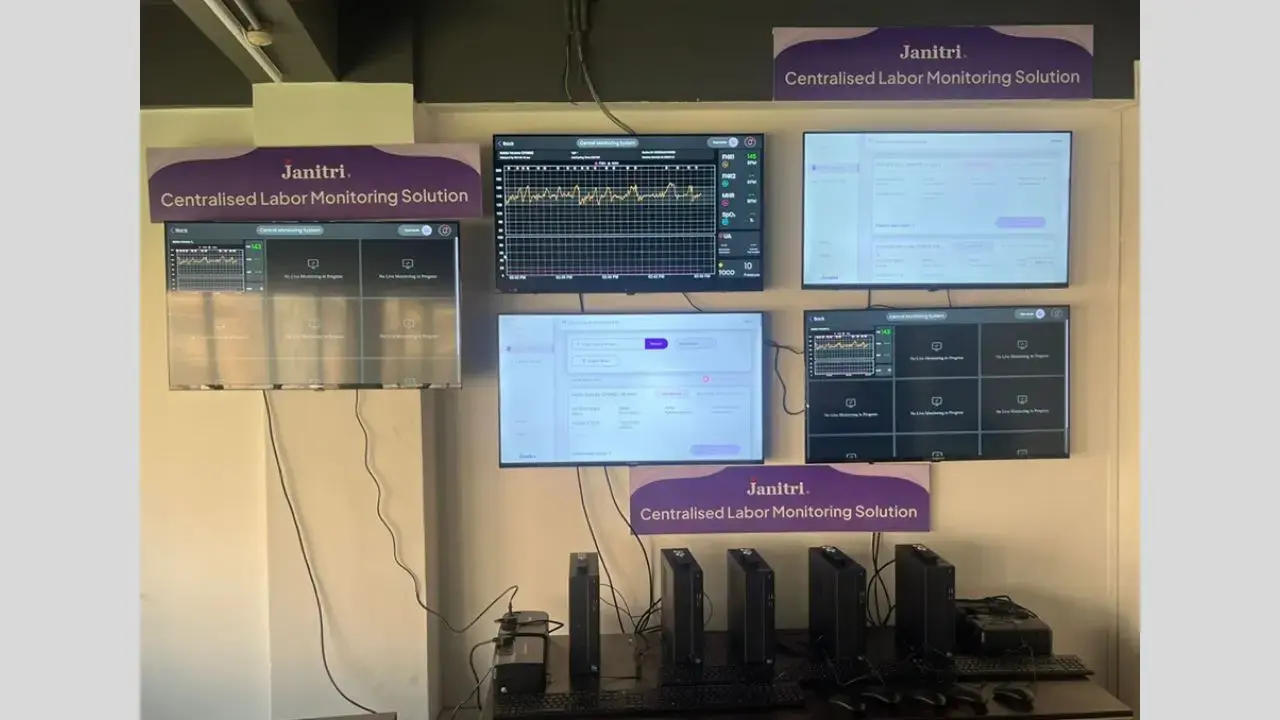
This first-of-its-kind initiative in India demonstrates how central and remote fetal monitoring can support early detection of fetal hypoxia, improve intervention timelines, and contribute to reducing MMR and IMR.
Conclusion
The transition from traditional CTG systems to wireless CTG machines represents a meaningful step forward in maternal care. Wireless technology enables real-time fetal heart rate and uterine contraction monitoring, faster interpretation, and improved coordination through remote and central monitoring capabilities.
With enhanced mobility, smart alerts, and secure digital records, hospitals can respond more quickly and strengthen safety for both mothers and babies.
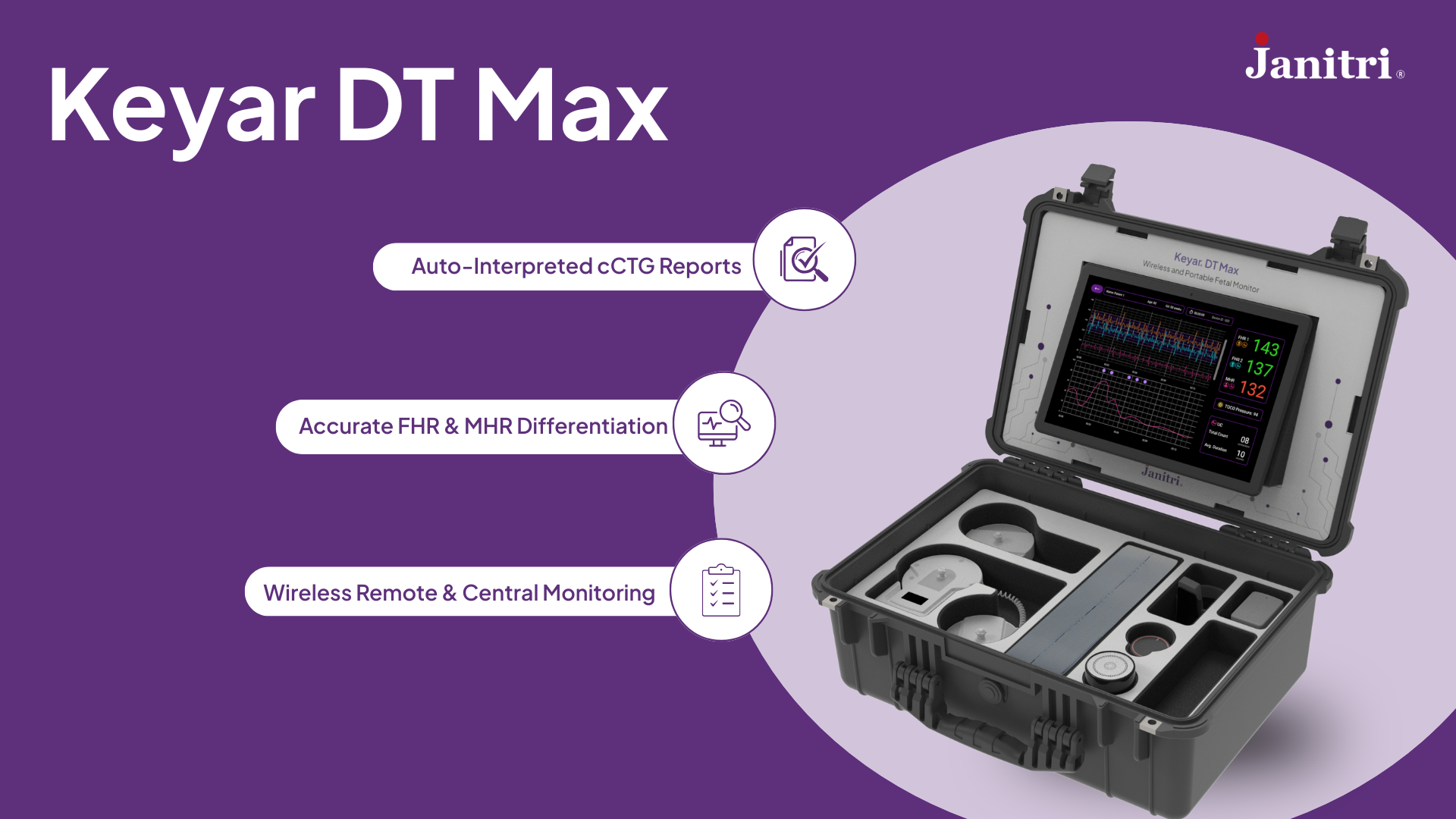
Keyar DT MAX is built to support this advancement with advanced computerized CTG, wireless connectivity, and seamless central monitoring integration. It empowers high-volume labor rooms and multi-facility networks with scalable, reliable fetal surveillance.
Upgrade to Keyar DT MAX and experience smarter, connected maternal monitoring.
Disclaimer
This content is for informational purposes only. CTG monitoring and interpretation must be performed by qualified healthcare professionals following clinical evaluation, hospital protocols, and manufacturer guidelines.
FAQ’s
How accurate are wireless CTG machines?
Wireless CTG machines offer accuracy comparable to traditional CTG systems when used correctly. Advanced sensors and digital processing ensure reliable fetal heart rate and contraction monitoring.
Is wireless CTG safe for mothers and babies?
Yes. Wireless CTG uses the same non-invasive ultrasound and contraction sensors as traditional CTG machines. It is safe when used by trained healthcare professionals.
Can CTG monitoring be done remotely?
Yes. Wireless CTG machines transmit real-time data to doctor dashboards or central monitoring systems, enabling remote fetal monitoring across wards or locations.
Wireless CTG vs traditional CTG – which is better?
Both are accurate, but wireless CTG offers added mobility, remote monitoring, digital records, and faster clinical response, making it better suited for modern hospitals.