Hospitals
Fetal Hypoxia Explained: Causes, Signs, and Clinical Monitoring
Jun 9 • 6 min read
Table of Content
Why Oxygen Matters for a Developing Baby
What are the causes of Fetal Hypoxia?
Common Causes of fetal hypoxia :
Signs of Fetal Hypoxia
Possible Signs of Fetal Hypoxia:
Baby Not Getting Enough Oxygen in Womb
Causes of Fetal Hypoxia During Labour
Risk Factors During Labour
How Is Fetal Hypoxia Detected?
Continuous Fetal Monitoring:
When Should Parents Seek Medical Attention?
Conclusion
Frequently Asked Questions
A lot of people who are going to be parents soon are really surprised when they find out that a baby can have trouble getting oxygen while it is still inside the womb. This is a deal. People want to know why this happens to the baby, how doctors figure it out and what they can do to keep the baby safe.
When a baby does not get oxygen to grow and develop as the baby should, it is called fetal hypoxia. Fetal hypoxia can happen because of a lot of things. For example, there can be problems with the placenta, issues with the cord, certain health problems with the mother or complications when the baby is being born. The baby needs oxygen to help the baby's organs and the baby's brain work properly. So it is really important to find out about hypoxia right away because fetal hypoxia can be a big problem for the baby.
Luckily, doctors and nurses have ways to check on the baby now, which helps them figure out if the baby is not getting enough oxygen. They can watch the baby's heart rate. Make sure everything is okay, which helps them make good decisions and do something if they need to. If they find out about the problem early and take care of it, it can make a big difference for both the mother and the baby.
Why Oxygen Matters for a Developing Baby
Oxygen is super important for all the organs in our body. When a woman is pregnant, oxygen moves from her blood into the placenta. From there, it reaches the baby through the cord. The baby needs oxygen to stay healthy. When the oxygen supply is low, the baby gets stressed.
If it stays low for a while, it can affect how the baby's organs work and grow.
Recent research analysing more than 737,000 births reported that neonatal asphyxia affects approximately 7% of newborns worldwide, highlighting the importance of timely fetal monitoring and early intervention when signs of oxygen deprivation are detected.
The World Health Organization and the American College of Obstetricians and Gynecologists say that finding oxygen problems early is key to keeping mothers safe during pregnancy. They tell us that oxygen is crucial for the baby's growth. Oxygen problems can lead to health issues for the baby. Oxygen helps the baby's organs work properly. The baby's organs need oxygen to develop correctly. Without oxygen, they may not grow the way they should. Oxygen is vital for the baby's health. The baby needs oxygen to thrive.
What are the causes of Fetal Hypoxia?
There are several possible causes of fetal hypoxia, ranging from maternal health conditions to labour complications.
Common Causes of fetal hypoxia :
Cause | How It Affects Oxygen Supply |
Placental insufficiency | Placenta cannot deliver enough oxygen and nutrients |
Umbilical cord compression | Blood flow through the cord becomes restricted |
Maternal low blood pressure | Reduced blood flow to the placenta |
Severe maternal anemia | Less oxygen carried in maternal blood |
Preeclampsia | Can affect placental function |
Excessive uterine contractions | May temporarily reduce blood flow |
Placental abruption | Placenta separates from the uterus too early |
Signs of Fetal Hypoxia
A lot of parents want to know what the signs of fetal hypoxia are. The thing is, it can be hard to tell if a baby is not getting oxygen. Doctors and nurses have to keep an eye on the baby to see if there are any problems
Possible Signs of Fetal Hypoxia:
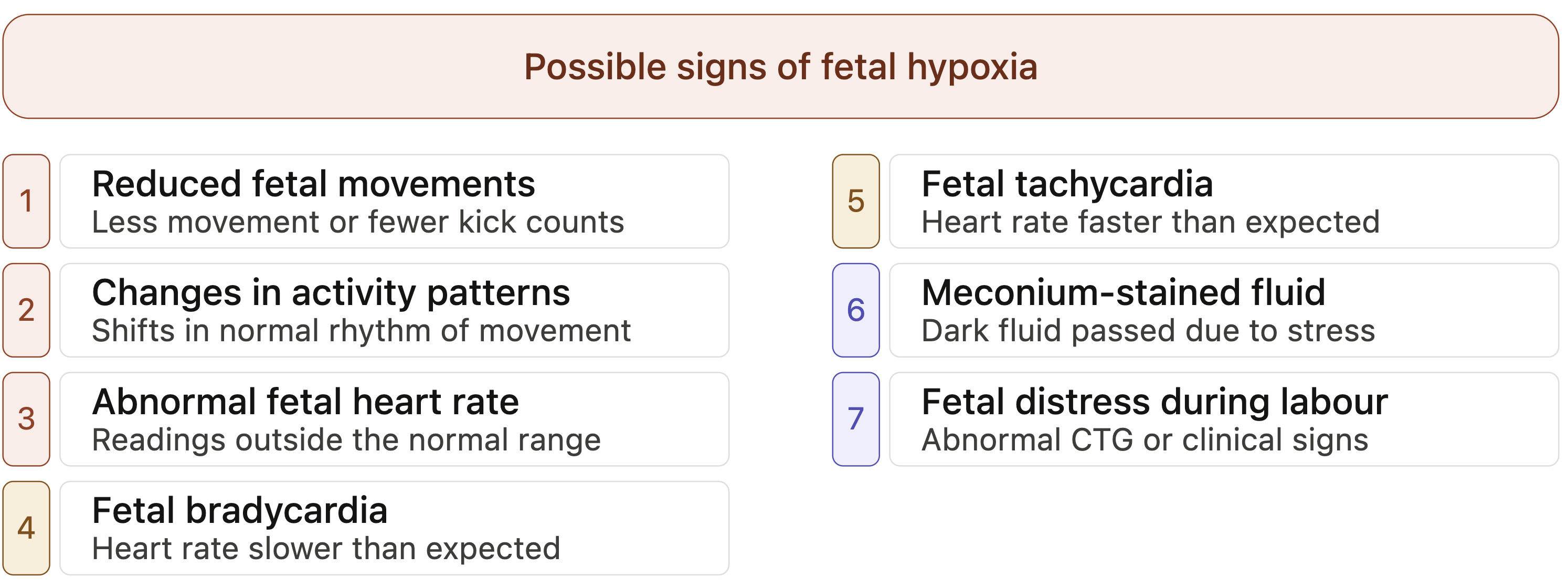
Changes in fetal activity patterns
Abnormal fetal heart rate
Fetal bradycardia (heart rate slower than expected)
Fetal tachycardia (heart rate faster than expected)
Meconium-stained amniotic fluid
Baby Not Getting Enough Oxygen in Womb
If a baby is not getting enough oxygen, the doctors and nurses might see some changes in the way the baby's heart is beating or the way the baby is moving. If parents notice that the baby is not moving as much as it used to, they should call their doctor right away. Fetal hypoxia is a thing, and parents should always keep an eye on their baby's movements and let their doctor know if they notice any changes in fetal hypoxia signs.
Causes of Fetal Hypoxia During Labour
Fetal hypoxia during labour is quite concerning. This is because contractions can sometimes cut off blood flow between the placenta and the baby. In some cases, babies are okay with these changes, but in some cases, babies might show signs of not getting enough oxygen if labour takes a long time or if there are problems.
Risk Factors During Labour
Active labour
Many contractions
Umbilical cord compression
Maternal infection
Placenta problems
Emergency situations during delivery
That's why it's really important to keep an eye on the baby's heart patterns during active labour. We need to watch for it. The baby's heart rate can tell us if they are getting oxygen.
How Is Fetal Hypoxia Detected?
Modern maternity care uses a lot of technology to monitor babies.
1. Fetal Heart Rate Monitoring
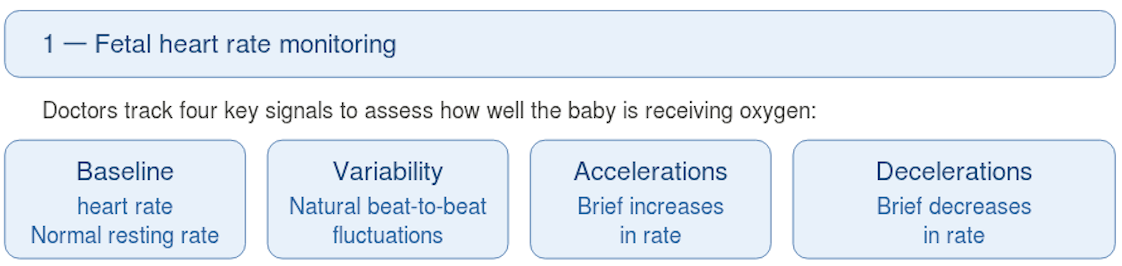
The fetal heart rate tells doctors how well the baby is doing during labor and pregnancy.
Doctors look at things like
Baseline heart rate
Variability
Accelerations
Decelerations.
If these things change, it might mean the baby is not getting oxygen.
2. CTG Monitoring System
A CTG monitoring system checks the heart rate and the mother's contractions at the same time.
Signs of Fetal Hypoxia on CTG
The baby's heart beating slowly all the time
The baby's heart beating quickly all the time
The heart rate is not changing much
The heart rate slowing down late in a contraction over and over
The heart rate slows down for a time.
These things do not mean the baby is badly hurt. The doctors might need to check more closely.
Continuous Fetal Monitoring: Why It Matters
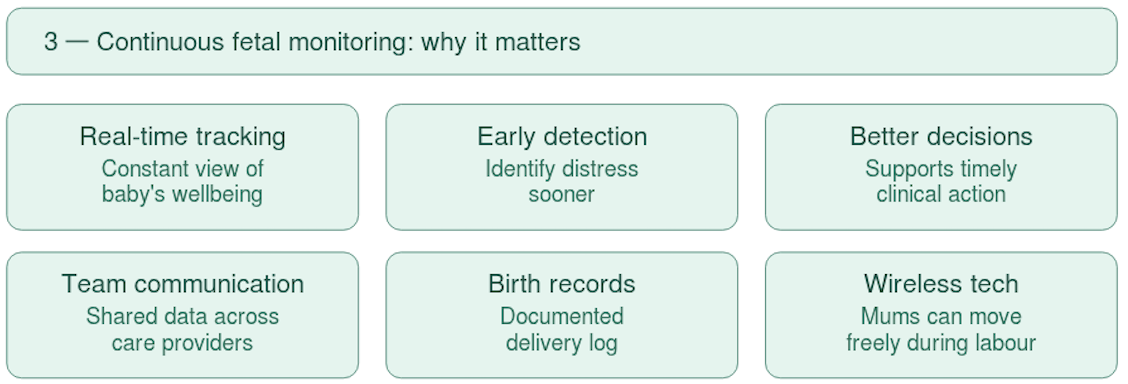
It helps doctors and nurses find out if there are any problems with the baby before it is born. This way, they can make decisions about what to do.
The good things about Continuous Fetal Monitoring are:
We can check on the baby all the time. See how it is doing.
We can find out if the baby is in trouble early.
The doctors and nurses can talk to each other better.
They can help the baby sooner if it needs it.
We can keep track of what happens when the baby is born.
Nowadays, technology is getting better and better. We have machines that can watch the baby without being attached to a big machine. This makes it easier for moms to move around while they are in the hospital.
For example, modern fetal monitoring systems such as those developed by Janitri help healthcare providers access meaningful data that supports informed maternal and newborn care decisions.
When Should Parents Seek Medical Attention?
Contact your doctor if you notice:
Reduced baby movement
Sudden changes in baby's activity
Bleeding
Severe tummy pain
Conclusion
Fetal hypoxia happens when a baby does not get oxygen. This can be due to problems with the placenta, the umbilical cord getting squished, issues with the mother's health or problems during labour.
Signs of hypoxia in newborn include abnormal baby heart rate, fewer baby movements and signs of distress during monitoring.
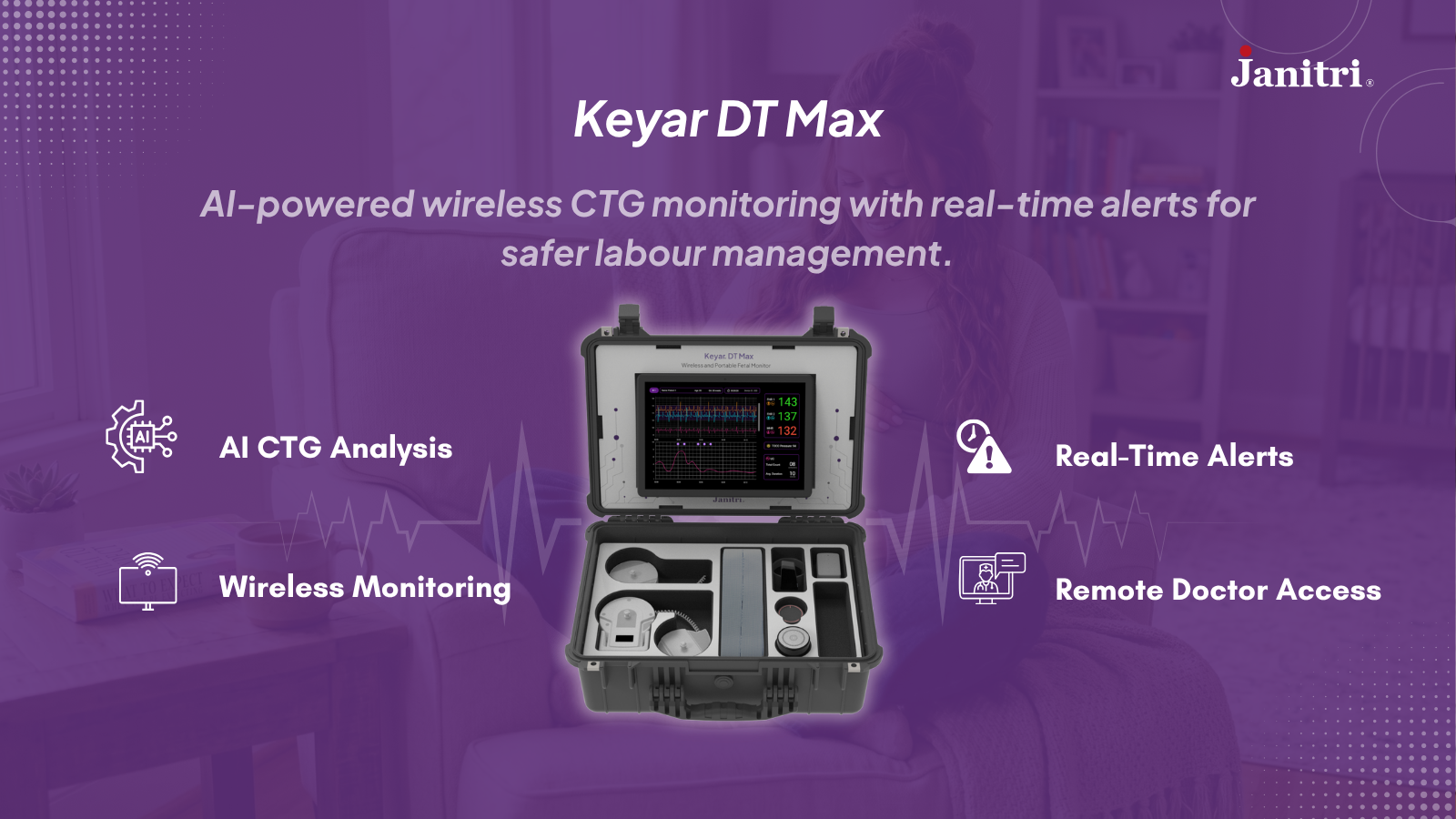
New technologies like baby monitoring and wireless baby monitors help doctors find problems early and make safer decisions. These tools, like Janitris baby monitoring systems, help with pregnancy monitoring and newborn care.
The fetal monitoring technology continues to evolve; healthcare providers now have access to advanced wireless solutions that support continuous monitoring while improving comfort and mobility during labour. Learn more about how modern systems are transforming maternity care in our guide to wireless fetal monitoring technology.
Frequently Asked Questions
1. What is hypoxia?
Fetal hypoxia is when a baby does not get oxygen for normal growth.
2. What causes hypoxia?
Fetal hypoxia can happen due to placenta problems, umbilical cord compression, maternal health issues or labour complications.
3. What are the signs of hypoxia?
Signs include reduced baby movements, baby heart rate and distress symptoms.
4. Can fetal hypoxia occur during labour?
Yes, fetal hypoxia can happen during labour if the baby's oxygen supply gets cut off.
5. How is fetal oxygen deprivation diagnosed?
Doctors use baby heart rate checks, monitoring and exams to diagnose it.
6. What is the role of fetal monitoring?
It helps find changes in the baby's condition so doctors can act fast.
7. Are fetal monitors useful?
Yes they can make mothers more comfortable while still monitoring the baby.