Hospitals
How Often Should High-Risk Pregnancies Be Monitored?
Jun 12 • 9 min read
Table of Content
What Is a High-Risk Pregnancy?
Common Cause for the High-Risk Pregnancy
Why Pregnancy Monitoring Is So Important
How Often Should High-Risk Pregnancies Be Monitored?
When you are pregnant, the gynaecologist will do some tests to check on the baby.
1. NST Test in Pregnancy (Non-Stress Test)
2. CTG Monitoring During Pregnancy (Cardiotocography)
3. Biophysical Profile (BPP)
4. Doppler Ultrasound
5. Kick Count / Fetal Movement Monitoring
If you are pregnant and you have any of these problems, you need to go to the hospital immediately.
Continuous Fetal Monitoring: When Is It Needed?
How Technology Is Changing Pregnancy Monitoring in India
Conclusion
Frequently Asked Questions (FAQs)
High-risk pregnancies often require additional surveillance and monitoring. Learn more about Janitri's High-Risk Pregnancy Monitoring Guidelines.
Every high-risk pregnancy is different, so the monitoring schedule varies based on the mother's health, the baby's condition, and the stage of pregnancy. In most cases, doctors recommend more frequent prenatal checkups, ultrasounds, and fetal monitoring tests to closely track the baby's growth and well-being. Regular monitoring helps detect potential complications early, allowing healthcare providers to take timely action and support a safer pregnancy and delivery.
Pregnancy is a big deal for a woman. It is a time when she feels excited and loves the idea of having a baby, but at the same time, she will also feel worried. When someone says that a pregnancy is at risk, the woman will feel even more worried. The thing is, just because a pregnancy is high-risk, it does not mean that something bad will happen.
A high-risk pregnancy is still a pregnancy, and many women have high-risk pregnancies, and everything turns out okay. The term high-risk pregnancy is used to describe a pregnancy that needs a little care.
Hospital monitoring during pregnancy is an important tool for doctors. It helps make sure both the mother and the baby are safe.
Here are some things we will cover:
How often monitoring should happen
What tests are used
When to rush to the hospital
How modern baby monitoring technology is helping to make care
Hospital monitoring during pregnancy helps doctors to keep a close eye on the mother and the baby. It is used to check if they are healthy. Doctors use hospital monitoring to find any problems early. This way, they can take action to prevent them from getting worse.
High-risk pregnancies need monitoring. The mother and the baby need to be checked. This helps doctors to make sure everything is okay.
Modern technology is helping to make care safer. They can see if there are any problems. This way they can take action quickly. It helps to keep the mother and the baby safe. Monitoring happens in the hospital. It is a part of pregnancy care.
What Is a High-Risk Pregnancy?
A pregnancy that is considered at risk does not always start that way. Some problems can happen during pregnancy. Some women have health issues before they get pregnant. A pregnancy is usually called high-risk when there is a greater chance that something could go wrong for the mother or the baby, or for both the mother and the baby.
Common Cause for the High-Risk Pregnancy
If the mother's age is over 35 or under 17, the pregnancy is considered at risk.
Diabetes is one condition. This includes Type 1 diabetes, Type 2 diabetes and gestational diabetes.
High blood pressure and preeclampsia are also high-risk conditions.
Having twins, triplets, or other multiple pregnancies can be risky.
If a woman has had pregnancy losses or preterm births, her pregnancy may be high-risk.
Placenta previa and placental abruption are conditions that can increase the risk of a pregnancy.
Certain infections, such as HIV, Zika and CMV, can increase the risk.
Autoimmune conditions like lupus are another risk factor.
Obesity, which is a BMI over 30, can make a pregnancy risk.
Fetal growth restriction and congenital abnormalities are also high-risk conditions.
~20–30% | Of all pregnancies worldwide are considered high-risk, yet with proper monitoring, most result in healthy outcomes for both mother and baby. |
Why Pregnancy Monitoring Is So Important
Pregnancy monitoring is like having a safety net. Most of the time, everything will be fine. If something goes wrong, that net will catch you before a small issue turns into a big problem.
Monitoring a baby's health during pregnancy helps doctors:
Detect signs that the baby is in distress
Keep track of the baby's heart rate and movement
Check a person's vital signs and blood pressure
Find complications like preeclampsia, cord compression or low oxygen levels
Make a quick decision about delivery or other treatments if needed
Every Year | An estimated 2.6 million stillbirths occur globally — many of which could be prevented with timely fetal wellbeing assessment and intervention. |
Prenatal monitoring is not just a box to tick — it is literally life-saving.
How Often Should High-Risk Pregnancies Be Monitored?
This is the question most expectant families ask — and the honest answer is: it depends on your specific condition. But here's a general framework that most obstetric care guidelines recommend:
Risk Condition | Monitoring Frequency | Key Tests Used |
Every 1–2 weeks after 28 weeks | NST, BPP, Growth Scan | |
Preeclampsia | Weekly or more frequently | CTG, Doppler, Blood tests |
Twin/Multiple Pregnancy | Every 2 weeks from 24 weeks | CTG, Growth Scan, NST |
Fetal Growth Restriction | Every 2 weeks or more often | Doppler, CTG, Amniotic fluid check |
Previous Stillbirth | Weekly NSTs from 32 weeks | NST, CTG, BPP |
Advanced Maternal Age | Every 2–4 weeks | NST, Anatomy Scan, CTG |
When you are pregnant, the gynaecologist will do some tests to check on the baby.
These tests help them to see how the baby is doing. There are different tests that the doctor can use to check on the baby during pregnancy. Each test is used for a reason, and the doctor will often use more than one test to get a good idea of how the baby is doing. The baby is checked with these tests to make sure the baby is healthy and strong. The doctor uses these tests to check on the baby during pregnancy.
1. NST Test in Pregnancy (Non-Stress Test)
The NST test in pregnancy is one of the most commonly used tools in high-risk care. It measures fetal heart rate in response to the baby's movements — a healthy baby's heart rate typically speeds up when it moves.
Takes about 20–40 minutes
Non-invasive, no risk to mother or baby
Usually started around 28–32 weeks for high-risk cases
A "reactive" NST (2 accelerations in 20 minutes) indicates fetal well-being
2. CTG Monitoring During Pregnancy (Cardiotocography)
CTG monitoring during pregnancy is the most widely used form of fetal heart rate monitoring in hospitals. A CTG machine simultaneously records fetal heart rate and uterine contractions, giving doctors a real-time picture of how the baby is responding.
Used in labour as well as antepartum (before labour) monitoring
Identifies fetal distress monitoring patterns like decelerations
Can be continuous or intermittent depending on clinical need
Wireless fetal monitor technology now allows mothers to move during CTG
~50% | Maternal deaths in hospitals occur due to delayed identification of deterioration — CTG monitoring systems help reduce this gap significantly. |
3. Biophysical Profile (BPP)
A BPP combines an NST with an ultrasound to assess five fetal well-being parameters: breathing movements, body movements, muscle tone, amniotic fluid volume, and heart rate reactivity. A score of 8–10/10 is considered normal.
4. Doppler Ultrasound
Doppler studies are used to check the blood flow through the cord and the blood vessels of the fetus. The Doppler studies can show if the blood is flowing properly. If the Doppler readings are not normal, this can be a sign that the placenta is not working well.
The Doppler studies can indicate that the baby is not getting oxygen or nutrients from the placenta. This is a condition where the placenta does not do its job properly. The baby does not get what it needs.
5. Kick Count / Fetal Movement Monitoring
Maternal health monitoring includes educating mothers to count fetal kicks daily, especially after 28 weeks. Reduced fetal movement is one of the earliest warning signs that something may be wrong — and it should never be ignored.
Less than 10 movements in 2 hours (after 28 weeks) = contact your provider immediately
No movement felt for 12 hours = go to the hospital.
If you are pregnant and you have any of these problems, you need to go to the hospital immediately.
You should go to the hospital if you have reduced fetal movement or no movement for hours, a severe headache, visual disturbances or swelling. These can be signs of preeclampsia.
You should also go to the hospital if you have bleeding at any stage of your pregnancy.
You should go to the hospital if you have abdominal pain or cramping.
swelling of the face, hands or feet.
A fever above 38°C with chills.
Rupture of membranes, or what people call water breaking, before 37 weeks.
Contractions before 37 weeks. This is what people call preterm labour.
Continuous Fetal Monitoring: When Is It Needed?
Continuous fetal monitoring is usually used in high-risk situations where checking on the baby now and then is not enough. This includes:
Labour in a high-risk pregnancy
Induction of labour with oxytocin
Epidural anaesthesia
Previous caesarean section (VBAC)
Antepartum haemorrhage during labour
Pre-existing conditions like diabetes or hypertension, in active labour
Doctors use fetal monitoring (EFM) during labour in such cases. Modern CTG monitoring systems give midwives and doctors real-time data. This helps them make decisions right away. They do not wait until later. Continuous fetal monitoring helps keep the baby safe.
How Technology Is Changing Pregnancy Monitoring in India
Access to fetal monitoring during pregnancy can be challenging in rural areas, where skilled healthcare workers and traditional CTG machines may be limited. Today, portable and digital monitoring technologies are helping bridge this gap.
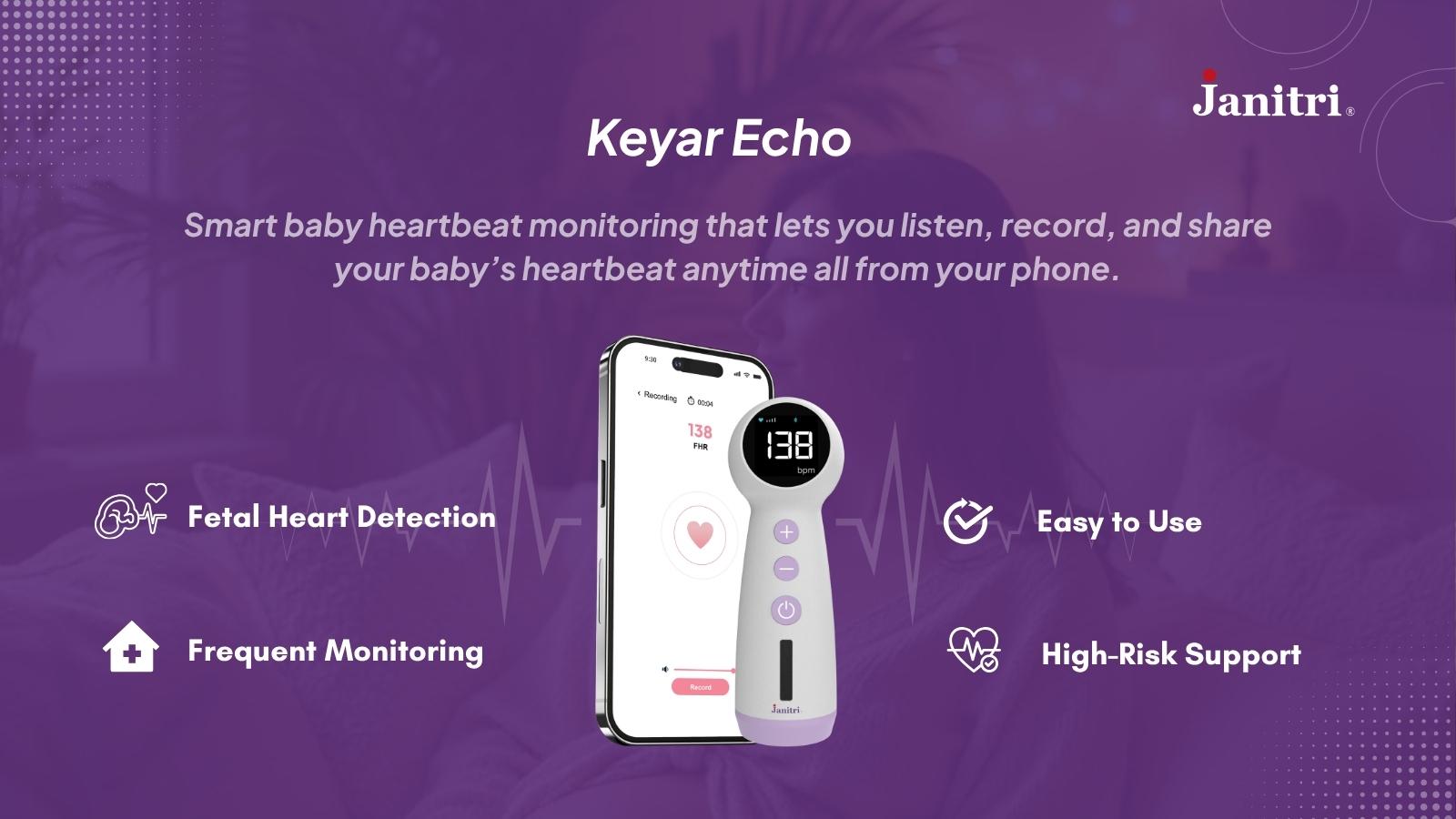
Wireless devices and remote monitoring solutions make CTG monitoring during pregnancy more accessible, enabling healthcare providers to track fetal well-being, identify potential complications earlier, and support safer maternal and newborn care across different healthcare settings.
Clinical recommendations for monitoring frequency in high-risk pregnancies are supported by ACOG guidance on antepartum fetal surveillance.
Conclusion
A high-risk pregnancy requires closer monitoring, but with timely care and regular check-ups, many women have healthy pregnancies and deliveries. Tests such as the NST test in pregnancy, CTG monitoring during pregnancy, Doppler ultrasound, and Biophysical Profile (BPP) help assess fetal well-being and detect potential complications early.
The frequency of pregnancy monitoring depends on individual risk factors, but attending all prenatal appointments and reporting warning signs promptly can make a significant difference. Consistent fetal monitoring during pregnancy remains one of the most effective ways to support the health and safety of both mother and baby.
Frequently Asked Questions (FAQs)
When should a pregnant woman go to the hospital?
A pregnant woman should go to the hospital if she has some serious problems. These problems include not feeling the baby move much as usual, bleeding from her vagin, a a very bad headache or changes in her vision.
Who needs monitoring during pregnancy?
All pregnant women need to have some check-ups to make sure everything is okay. Some women need to have more careful monitoring because they have health problems that could affect the baby. These problems include having diabetes during pregnancy, high blood pressure, being pregnant with more than one baby, having lost a baby before, having a baby that is not growing well or being over thirty-five years old.
3.What is the NST test in pregnancy? How often is it done?
The NST test is a test that checks the baby's heart rate when the baby moves. This test is especially important for women who have high-risk pregnancies. Usually, women start having this test between twenty-eight and thirty-two weeks of pregnancy.
What symptoms require hospital monitoring during pregnancy?
Some symptoms mean a pregnant woman needs to go to the hospital. These symptoms include having a bad headache, blurred vision, not feeling the baby move as much as usual, having contractions too early, bleeding from the vagina, having her water break, having a high fever or having trouble breathing.
What is the difference between CTG and NST monitoring?
Both CTG and NST monitoring check the baby's heart rate. The NST test checks how the baby's heart rate changes when the baby moves. It is usually done in a clinic. The CTG test is more complete. It checks the baby's heart rate and the mother's contractions at the same time. The CTG test is especially important when a woman is in labour because it can show if the baby is in distress.