Hospitals
High-Risk Pregnancy Monitoring Guidelines for Obstetric Practice
Jun 9 • 10 min read
Table of Content
What Is a High-Risk Pregnancy?
Who is Classified as High-Risk and Why?
Individual and Social Risk Factors
Family and Medical History
Maternal Health Conditions During Pregnancy
Pregnancy-Specific Factors
Fetal Factors
Understanding Hypertensive Disorders in Pregnancy
High-Risk Pregnancy Monitoring Guidelines
ACOG Guidelines for Antepartum Surveillance
Core Components of High-Risk Pregnancy Monitoring
1.
Key CTG features clinicians assess:
2. Doppler Ultrasound
3. Ultrasound and Biophysical Profile
4.
5. Laboratory Investigations
Monitoring Protocol by Condition
Continuous Fetal Monitoring
Wireless fetal monitoring
Obstetric Monitoring Guidelines During Labour
How Technology is Transforming the
When to Seek Immediate Medical Attention
Conclusion
What Is a High-Risk Pregnancy?
When a mom, the baby, or both face health issues before, during, or right after birth, that pregnancy is seen as high-risk Pregnancy. This could be due to existing health problems, complications that pop up, or the baby's health being affected in some way.
The World Health Organisation (WHO) notes that about 15% of pregnancies need the input of skilled medical staff. Even though 15% might seem pretty big, it also tells us that with good watching and care, most of these pregnancies turn out okay.
This is key: knowing how not having that extra monitoring can impact things. Worldwide stats show 27% of babies are born small, 1.3% as stillbirths, 10.6% arrive premature, and 2.2% with structural birth defects. Every one of those figures means a family facing challenges. If we spot troubles early and address them quickly, we can stop many of these outcomes. To help, doctors have algorithms to predict problems in high-risk situations. These tools are actually really effective – sometimes getting it right almost 91% of the time. To get this level of accuracy, pregnant women need thorough and clinically guided monitoring.
Who is Classified as High-Risk and Why?
When doctors are trying to figure out if a pregnancy needs to be watched closely, they look at a lot of different things. They think about the person, their history and their life at home. The things that doctors consider are not about what has happened to the person medically. A lot of families are really surprised when they find out that doctors look at all these things when they are deciding about a pregnancy. Doctors consider the pregnancy. They think about the person and their life, and how these things affect the pregnancy.
Individual and Social Risk Factors
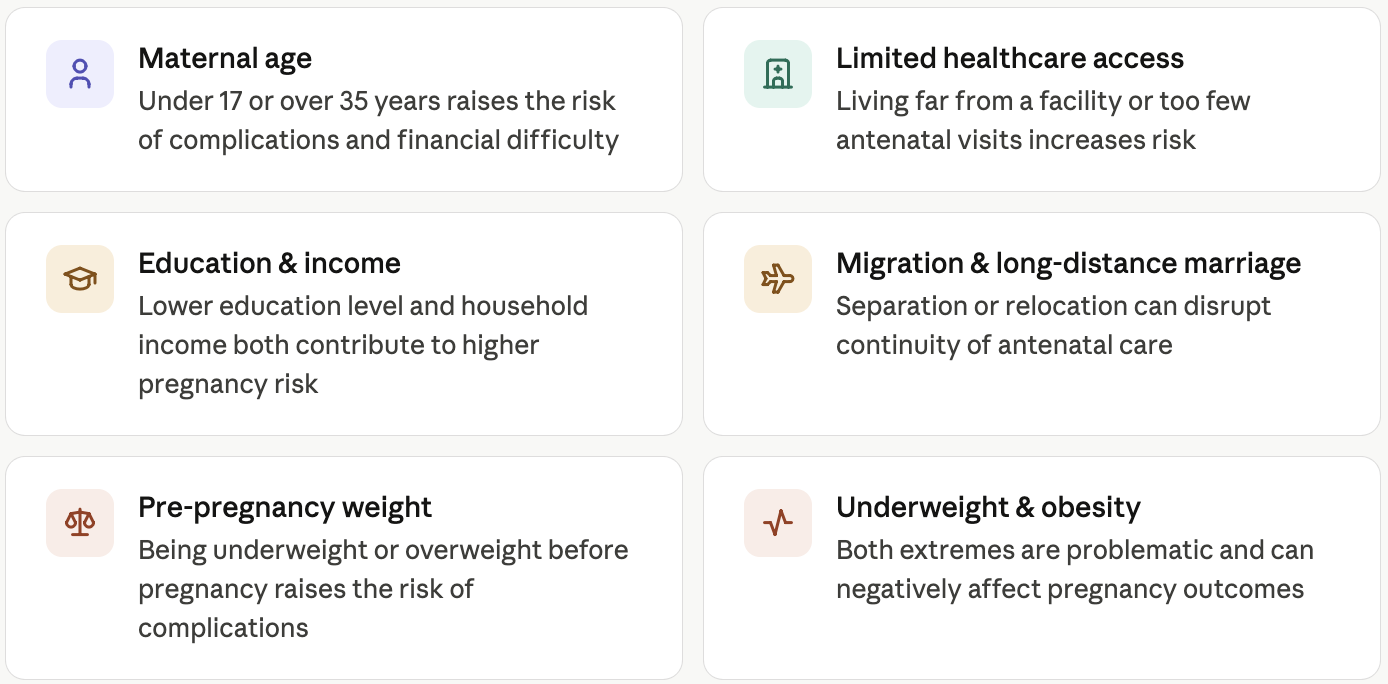
Maternal age under 17 years or over 35 years is linked to household income and financial difficulties. This situation also increases the risk of pregnancy and birth complications.
Limited access to healthcare is another issue – This includes living far from a health facility and not visiting the doctor often enough during pregnancy.
A woman's education level and her household income both play a role in her pregnancy risk.
Long-distance marriages or migration can disrupt care.
Being underweight or overweight before pregnancy also increases the risk.
Both being underweight and being obese are problematic– These factors can affect pregnancy.
Family and Medical History
Family history of high blood pressure, heart disease or diabetes
Previous abortion, preterm delivery or Caesarean section
History of uterine fibroids, ovarian cysts or cervical surgery.
Co-morbidities like tuberculosis, heart disease or diabetes mellitus.
History of drug allergy or major surgery.
Maternal Health Conditions During Pregnancy
Gestational diabetes is high blood sugar that happens when you're pregnant. It can affect your baby's development.
Pre-eclampsia is when you have high blood pressure, and some organs are affected. This usually happens after 20 weeks of pregnancy.
Chronic hypertension means you had high blood pressure before you got pregnant.
Thyroid problems can also cause issues. If your thyroid is too active or not active enough, it can affect your baby's development.
Heart disease, kidney disease or diseases where your body attacks itself can be a concern.
Being obese with a BI over 30 can increase your risk of diabetes and high blood pressure problems.
Pregnancy-Specific Factors
When a woman is having twins or triplets, the doctor will do checks on the babies.
This is also the case if the woman has had a miscarriage before or if her baby was born early.
The doctor will also do checks if the woman has placenta previa or if the placenta separates from the uterus.
If the woman has a cervix or if she goes into labour too early, the doctor will do more checks.
The doctor will also do checks if there is too much or too little water around the baby because this can affect the baby's health.
The doctor will also check if the baby is not growing as fast as it should. This is called intrauterine growth restriction, and it means the baby is not growing at the right rate for how far along the pregnancy is.
Fetal Factors
Chromosomal abnormalities identified on screening
Structural anomalies detected on ultrasound
Fetal anaemia or Rh incompatibility
The American College of Obstetricians and Gynaecologists (ACOG) specifically recommends enhanced fetal surveillance for women over 35. Complications, their guidelines note, occur in roughly 6% to 8% of all pregnancies globally, and obstetric practice is now increasingly directed by standardised frameworks from WHO and ACOG to manage the most common of these, including chronic hypertension and advanced maternal age.
Understanding Hypertensive Disorders in Pregnancy
Hypertension is one of the leading causes of maternal and neonatal mortality worldwide. Understanding its different forms is central to any high-risk pregnancy monitoring protocol.
Type | Definition |
Chronic hypertension | Hypertension detected before pregnancy or before 20 weeks |
White-coat hypertension | BP ≥140/90 mmHg in the clinic only; normal outside clinical settings |
Masked hypertension | Normal BP in clinic; ≥140/90 mmHg at other times |
Gestational hypertension | New-onset hypertension at ≥20 weeks without proteinuria or organ involvement |
Pre-eclampsia (de novo) | Gestational hypertension with evidence of end-organ dysfunction — renal, neurological, haematological, hepatic, or pulmonary |
Superimposed pre-eclampsia | New proteinuria or organ dysfunction in a woman with pre-existing chronic hypertension |
For hospitals and doctors who want to take care of women outside of the office, remote blood pressure monitoring tools are becoming a part of care. Companies, like Janitri, are making tools that let doctors track blood pressure to see if there are any problems and help prevent pre-eclampsia from becoming a big crisis.
High-Risk Pregnancy Monitoring Guidelines
ACOG Guidelines for Antepartum Surveillance
ACOG recommends structured antepartum fetal surveillance for pregnancies at risk of stillbirth:
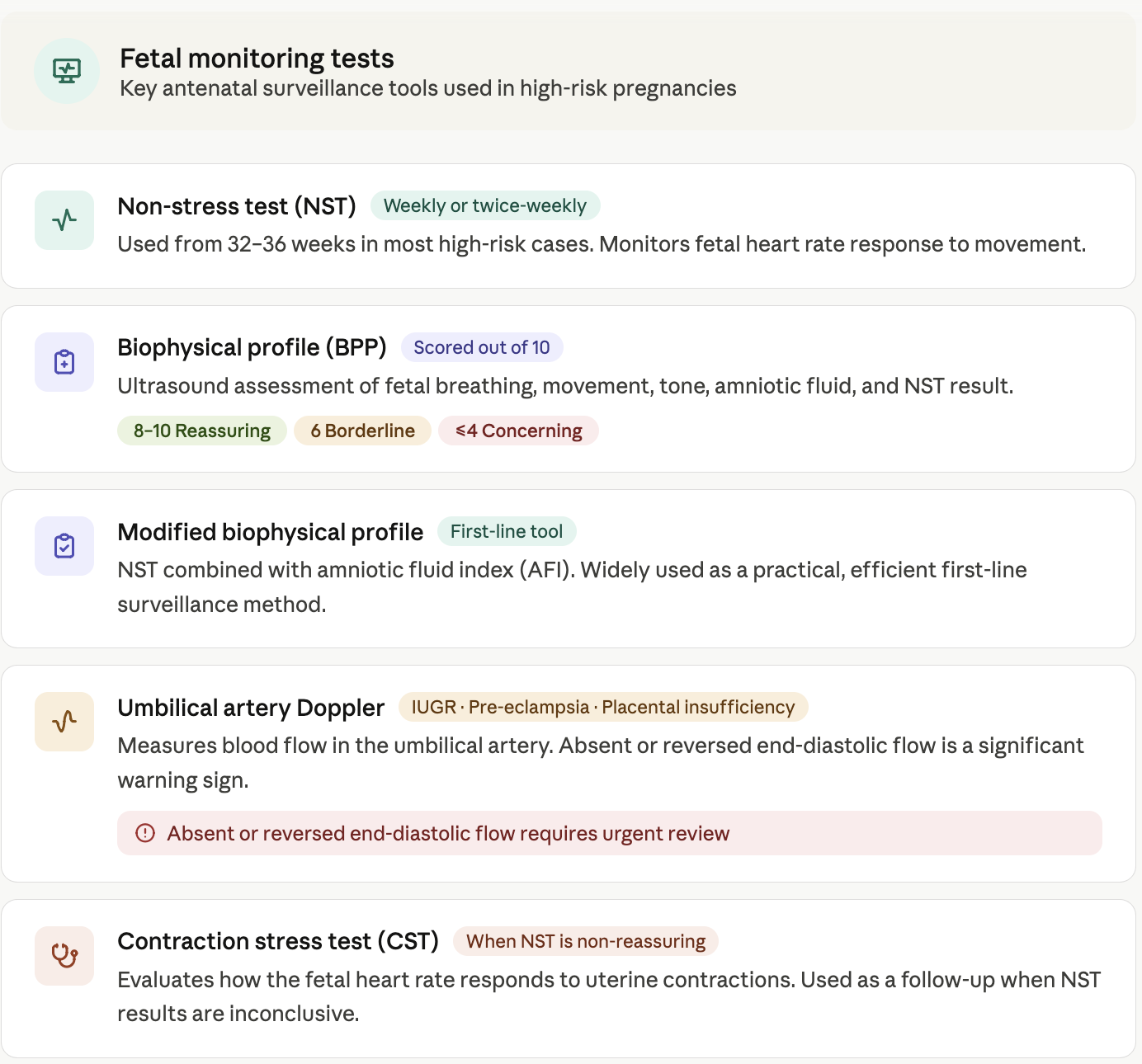
Non-stress test (NST): Weekly or twice-weekly from 32–36 weeks in most high-risk cases
Biophysical profile (BPP): Ultrasound scoring of fetal breathing, movement, tone, amniotic fluid, and NST result — scored out of 10; 8–10 is reassuring.
Modified biophysical profile: NST combined with amniotic fluid index (AFI); widely used as a first-line tool
Umbilical artery Doppler: Recommended for IUGR, pre-eclampsia, and placental insufficiency — absent or reversed end-diastolic flow is a significant warning sign
Contraction stress test (CST): Used when NST results are non-reassuring
Core Components of High-Risk Pregnancy Monitoring
1. Fetal Heart Rate Monitoring
Fetal heart rate (FHR) monitoring is the most widely used method of fetal well-being assessment. It measures how the baby's heart responds to movement and contractions.
Method | When Used | Description |
Intermittent auscultation | Low-risk pregnancies | Manual listening with a Doppler device at regular intervals |
High-risk pregnancies, active labour | Simultaneous recording of fetal heart rate and uterine activity |
Key CTG features clinicians assess:

Baseline heart rate — normal range: 110–160 bpm
Variability — small natural fluctuations; their presence is reassuring
Accelerations — brief heart rate increases linked to fetal movement and wellbeing
Decelerations — drops in heart rate assessed for timing, depth, and pattern
2. Doppler Ultrasound
Doppler ultrasound helps doctors assess how well blood flows through the umbilical cord between the placenta and the baby. It is especially useful in high-risk pregnancies where there are concerns about the baby's growth, the placenta's function, or conditions like pre-eclampsia.
During the scan, doctors check blood flow in vessels, including the umbilical artery. If blood flow is much lower than normal, particularly when there is no or reversed end-diastolic flow, it may mean the baby is not getting oxygen and nutrients from the placenta.
In cases, closer monitoring or even early delivery may be considered to keep the baby safe. While Doppler studies give information during scheduled assessments, continuous fetal surveillance is also very important in tracking the baby's wellbeing between scans.
Solutions, like the Some CTG monitoring system, help doctors continuously monitor thebaby'ss heart rate patterns in real time. This enables the spotting of potential problems and supports timely decisions in high-risk pregnancies.
3. Ultrasound and Biophysical Profile
The growth scan is done every two to four weeks during pregnancy in women whose babies are not growing as they should or whose placentas are not working properly. The biophysical profile is a test that checks on the fetus. This test looks at five things: the baby's breathing, the baby's movement, the baby's muscle tone, the amount of fluid around the baby and the results of a test called a stress test.
4. Maternal Vital Signs Monitoring
We need to check the mother's signs regularly. This means we record her blood pressure, oxygen level and heart rate. This is very important for women who are pregnant. It is especially important for women who have preeclampsia, eclampsia and heart problems. Remote monitoring has some advantages. It lets us keep an eye on the mother all the time, whether she is in the hospital or not. This means she does not have to go to the hospital often. It helps keep the pregnancy safe. We can check the mother's blood pressure. Make sure she is healthy overall.
5. Laboratory Investigations
Complete blood count (CBC) — anaemia detection
Liver function tests and uric acid — pre-eclampsia surveillance
HbA1c and glucose tolerance testing — diabetes monitoring
Urine protein-to-creatinine ratio — renal involvement assessment
Monitoring Protocol by Condition
Condition | NST / CTG Frequency | Growth Scan Frequency | Doppler |
Gestational diabetes (diet-controlled) | Weekly from 36 weeks | Every 4 weeks from 28 weeks | As indicated |
Gestational diabetes (insulin-requiring) | Twice weekly from 32 weeks | Every 2–3 weeks | As indicated |
Chronic hypertension | Twice weekly from 32 weeks | Every 3–4 weeks | As indicated |
Pre-eclampsia | 2–3 times/week or continuous | Every 1–2 weeks | Weekly |
IUGR | 2–3 times/week | Every 2 weeks | Weekly or twice-weekly |
Twin pregnancy (DCDA) | Weekly from 36 weeks | Every 2 weeks from 24 weeks | As indicated |
Twin pregnancy (MCDA) | Weekly from 28 weeks | Every 2 weeks from 16 weeks | Weekly |
Continuous Fetal Monitoring in Practice
Many parents want to know: "Do I have to monitor my baby all the time?"
The truth is, it really depends on how long you are in your pregnancy and what the specific risks are. When you're in the hospital in labour or in a special antenatal ward, monitoring your baby's heartbeat continuously is really important.
For most check-ups, going in for scheduled visits and doing some testing is enough. Old fetal monitoring machines used to keep women stuck in bed with wires attached to their tummies. That made labour harder both physically and emotionally.
Some studies even found that it led to interventions just because women couldn't move around freely. Fetal monitoring is still important. Now we have better ways to do it. It helps to keep an eye on yourbaby'ss health, especially if there are any concerns. You and your doctor can decide what's best for you and your baby. Monitoring your baby's heartbeat helps make sure everything is okay.
Wireless fetal monitoring has changed this.
Today, it is possible to monitor a baby's health while a mother walks around, changes position, or uses water therapy without losing the signal. This is important for doctors:
When a mother moves around during labour, it can mean less labour and less pain.
Sitting up and being active can help get more oxygen to the baby.
Wireless monitoring lets nurses keep an eye on patients at once without getting busier.
Doctors can see the baby's health information in time on a central screen for many patients at once. This is very helpful in labour rooms, in India, where there are no nurses.
Obstetric Monitoring Guidelines During Labour
Labour is the highest-risk period for the fetus in any high-risk pregnancy. FIGO, ACOG, and NHS all recommend continuous EFM throughout labour when any of the following are present:
Pre-eclampsia or hypertension
Diabetes in pregnancy
Induced or augmented labour (oxytocin)
Preterm labour (less than 37 weeks)
Multiple pregnancy
Previous caesarean section
Epidural analgesia
Suspected IUGR or oligohydramnios
Meconium-stained liquor
Abnormal fetal heart rate on intermittent auscultation
How Technology is Transforming the High-Risk Pregnancy Monitoring
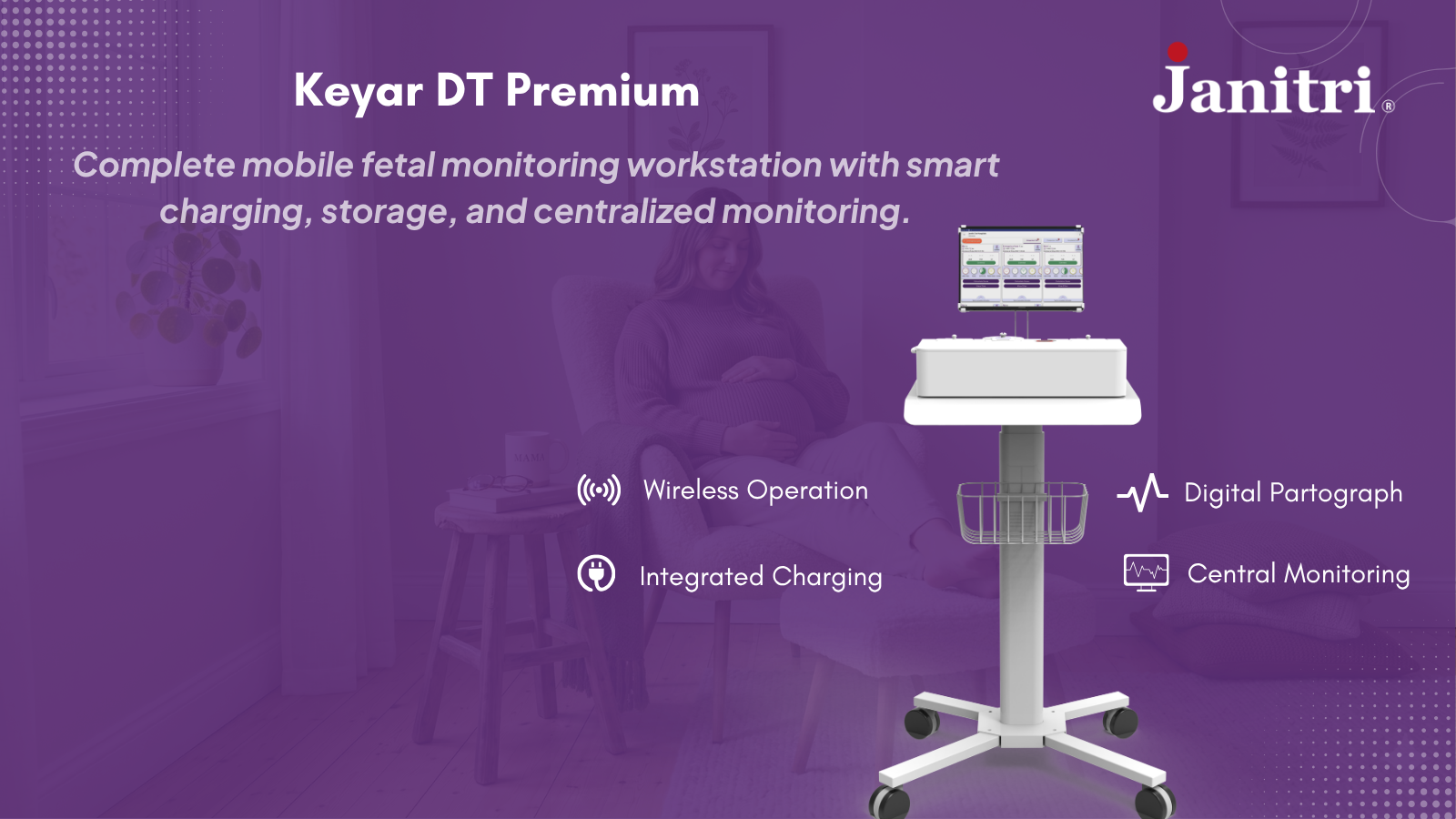
Wireless CTG Monitoring: Enables continuous maternal and fetal monitoring without restricting movement, improving care efficiency.
AI-Powered Analysis: Helps clinicians detect potential complications earlier and interpret CTG data more accurately.
Remote Monitoring: Allows mothers to track key health parameters from home, reducing unnecessary hospital visits.
Early risk detection is important because it helps find health problems quickly. This means fixes and better results for both the mother and the baby.
When to Seek Immediate Medical Attention
When should someone go to the hospital right away? If you notice these issues get help fast:
If the baby's kicks slow down a lot than ten kicks in two hours
Severe headaches or blurry vision these can be big signs of pre-eclampsia
Unusual swelling in the face, hands or feet
Any bleeding during pregnancy
Very strong constant stomach pain
Before 37 weeks if you feel tightening, backache or pelvic pressure
Feeling dizzy, short of breath or having chest pain
High blood pressure, unusual heartbeat patterns or dropping oxygen levels can show up between doctor visits. These warning signs might be missed. Home monitoring catches them quickly. Janitri’s devices let mothers track data constantly and send urgent warnings straight to families when there’s a problem, with the mother and the baby.
Conclusion
High-risk pregnancy Monitoring is not meant to scare people. It is about getting the right information. When the doctors and nurses have a picture of what is going on with the mother and the baby, they can make good decisions at the right time.
The situation is serious. High-risk pregnancies make up 20 per cent of all pregnancies, but they are the cause of more than 80 per cent of bad outcomes for the mother and the baby. The goal is to reduce the number of mothers who die during childbirth to fewer than 70 out of every 100,000 births by the year 2030. This is an important goal for the Sustainable Development program. One way to achieve this goal is by watching the mother and the baby all the time and doing it in a very organised way. High-risk pregnancy monitoring is the key to making this happen. High-risk pregnancy care is crucial for the health of the mother and the baby.