Mothers
Gestational Diabetes: Early Symptoms, Risk Factors & When to Get Tested
Apr 21 • 4 min read
Table of Content
Early Symptoms of Gestational Diabetes
Common Signs
Subtle Signs of Gestational Diabetes
Signs of Gestational Diabetes vs Normal Pregnancy Changes
Risk Factors for Gestational Diabetes
Common Risk Factors
Medical Risk Factors
When to Get Tested for Gestational Diabetes
Standard Testing Time
Early Testing Recommended If
Types of Gestational Diabetes Tests
Gestational Diabetes Tests Overview
Gestational Diabetes Treatment & Management
Lifestyle Management
Medical Treatment
Low Blood Sugar Pregnancy Sign (Hypoglycemia)
Symptoms Include
Potential Complications If Untreated
For the Baby
For the Mother
Prevention Tips for Gestational Diabetes
Before Pregnancy
During Pregnancy
When to Consult a Doctor
Conclusion
Pregnancy brings many changes, and some of them can feel unexpected. One such condition is gestational diabetes, which affects how your body handles sugar during pregnancy. It may sound worrying at first, but with the right knowledge and care, it can be managed safely.
This guide will walk you through the early symptoms, risk factors, testing process, and treatment options in a simple and reassuring way so you feel more confident during your pregnancy journey.
What Is Gestational Diabetes?
This section explains what gestational diabetes means, why it happens during pregnancy, and how it affects your body’s ability to control blood sugar. Understanding this helps you feel more prepared rather than anxious about the condition.
Gestational diabetes is a type of diabetes that develops during gestational pregnancy, usually in the second or third trimester. It occurs when pregnancy hormones make it harder for insulin to work properly, leading to higher blood sugar levels.
With proper care and Continuous maternal and fetal monitoring during pregnancy, most women go on to have healthy pregnancies and babies.
Early Symptoms of Gestational Diabetes
This section helps you quickly identify early gestational diabetes symptoms, which are often mild and easy to overlook. Recognizing these signs early can help you seek timely testing and reduce the risk of complications.
Many women may not notice obvious symptoms, which is why routine screening is essential. However, some early gestational diabetes symptoms include:
Common Signs
Increased thirst that does not go away
Frequent urination, more than usual for pregnancy
Feeling unusually tired even after rest
Blurred or unclear vision
Subtle Signs of Gestational Diabetes
Feeling very hungry even after eating
Sugar detected in routine urine tests
Frequent infections such as urinary or vaginal infections
These signs of gestational diabetes are usually mild but persistent. You can also read more about pregnancy risk monitoring and early warning signs. If you notice more than one symptom, consult your doctor and consider getting tested for confirmation.
Signs of Gestational Diabetes vs Normal Pregnancy Changes
This section helps you understand the difference between normal pregnancy discomforts and symptoms that may need medical attention. It reduces confusion and helps you decide when to speak with your doctor.
Normal Pregnancy | Possible Gestational Diabetes |
Mild tiredness | Ongoing extreme fatigue |
Occasional thirst | Constant strong thirst |
Regular urination | Frequent urination affecting sleep |
If something feels unusual or persistent, it is always better to check with your doctor.
Risk Factors for Gestational Diabetes
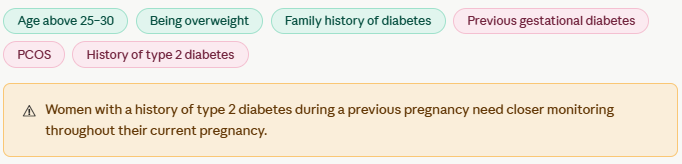
This section explains who is more likely to develop gestational diabetes. Knowing your risk factors helps you stay alert and take preventive steps early in your pregnancy.
Common Risk Factors
Age above 25 to 30 years
Being overweight
Family history of diabetes
Medical Risk Factors
Previous gestational diabetes
PCOS
History of type 2 diabetes pregnancy
Women with a history of type 2 diabetes during pregnancy need closer monitoring.
When to Get Tested for Gestational Diabetes
This section explains the right time to take a gestational diabetes test and why timing is important. Early testing helps detect the condition before it causes complications.
Standard Testing Time
Between 24 and 28 weeks of pregnancy
Early Testing Recommended If
You are overweight
You had gestational diabetes before
You have a history of type 2 diabetes pregnancy
Timely testing ensures better care for you and your baby.
Types of Gestational Diabetes Tests
This section explains the different tests used to diagnose gestational diabetes. It helps you understand what to expect during the process so you feel more comfortable and prepared.
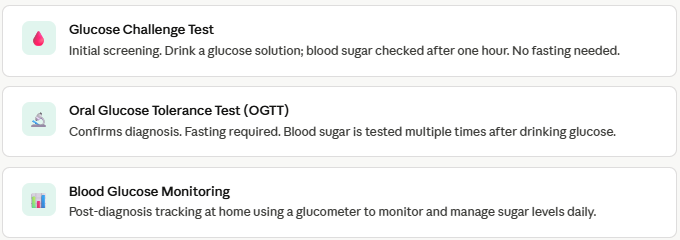
Gestational Diabetes Tests Overview
This table gives a quick and clear comparison of the main tests. It helps you easily understand their purpose and what happens during each test without feeling overwhelmed.
Test Name | Purpose | What to Expect |
Glucose Challenge Test | Initial screening to check for high blood sugar levels. | Drink a glucose solution and blood sugar is checked after one hour. No fasting needed. |
Oral Glucose Tolerance Test (OGTT) | Confirms gestational diabetes with detailed results. | Requires fasting. Blood sugar is tested multiple times after drinking glucose. |
Blood Glucose Test Pregnancy Monitoring | Tracks daily blood sugar after diagnosis. | Done at home using a glucometer to monitor and manage sugar levels. |
These tests are safe and commonly used during pregnancy to ensure timely diagnosis and proper care.
Gestational Diabetes Treatment & Management
This section focuses on how gestational diabetes can be managed through simple lifestyle changes and medical care. It reassures you that with the right steps, healthy outcomes are very achievable.
Lifestyle Management
Eating a balanced diet
Staying physically active
Monitoring weight
Medical Treatment
Insulin if required
Medication in some cases
Proper gestational diabetes treatment helps keep your pregnancy on track.
Low Blood Sugar Pregnancy Sign (Hypoglycemia)
This section explains what happens when blood sugar drops too low, which can sometimes occur during treatment. Recognizing these signs early helps you respond quickly and stay safe.
Symptoms Include
Dizziness
Sweating
Shaking
Confusion
Understanding a low blood sugar pregnancy sign can prevent complications.
Potential Complications If Untreated
This section highlights why managing gestational diabetes is important. It explains possible risks for both mother and baby if blood sugar levels are not controlled.
For the Baby
Higher birth weight
Early delivery
Risk of future diabetes
For the Mother
Higher chance of C-section
Increased risk of type 2 diabetes during pregnancy later
Timely care can greatly reduce these risks.
Prevention Tips for Gestational Diabetes
This section offers practical steps you can take to lower your risk. While not all cases can be prevented, healthy habits can make a big difference.
Before Pregnancy
Maintain a healthy weight
Eat nutritious food
During Pregnancy
Stay active
Attend regular checkups
Monitor weight gain
Small consistent steps can support a healthier pregnancy.
When to Consult a Doctor
This section guides you on when it is important to seek medical advice. Early consultation helps address concerns quickly and ensures better outcomes.
You should speak to a doctor if:
You notice symptoms of gestational diabetes
You have known risk factors
Your blood glucose test pregnancy results are abnormal
Conclusion
This section brings together all the key points discussed in the blog and reinforces the importance of awareness, early testing, and proper care. It helps readers feel informed, reassured, and prepared to manage gestational diabetes confidently.
Gestational diabetes can feel overwhelming at first, but with the right support and knowledge, it is manageable. By understanding the symptoms, risk factors, and testing process, you can take the right steps toward a safe and healthy pregnancy.