Hospitals
Anemia in Pregnancy and Its Impact on Maternal Health
Jul 9 • 7 min read
Table of Content
Anemia in Pregnancy WHO Classification
Causes of Anemia in Pregnancy
1. Iron Deficiency
2. Folate Deficiency
3. Vitamin B12 Deficiency
4. Multiple Pregnancy
5. Pre-existing Medical Conditions
Anemia in Pregnancy: 1st Trimester
Symptoms of Anemia
Iron Deficiency Anemia in Pregnancy
Maternal and Fetal Effects of Anemia
Impact on Maternal Health
Impact on Fetal and Newborn Health
How Is Anemia Diagnosed?
Anemia in Pregnancy Diet
Foods That Support Maternal Health
How to Increase Hemoglobin During Pregnancy
Treatment for Anemia in Pregnancy
Preventing Anemia During Pregnancy
The Role of
Conclusion
Pregnancy is tough on a woman's body. She requires a lot of nutrients and oxygen during this period. A big health problem during pregnancy is anemia. This happens when her blood doesn't have healthy red blood cells or hemoglobin to carry oxygen like it should.
Anemia is a condition where the body doesn't have healthy red blood cells or hemoglobin to move oxygen around properly. According to the World Health Organization many pregnant women over the world have anemia. Anemia is very common in pregnancy. The body needs red blood cells to transport oxygen.
Alarmingly, anemia is estimated to contribute to nearly 20% of all maternal deaths globally, making it a major public health concern. To reduce the risks of anemia it's crucial to find it early, have regular prenatal check-ups and monitor the pregnancy closely. This helps improve outcomes, for both the mother and the baby.
Anemia in Pregnancy WHO Classification
The WHO classifies anemia in pregnancy based on hemoglobin levels:
Severity Category | Hemoglobin (Hb) Level | Clinical Significance |
Normal | ≥ 11.0 g/dL | Healthy range for all trimesters. |
Mild Anemia | 10.0–10.9 g/dL | Requires dietary adjustment and routine iron supplementation. |
Moderate Anemia | 7.0–9.9 g/dL | Often warrants increased iron dosage; may require further testing. |
Severe Anemia | < 7.0 g/dL | Requires urgent medical evaluation and potential IV iron or blood transfusions. |
This chart helps healthcare providers assess severity and determine appropriate treatment.
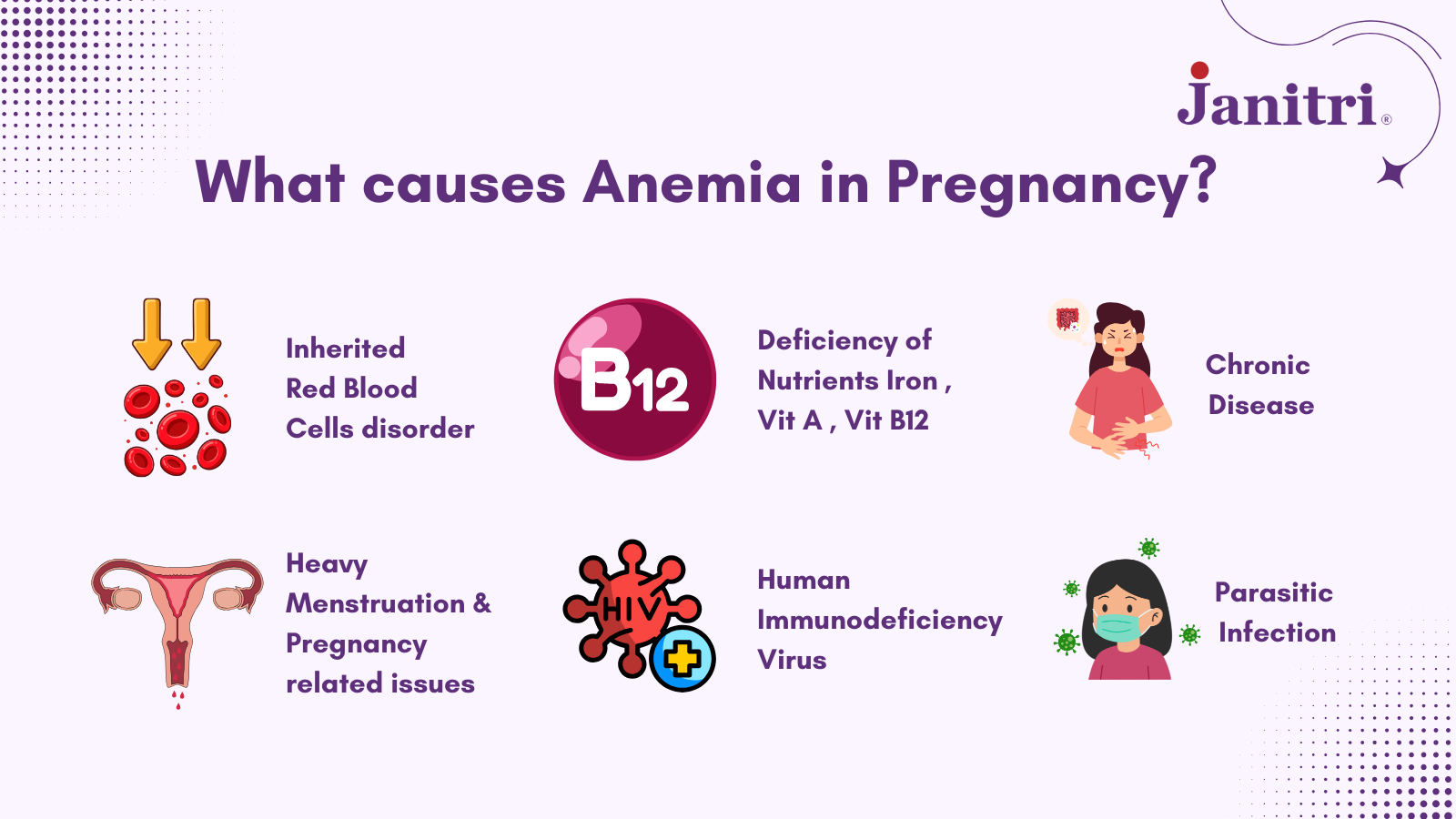
Causes of Anemia in Pregnancy
People often think about why they get anemia even when they are eating food. There are some reasons why anemia happens when a woman is pregnant. These are:
1. Iron Deficiency
This is the common reason for anemia all over the world. The body needs iron to make hemoglobin and to help the baby grow. In some pregnancies, doctors may recommend fetal monitoring to ensure the baby is receiving enough oxygen.
2. Folate Deficiency
Folate, which is also called Vitamin B9, helps the body make red blood cells. If you do not have folate you might get anemia and your baby might have some problems.
3. Vitamin B12 Deficiency
This is not as common. It is still important especially for women who do not eat a lot of different foods.
4. Multiple Pregnancy
If you are having twins or triplets your body needs nutrients.
5. Pre-existing Medical Conditions
If you already have some problems, like kidney disease, blood disorders that you were born with or chronic inflammation these can cause anemia.
Anemia in Pregnancy: 1st Trimester
A lot of women are surprised to learn that anemia can begin early in pregnancy. During the initial few months the symptoms of anemia may not be very bad and women might think they are just normal pregnancy symptoms.
It is really important to find out if you have low iron early on so you can stop anemia from getting worse later in the pregnancy. Doctors usually recommend a blood test when you first go see them to check your iron levels and make sure you are healthy.
Symptoms of Anemia
The symptoms of anemia when you are pregnant can be different depending on how bad it is, some common things that women notice include:
Persistent fatigue
Weakness
Dizziness
Headaches
Pale skin
Rapid heartbeat
Shortness of breath
Difficulty concentrating
Feeling unusually cold
Women who are pregnant often feel a lot more tired than they thought they would. If the symptoms of anemia get really bad you should go see a doctor away. Anemia in pregnancy is something that doctors can help with. It is good to talk to them about anemia and how it affects pregnancy.
Iron Deficiency Anemia in Pregnancy
Iron deficiency anemia in pregnancy happens when the body does not have iron to make enough hemoglobin. This is the common kind of anemia that women get when they are pregnant. Iron deficiency anemia in pregnancy can make women feel very tired. It can also reduce the amount of oxygen that gets to the baby. If iron deficiency anemia in pregnancy is not treated it can cause a lot of problems during pregnancy.
The American College of Obstetricians and Gynecologists and the World Health Organization say that women should get checked for iron deficiency anemia in pregnancy regularly. They also say that women should take iron supplements if they need them. Iron deficiency anemia in pregnancy is a deal and iron supplements can really help. The American College of Obstetricians and Gynecologists and the World Health Organization want to make sure that all women know about iron deficiency anemia, in pregnancy and how to prevent it.
Maternal and Fetal Effects of Anemia
Many women wonder if anemia can affect their baby. Yes it can, especially if it gets bad.
Impact on Maternal Health
Anemia during pregnancy can cause some problems, such as:
Feeling more tired
Not being able to do much physically
Getting sick easily
Might need a blood transfusion after giving birth
Requiring more time to recover after birth
Impact on Fetal and Newborn Health
Anemia can also affect the baby and newborn including:
The baby not developing well
The baby being born small
The baby being born early (preterm birth)
The baby not getting enough oxygen
Reduced oxygen delivery may also increase the risk of fetal distress in some pregnancies.
Persistent oxygen deprivation may contribute to fetal hypoxia, which requires prompt medical attention.
The newborn having more health problems
According to research supported by WHO and NIH stopping anemia helps to improve care results for mothers, babies and newborns.
How Is Anemia Diagnosed?
Anemia is usually found through blood tests. These tests are often done as part of a checkup. Here are some tests that might be done:
Hemoglobin level measurement
Complete blood count (CBC)
Iron studies
Ferritin testing (iron storage levels)
Vitamin B12 and folate evaluation when needed
Regular prenatal checkups can identify anemia before it gets serious. This is why pregnant women should go for prenatal checkups.
Anemia in Pregnancy Diet
A healthy diet for anemia during pregnancy often includes foods containing iron. You should also eat foods rich in vitamin C. This is because vitamin C helps your body absorb iron better.
Iron-Rich Foods | Vitamin C Sources |
Spinach | Oranges |
Lentils | Lemon |
Beans | Guava |
Lean meat | Tomatoes |
Eggs | Bell peppers |
Pumpkin seeds | Strawberries |
Foods That Support Maternal Health
There are some foods that're really good for mothers to eat. These foods include leafy vegetables, whole grains, nuts, seeds, and dairy products.Fruits that are rich in vitamin C are very good for you.
Doctors frequently recommend that mothers avoid drinking tea or coffee after eating foods that are rich in iron because foods that support maternal health like these can be affected by tea or coffee and they may reduce iron absorption.
How to Increase Hemoglobin During Pregnancy
A lot of families want to know how to make their low hemoglobin better in a way.
Steps that are often recommended to help with hemoglobin are
1. Take the iron supplements that the doctor tells you to take.
2. Eat foods that have a lot of iron in them every day.
3. Have some vitamin C when you eat meals to help with hemoglobin.
4. Go to the doctor for check ups when you are supposed to.
5. Drink a lot of water to stay hydrated and help with hemoglobin.
6. Listen to what the doctor says about taking vitamins or supplements to help with low hemoglobin.
You should always talk to a healthcare professional before you start taking any supplements to help with hemoglobin.
Treatment for Anemia in Pregnancy
The treatment for anemia in pregnancy is different for every woman. There are some things that doctors do to help women with anemia in pregnancy. These things include:
Taking iron pills
Taking folic acid supplements
Getting vitamin B12 shots when the doctor says it is necessary
Modifying the food you eat
Going to the doctor for regular checkups
In some rare cases you might have to go to the hospital or get suggested treatment.
Preventing Anemia During Pregnancy
It is better to try and prevent anemia before you even get pregnant. You should keep eating and exercising to prevent anemia when you are pregnant. Here are some tips to help you prevent.
Attend your appointments all the time.
You should follow the rules about what to eat when you're pregnant.
Take the vitamins that your doctor tells you to take.
Eat food that's good for you.
Check your hemoglobin levels a lot when you're pregnant.
If you start to feel bad or uneasy at any point of time, you should go to the doctor immediately.
The Role of Pregnancy Monitoring
Monitoring moms and babies health helps healthcare teams spot problems early and make care decisions.Pregnancy monitoring and fetal monitoring help healthcare teams spot problems early and make timely care throughout pregnancy. In hospitals, CTG monitoring is commonly used to evaluate fetal heart rate and uterine contractions during pregnancy. For example, healthcare providers use advanced monitoring solutions to track moms' health and baby's status during high-risk pregnancies. Solutions from Janitri support doctors with health data that help them make timely decisions and improve care coordination across moms, babies and newborns health settings.
Conclusion
Anemia in pregnancy is common. It should not be ignored. Understanding the causes and recognizing the symptoms of anemia in pregnancy, eating foods in iron and following treatment plans can help protect both moms and babies health. Regular prenatal visits, testing and pregnancy monitoring allow healthcare providers to detect hemoglobin early and respond before problems develop. With care most women with anemia, during pregnancy can have healthy outcomes for themselves and their babies.