Mothers
5 Signs Your Baby’s Fever Needs Immediate Medical Attention
Apr 24 • 6 min read
Table of Content
Understanding Fever in Babies: What’s Normal and What’s Not
A Quick Temperature Guide for Parents
The 5 Signs of Baby’s Fever That Need Immediate Medical Attention
1. Fever in a Newborn or Very Young Baby
3. Unusual Behavior or Reduced Responsiveness
4. Signs of Dehydration
5. Breathing Difficulty, Seizures, or Rash
Fever in Different Ages
When Should You Take Your Baby to the Doctor?
Why Trends Matter More Than Single Readings?
Practical Tips Every Parent Should Know
Conclusion
1. What temperature is dangerous for babies?
2. How long should fever last in babies?
3. What is the normal baby temperature armpit range?
4. How to know if baby fever is serious?
5. What are common warning signs of fever in child?
There is a moment almost every parent remembers. You place your hand on your baby’s forehead and pause. It feels warmer than usual. You check again, hoping it is just your imagination. Then comes the quiet spiral of questions. Is this normal? Should I wait? Or is this something serious?
Fever in babies is common. In fact, it is often the body’s natural way of fighting infection, a reflection of the infant immune response doing its job. But here is what makes it difficult: fever alone rarely tells the full story. What matters is how the fever behaves and what comes with it.
This is where most parents struggle. Not because they are careless, but because the line between “safe to monitor” and “needs immediate care” is not always obvious.
In this guide, we will walk through the 5 signs of baby’s fever that demand urgent attention, along with clear, medically grounded explanations so you know exactly what to do when it matters most.
Understanding Fever in Babies: What’s Normal and What’s Not
Before identifying danger, it helps to understand what fever really means.
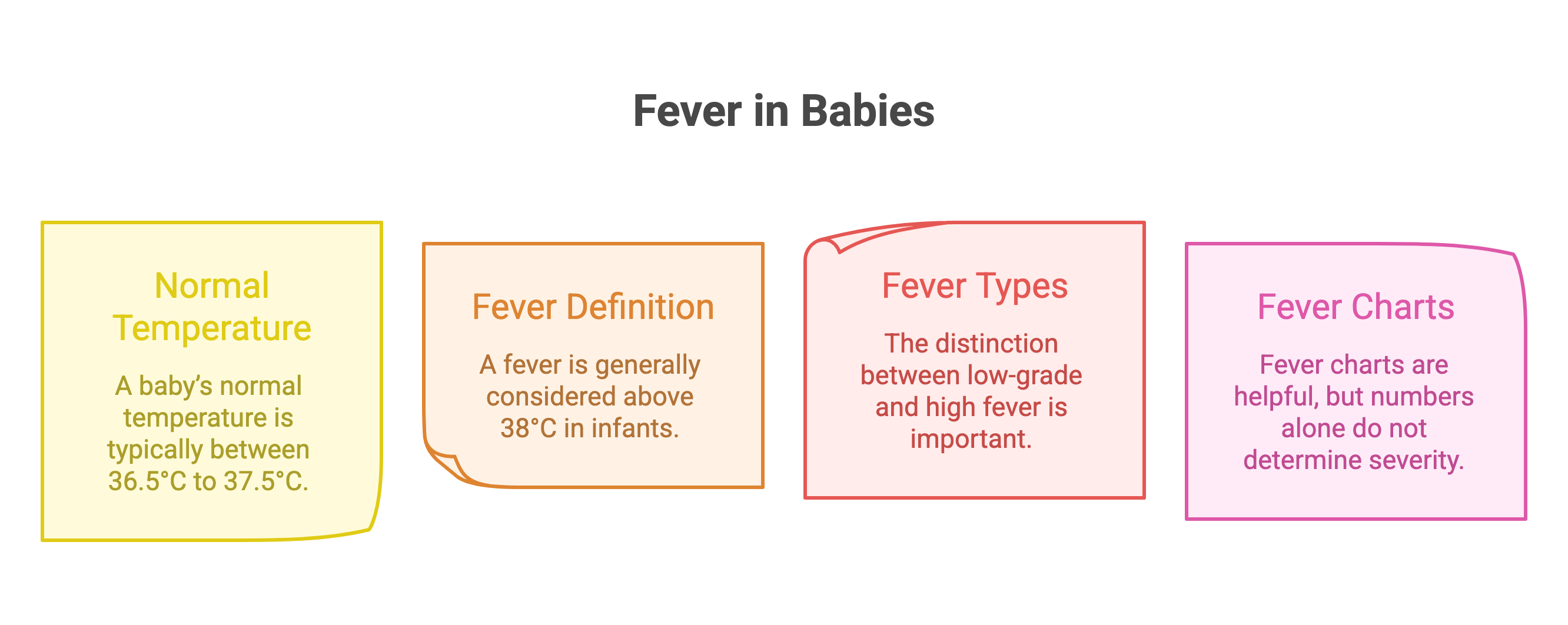
A baby’s normal temperature is slightly higher than an adult’s. The baby body temperature range typically falls between 36.5°C to 37.5°C when measured correctly. If you are checking under the arm, knowing the normal baby temperature armpit range is important because readings can be slightly lower than rectal measurements.Learning how to check baby temperature correctly can help avoid inaccurate readings.
A fever is generally considered:
Above 38°C in infants
But not all fevers are equal.
The distinction between low-grade vs high fever baby is important. A mild fever may simply indicate a viral infection, while a high fever in infants can sometimes signal something more serious, especially in younger babies.
Parents often search for a baby fever chart or a child fever temperature chart to make sense of numbers. These charts are helpful, but numbers alone do not determine severity. Behavior, duration, and accompanying symptoms matter just as much.
A Quick Temperature Guide for Parents
To simplify things:
Temperature Range | Category | What It Means | What You Should Do |
36.5°C – 37.5°C | Normal | Healthy baby body temperature range | No action needed |
37.6°C – 38°C | Mild fever | Early response of infant immune response | Monitor and ensure hydration |
38°C – 39°C | Moderate fever | Common in infections | Observe baby fever symptoms, track regularly |
Above 39°C | High fever | Possible serious infection | Consult doctor |
Any fever in <3 months | Critical | High risk | Immediate medical attention |
If you are wondering what temperature is dangerous for babies, the answer depends on age. In newborns, even a slight fever is significant. In older infants, persistence and associated symptoms are more important than the number alone.Sometimes, babies may feel warm even without fever, so understanding why your baby feels hot without a fever can prevent unnecessary concern.
The 5 Signs of Baby’s Fever That Need Immediate Medical Attention
Fever becomes concerning when it is accompanied by specific warning signs. These are not rare edge cases. They are clinically recognized pediatric emergency signs that require prompt evaluation.
1. Fever in a Newborn or Very Young Baby
This is one of the most critical 5 signs of baby’s fever.
If your baby is under 3 months old, even a single fever reading is taken seriously. The immune system at this stage is still developing, and infections can escalate quickly.
Look for:
Subtle signs of fever in newborn
Poor feeding
Unusual sleepiness
These may also overlap with infection symptoms in newborns, which are often not dramatic but still dangerous.
What to do: Seek medical attention immediately. Do not wait for the fever to rise further.
2. Persistent or Rising Fever
A fever that does not settle or keeps increasing is another key indicator.
Parents often ask, how long should fever last in babies? Most mild viral fevers resolve within 2 to 3 days. If it continues beyond that or worsens, it may indicate persistent fever in infants.
Watch for:
Fever lasting more than 48–72 hours
Fever that returns after subsiding
Increasing temperature despite medication
This is one of the clearest 5 signs of baby’s fever that should not be ignored.
What to do: Consult a pediatrician, especially if the fever trend is upward.
3. Unusual Behavior or Reduced Responsiveness
Sometimes, the thermometer shows less than what the baby’s behavior reveals.
Changes such as:
Extreme irritability
Lethargy
Weak or unusual crying
These fall under baby fever symptoms that indicate the body is struggling.
In clinical settings, such behavior is often linked to more serious febrile conditions in babies, where the infection or inflammation is affecting overall functioning.
What to do: Trust behavioral changes as much as temperature readings. Seek evaluation if your baby is not acting like themselves.
4. Signs of Dehydration
Fever increases fluid loss. Babies, especially younger ones, can become dehydrated quickly.
Common dehydration signs in babies include:
Fewer wet diapers
Dry lips and mouth
No tears while crying
Sunken soft spot (fontanelle)
This is one of the 5 signs of baby’s fever that often gets overlooked until it becomes severe.
What to do: Ensure frequent feeding and hydration. If signs persist, consult a doctor immediately.
5. Breathing Difficulty, Seizures, or Rash
This is the most urgent category among the 5 signs of baby’s fever.
Watch for:
Rapid or labored breathing
Bluish lips or skin
Seizures (febrile seizures)
Unusual rash
These are classic signs baby fever needs medical attention and fall under pediatric emergency signs.
What to do: Seek emergency care without delay.
Fever in Different Ages
A fever symptoms in 5 month old baby may look very different from those in a newborn.
Newborns: Subtle, high risk
3–6 months: More visible symptoms but still vulnerable
Older infants: Better immune response, but still require monitoring
Understanding this helps parents better interpret the 5 signs of baby’s fever across stages.
When Should You Take Your Baby to the Doctor?
If you are unsure when to take baby to doctor for fever, use this as a guide:
Situation | Should You See a Doctor? |
Baby under 3 months with fever | Yes, immediately |
Fever > 2–3 days | Yes |
High fever in infants (>39°C) | Yes |
Presence of 5 signs of baby’s fever | Urgent |
Unsure if serious | Always safer to consult |
Parents often ask how to know if baby fever is serious. The honest answer is: it is rarely one symptom, but a combination of patterns.
Why Trends Matter More Than Single Readings?
One of the biggest challenges parents face is not detecting fever, but understanding its progression.
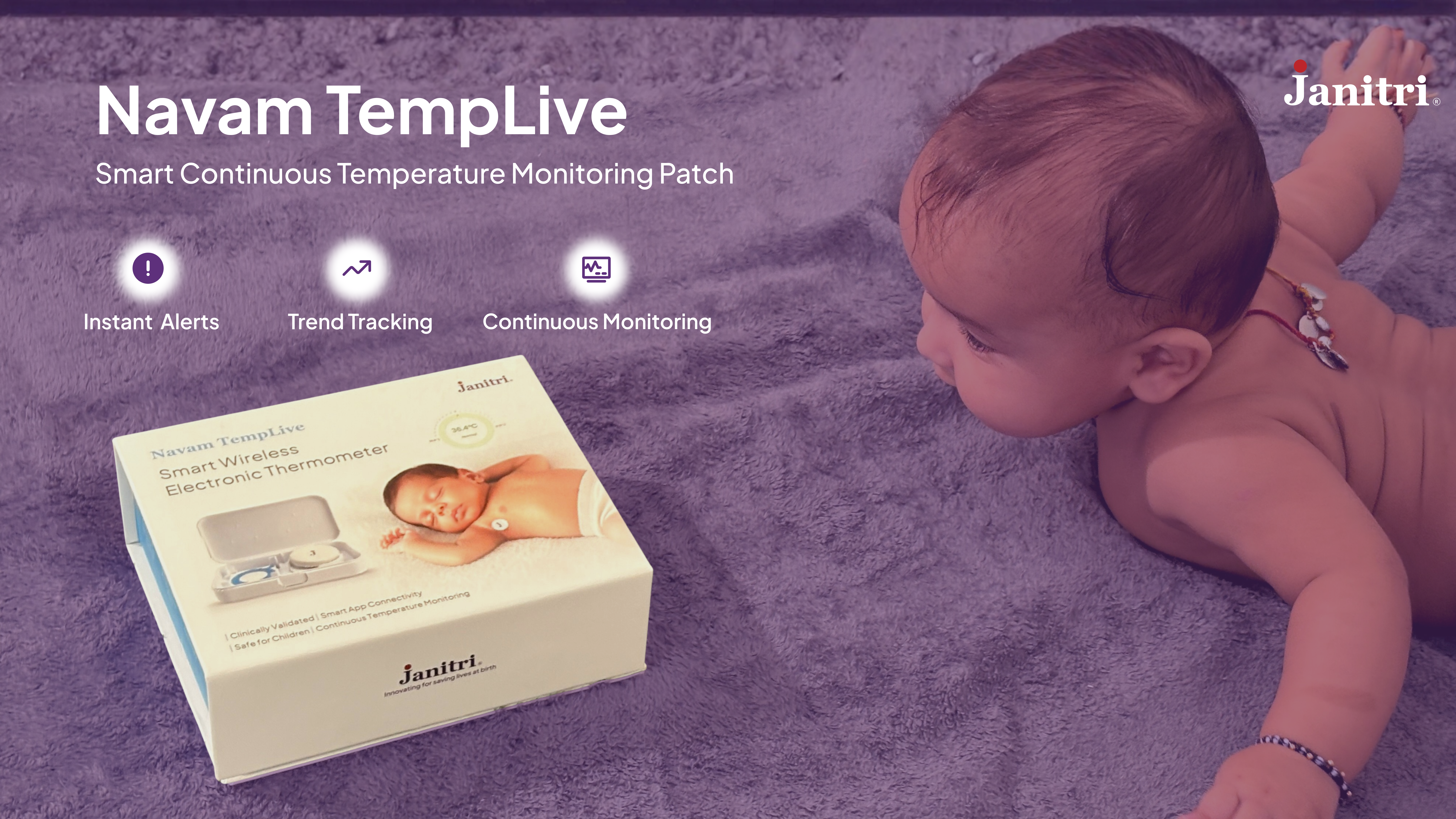
Checking temperature every few hours can miss important changes, especially at night. This is where continuous baby temperature monitoring can provide clarity. Solutions like Navam TempLive allow caregivers to track temperature trends over time rather than relying on isolated readings.
The value here is not convenience alone, but early detection of patterns such as persistent fever in infants or sudden spikes, which are part of the 5 signs of baby’s fever.
Practical Tips Every Parent Should Know
Always use a reliable thermometer and consistent method
Track temperature along with symptoms, not separately
Keep your baby hydrated during fever episodes
Avoid overmedicating without medical advice
Observe behavior as closely as temperature
If needed, refer to how to manage baby fever safely at home for supportive care steps.
Conclusion
Fever, by itself, is not the enemy. It is often a sign that the body is working to protect itself. But knowing the 5 signs of baby’s fever that indicate something more serious can make all the difference.
What separates reassurance from risk is awareness. Not panic, not guesswork, but informed observation.
When parents understand what to look for, they move from uncertainty to confidence. And in those moments when action is needed, they are ready.
FAQs
1. What temperature is dangerous for babies?
In newborns, any fever above 38°C is concerning. In older babies, high or persistent fever combined with symptoms is more important than the number alone.
2. How long should fever last in babies?
Most fevers resolve within 2 to 3 days. Longer duration may indicate persistent fever in infants and requires evaluation.
3. What is the normal baby temperature armpit range?
Typically between 36.5°C and 37.5°C, though slightly lower than core body measurements.
4. How to know if baby fever is serious?
Look for the 5 signs of baby’s fever, including behavior changes, dehydration, and breathing difficulty.
5. What are common warning signs of fever in child?
Persistent high fever, poor feeding, lethargy, dehydration, and abnormal breathing are key warning signs of fever in child.