Mothers
Baby Fever at Night: Home Care Tips Every Parent Should Know
Mar 13 • 5 min read

Table of Content
1. Stay Calm, Your Baby Feels Your Energy
2. Keep Your Baby Comfortable, Not Overwrapped
3. Focus on Hydration and Feeding
5. Use Fever Medicines Only When Advised
6. Watch the Baby, Not Just the Thermometer
7. Trust Your Instincts as a Parent
Key Take Away
A Final Thought From One Parent to Another
The first time my baby had a fever, I remember staring at the thermometer longer than I should have.
It read 100.4°F.
I knew, logically, that fever is common in babies. Paediatricians say it often means the body is fighting an infection. But when it’s your baby, logic becomes very small compared to the wave of worry that follows.
I touched his forehead again. Then his neck. Then I checked the thermometer once more just to be sure it hadn’t made a mistake.
That night taught me a lot about caring for a baby with a fever, not just medically, but emotionally. Over time, through conversations with paediatricians and my own experiences, I learned that the goal at home isn’t to panic or aggressively “fight” the fever. It’s to monitor, comfort, and stay attentive to your baby’s needs.
If you’re a parent going through this right now, here are the home care tips that truly helped me.
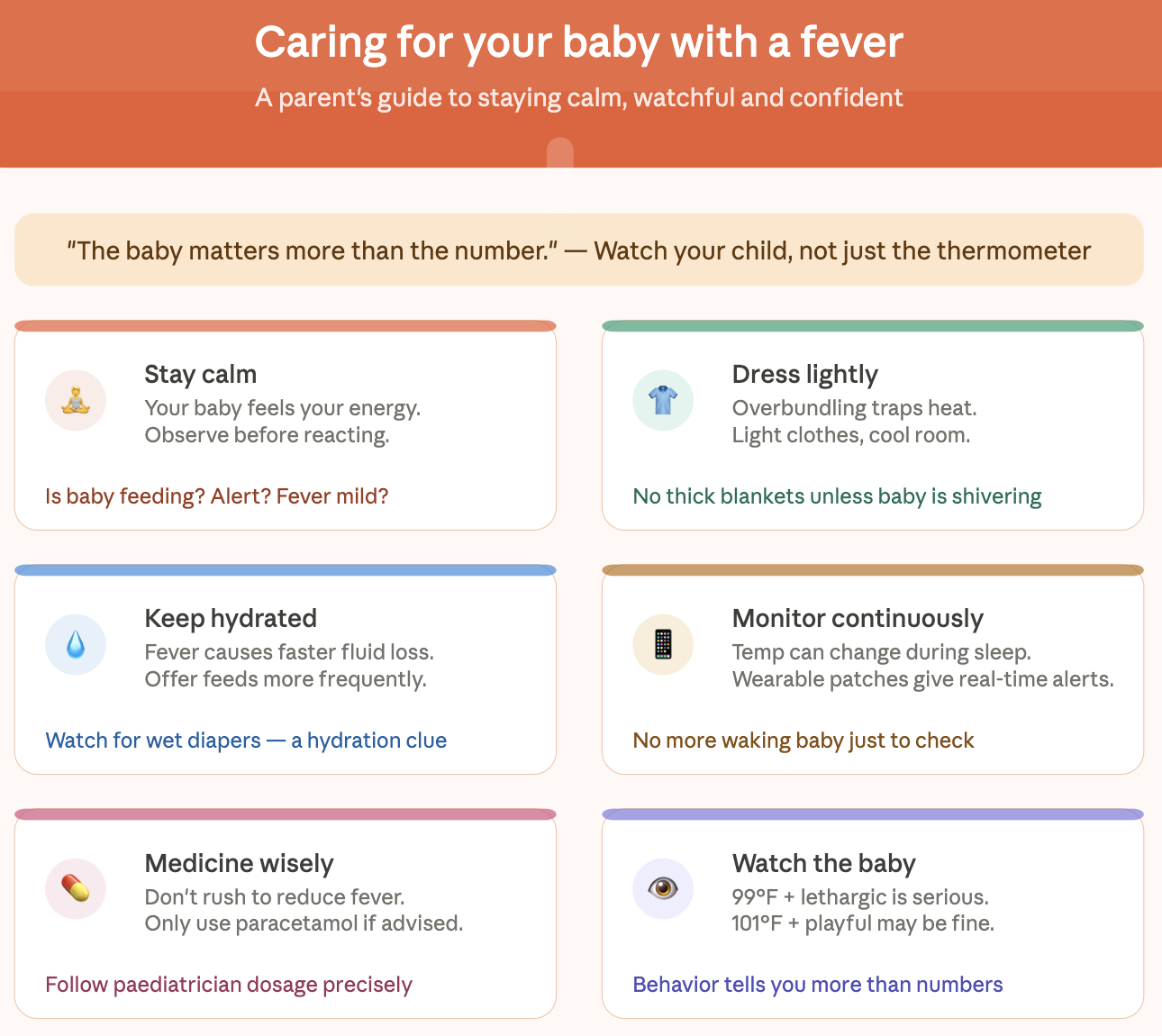
1. Stay Calm, Your Baby Feels Your Energy
Babies sense when we are anxious. The first thing I had to learn was to slow down.
A mild fever is often the body’s natural response to infections. In many cases, the baby may still feed, sleep, and behave normally.
Instead of rushing into panic mode, I learned to observe:
Is my baby feeding well?
Are they responsive and alert when awake?
Is the fever mild or rising?
Staying calm doesn’t mean ignoring the fever. It means watching carefully without assuming the worst immediately.
2. Keep Your Baby Comfortable, Not Overwrapped
My instinct that first night was to wrap my baby in blankets. It felt like the caring thing to do.
But our paediatrician explained something important: overbundling can actually trap heat and worsen fever.
What worked better was:
Dressing the baby in light, breathable clothing
Keeping the room comfortably cool
Avoiding thick blankets unless the baby is shivering
Comfort matters more than trying to “sweat out” the fever.
3. Focus on Hydration and Feeding
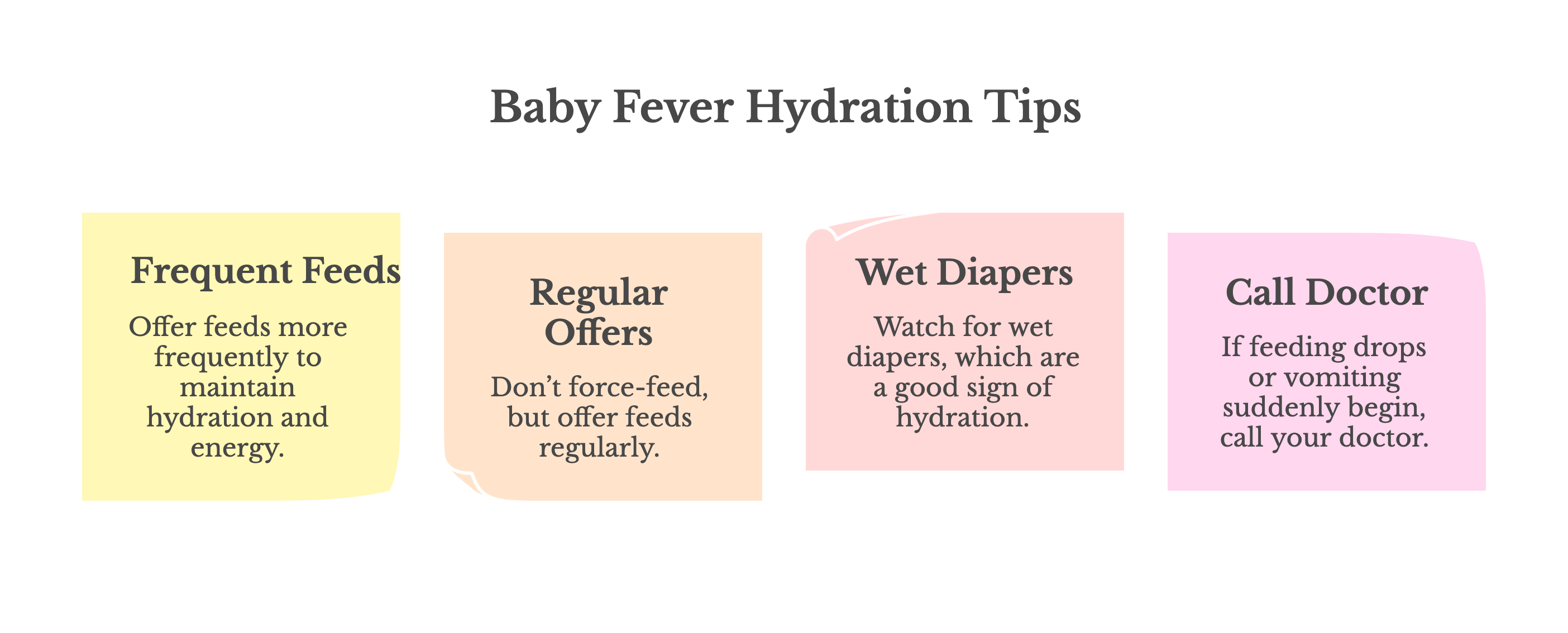
When babies have a fever, they can get dehydrated faster.
Even if my baby was fed for shorter periods, I made sure to offer feeds more frequently. Breast milk or formula helps maintain hydration and energy.
Some things I kept in mind:
Don’t force-feed, but offer feeds regularly
Watch for wet diapers (a good sign of hydration)
If feeding drops or vomiting suddenly begin, call your doctor
Small things like this often tell you more than the temperature number itself.
4. Monitor the Fever Because It Can Change Quickly
One of the most stressful parts of baby fever is uncertainty.
You check the temperature… and then you wonder what happens when you’re not checking.
That was exactly what worried me the most at night.
Babies can’t tell us when they feel worse. Their temperature can rise between checks, and waking them repeatedly to measure it isn’t ideal either. I found myself checking the thermometer again and again, worried I might miss something.
Later, I learned about continuous temperature monitoring, which made a big difference in how confidently I could manage fever at home.
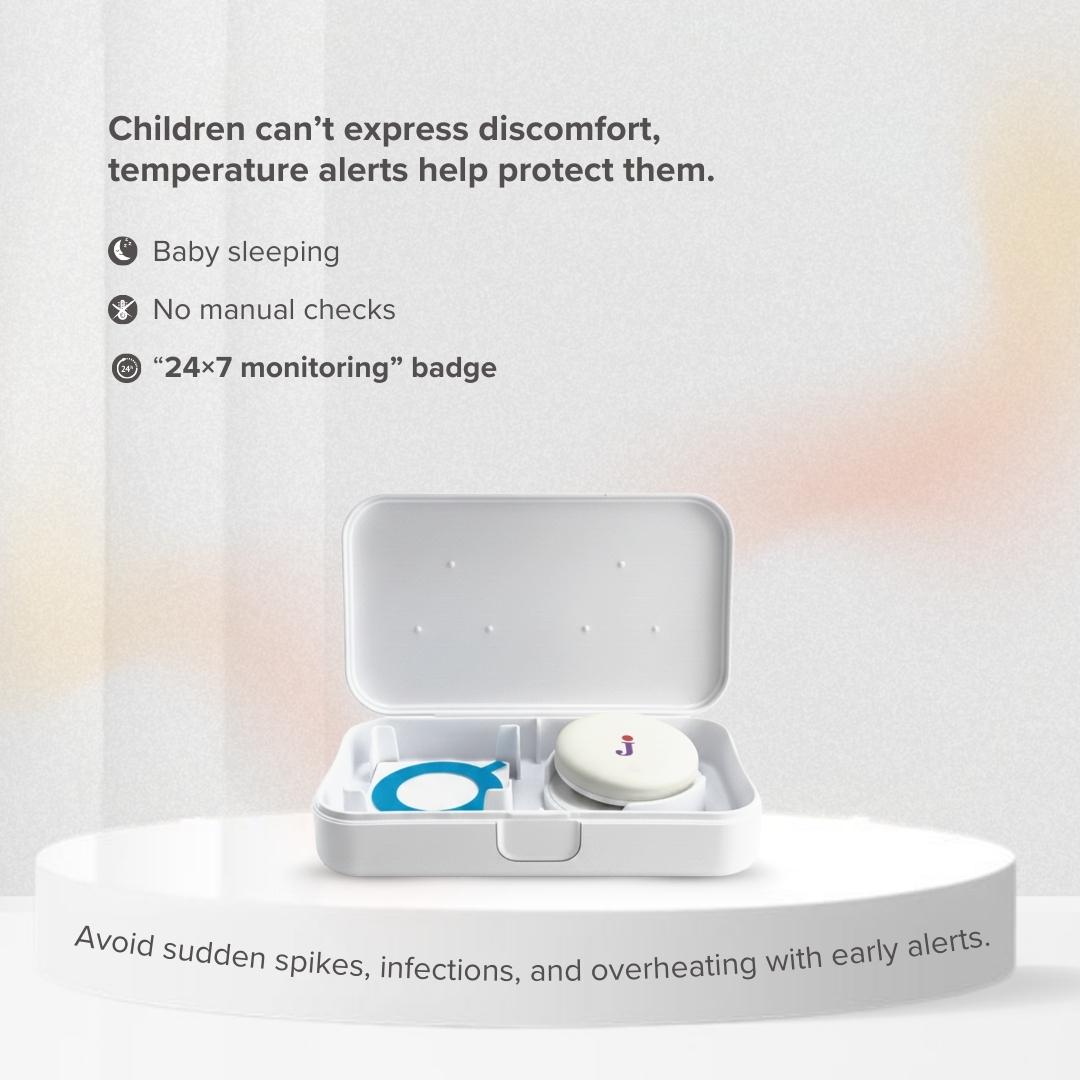
Devices like Navam TempLive, a soft wearable patch, allow real-time body temperature monitoring while your baby rests. Instead of repeatedly disturbing their sleep, parents can follow temperature trends through a simple app on their phone.
What reassured me most was the ability to notice changes early. It can even alert parents if the temperature crosses a certain threshold, allowing them to respond quickly without constantly checking manually.
For many families today, tools like a wearable temperature monitor are becoming part of newborn health monitoring, especially during illness or vaccinations.
For me, the biggest relief was simple: I no longer felt like I had to stay awake every minute just to make sure my baby was okay.
5. Use Fever Medicines Only When Advised
One of the biggest mistakes parents sometimes make is rushing to reduce the fever immediately.
But fever itself is not always the enemy. It’s the body’s defence mechanism.
Paediatricians usually recommend medication like paracetamol only when:
The baby is uncomfortable
The fever crosses a certain threshold
A doctor specifically advises it
Always follow your paediatrician’s dosage guidance, because babies require very precise dosing.
6. Watch the Baby, Not Just the Thermometer
This is something a paediatrician once told me that has stayed with me forever:
“The baby matters more than the number.”
Sometimes a baby with 101°F might still be feeding and playing.
Another baby with 99°F might be unusually lethargic.
It also helped me learn the baby fever warning signs that require medical attention, such as:
Difficulty breathing
Persistent vomiting
Extreme irritability or unusual sleepiness
Refusing feeds
Fever in babies younger than 3 months
If any of these appear, don’t wait. Contact your doctor immediately.
Being informed about these signs is part of growing parenting health awareness, something every new parent gradually learns through experience.
7. Trust Your Instincts as a Parent
One thing no one talks about enough is parental instinct.
That quiet voice in your mind that says something feels different, it’s worth listening to.
Doctors rely on parents’ observations because we spend the most time with our babies. If something doesn’t feel right, it’s always okay to reach out to your paediatrician for reassurance.
No question is silly when it comes to your child’s health.
Key Take Away
Monitor fever trends, not just a single reading.
A baby’s temperature can change quickly, which is why regular checks or tools that allow continuous temperature monitoring can help parents track fever patterns and respond early if the temperature rises.
Know the warning signs and trust your instincts.
Watch for symptoms like difficulty breathing, persistent vomiting, unusual sleepiness, or refusal to feed. If these appear, contact your doctor immediately because a parent’s observation is often the first step in protecting a baby’s health.
A Final Thought From One Parent to Another
The night my baby first had a fever felt endless.
I checked his temperature more times than I can count. I watched him breathe while he slept. I googled things I probably shouldn’t have.
But over time, I realized something important: fever doesn’t mean you have to face the night helplessly.
With attentive care, guidance from your paediatrician, and safe ways to monitor your baby’s temperature, you can navigate these moments with more confidence.
And sometimes, what helps the most is simply knowing that many parents have been exactly where you are, sitting beside a sleeping baby, hoping the morning comes soon.
It always does.
And most of the time, our babies wake up smiling again.
Nothing scares a mother more than feeling her baby burn with fever — and nothing comforts her more than seeing that temperature slowly come down.