Mothers
Why Premature Babies Are at Higher Risk of Hypoxia
Apr 24 • 6 min read
Table of Content
What Is Hypoxia in Newborns?
Looking a bit deeper:
1. Underdeveloped Lungs
2. Immature Breathing Control
3. Unstable Oxygen Regulation
4. Immature Blood and Oxygen Transport System
Normal vs Risky Oxygen Levels in Premature Babies
Hypoxia Effects on Premature Babies
Short-term effects:
Long-term effects (in-depth):
How Hypoxia Is Managed in Premature Babies
Real-Life Insight for Parents
Role of Hypoxia in Pregnancy and Premature Birth
Deeper factors include:
How Parents Can Help Prevent and Manage Hypoxia
Daily observation checklist:
Environmental factors to consider:
When monitoring becomes important:
What Doctors Monitor Beyond Oxygen Levels
Conclusion: Small Awareness, Big Impact
Introduces hypoxia in newborns and explains why premature babies are more vulnerable. Builds emotional connection with parents while highlighting the importance of early awareness and proactive care. When a baby arrives earlier than expected, everything can feel uncertain. You may find yourself watching every breath, every tiny movement, wondering if everything is okay.
One concern that often comes up is hypoxia in newborns, a condition where oxygen levels drop below what the body needs.For premature babies, this risk is higher because their bodies are still learning to function independently outside the womb. The good news is that with awareness and the right care, most complications can be managed effectively.
What Is Hypoxia in Newborns?
Oxygen is essential for your baby’s growth and development. Every organ in the body relies on a steady supply of oxygen to function properly, especially the brain.
Hypoxia in newborns occurs when oxygen levels fall below what the body needs to stay healthy.
Looking a bit deeper:
Oxygen is carried through the blood by hemoglobin and delivered to different parts of the body. In premature babies, this process is not always efficient because:
Hemoglobin levels may be lower
Oxygen binding can be less effective
Delivery of oxygen to organs can be uneven
As a result, even small drops in oxygen levels can have a greater impact compared to full-term babies.
Clinical studies suggest that reduced oxygen supply can affect how cells produce energy and, if it continues for longer periods, may lead to inflammation and tissue damage.
Why Premature Babies Are More Prone to Hypoxia
The biological and developmental reasons that increase the risk of hypoxia in premature babies, focusing on immature lungs, breathing control, and oxygen regulation.
Premature babies are still in an important stage of development when they are born. Inside the womb, the placenta supplies oxygen continuously, so the baby does not need to breathe on their own. After birth, the body must quickly adapt to breathing and maintaining oxygen levels independently.
For premature babies, this transition is more challenging because several systems are not fully developed yet.
Lungs may not be mature enough to exchange oxygen efficiently, making breathing more difficult.
The brain’s control over breathing can be irregular, leading to pauses in breathing or uneven patterns.
Oxygen transport in the blood may not be as efficient, affecting how oxygen reaches vital organs.
Regulation of oxygen levels is less stable, causing sudden drops, especially during sleep or feeding.
Because these systems are still developing and not fully coordinated, premature babies are more likely to experience fluctuations in oxygen levels. This is why they have a higher risk of developing hypoxia and often require closer monitoring and care.
1. Underdeveloped Lungs
In full-term babies, the lungs are coated with surfactant that helps air sacs stay open. In premature babies:
Surfactant is insufficient
Air sacs collapse more easily
Gas exchange is reduced
This condition is often called Respiratory Distress Syndrome.This directly limits oxygen intake and increases hypoxia risk.
2. Immature Breathing Control
The brain controls breathing rhythm automatically. In premature infants:
Signals may be inconsistent
Breathing pauses can occur
Recovery after pauses may be slow
These repeated cycles are known as intermittent hypoxia, and studies show they can affect neurological development over time. (PubMed)
3. Unstable Oxygen Regulation
Premature babies often experience:
Rapid drops and rises in oxygen levels
Delayed stabilization
Increased sensitivity to environmental changes
Even routine activities like feeding or crying can temporarily affect oxygen levels.
To know about Signs of Low Oxygen in Babies
4. Immature Blood and Oxygen Transport System
Premature infants often have:
Lower red blood cell counts
Higher fetal hemoglobin levels
Reduced oxygen-carrying efficiency
This means oxygen delivery to tissues is not just about breathing, but also about how well oxygen is transported and utilized.
Normal vs Risky Oxygen Levels in Premature Babies
Oxygen Level (SpO2) | Interpretation | Recommended Action |
95% to 100% | Stable | Routine care |
92% to 94% | Borderline | Close monitoring |
88% to 91% | Concerning | Medical advice needed |
Below 88% | Severe hypoxia | Immediate care |
Important nuance:
Premature babies in NICU may have slightly different target ranges depending on their condition. Doctors often individualize these targets to balance oxygen supply and avoid complications.
Hypoxia Effects on Premature Babies
Hypoxia is not just about a momentary drop in oxygen. It is about how often and how long those drops happen.
Short-term effects:
Irregular breathing patterns
Increased heart rate variability
Feeding fatigue
Long-term effects (in-depth):
Neurodevelopmental delays due to reduced oxygen to the brain
Chronic lung conditions such as bronchopulmonary dysplasia
Retinopathy of prematurity due to oxygen imbalance
How Hypoxia Is Managed in Premature Babies
Managing hypoxia in premature babies focuses on one key goal: keeping oxygen levels stable while supporting the baby’s developing body.
In the hospital, doctors closely monitor oxygen levels using continuous devices. Based on the baby’s condition, they may provide:
Oxygen therapy to increase oxygen levels in the blood
CPAP support to help keep the airways open and make breathing easier
Ventilator support in more serious cases where the baby needs help breathing
Care is very carefully controlled because both low and excessively high oxygen levels can be harmful for premature babies.
Once the baby is stable and at home, management continues through:
Regular pediatric check-ups
Observing breathing patterns and feeding behavior
Monitoring when recommended by a doctor
In some cases, continuous monitoring solutions can help track oxygen levels and alert caregivers to sudden changes, especially during sleep when fluctuations are harder to notice.
The overall approach is to detect changes early, respond quickly, and support healthy development over time.
Treatment Overview
Method | Clinical Role | Key Benefit |
Oxygen Therapy | Improves saturation | Immediate stabilization |
CPAP | Maintains airway pressure | Prevents lung collapse |
Ventilator | Supports breathing | Critical care support |
Monitoring | Tracks fluctuations | Early intervention |
Real-Life Insight for Parents
One of the most challenging parts for parents is that hypoxia is not always visible.
A baby may appear calm and comfortable, but oxygen levels can still fluctuate internally. This is especially true during sleep.
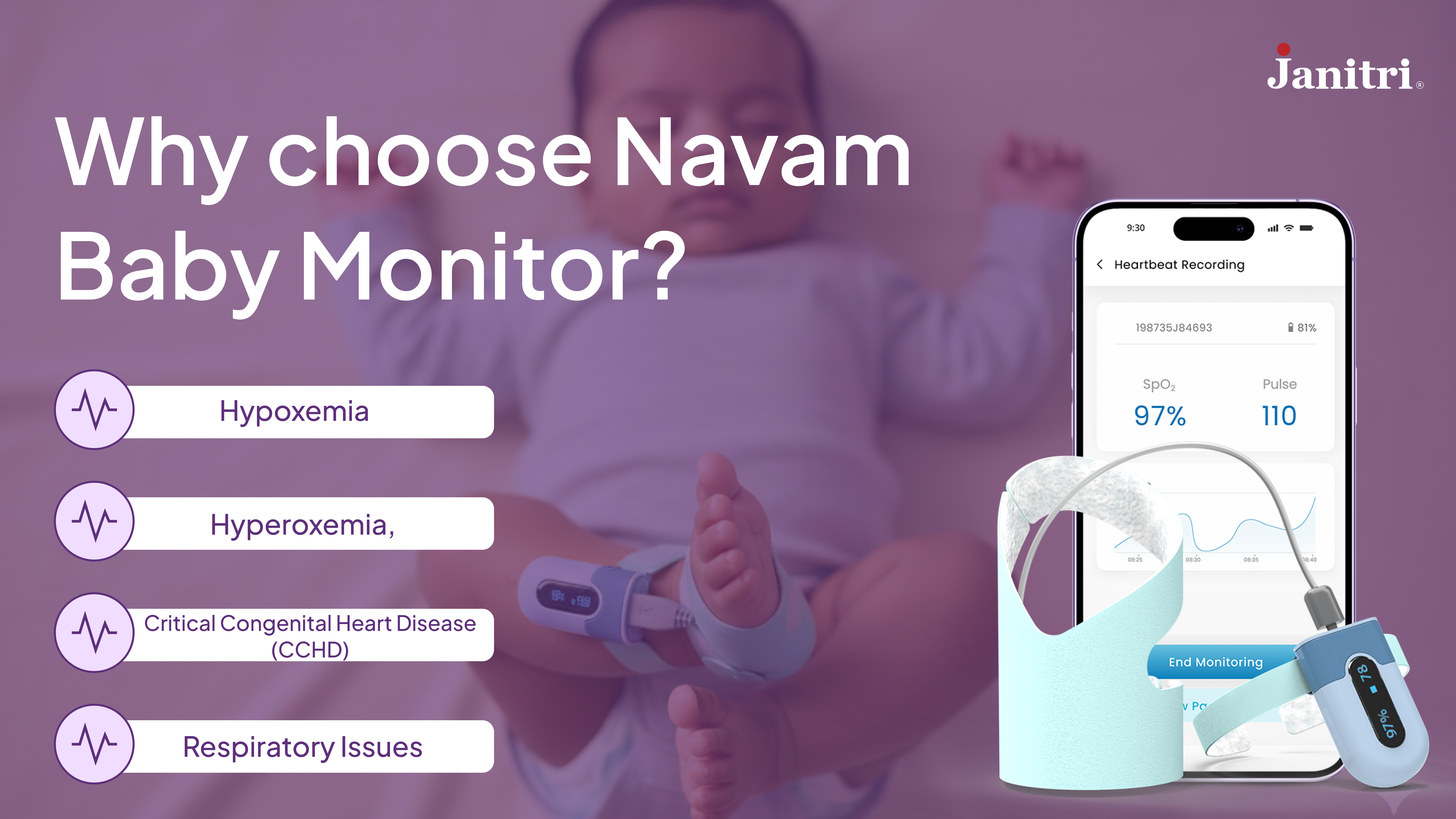
Continuous monitoring solutions like Navam Baby Monitor help bridge this gap by:
Tracking oxygen levels in real time
Alerting caregivers to sudden drops
Providing trends that can be shared with doctors
This does not replace medical care. It supports informed and timely decisions at home.
Role of Hypoxia in Pregnancy and Premature Birth
Hypoxia in pregnancy can influence how a baby develops even before birth.
Deeper factors include:
Placental insufficiency reducing oxygen transfer
Maternal conditions affecting blood flow
Chronic fetal stress leading to early delivery
How Parents Can Help Prevent and Manage Hypoxia
Taking care of a premature baby can feel overwhelming, but small, consistent observations can make a big difference. Being aware of everyday changes helps in early detection and timely action.
Daily observation checklist:
Is breathing smooth and regular
Watch for pauses, rapid breathing, or unusual patterns, especially during sleep.Is skin color consistent
Look for any bluish tint around the lips or fingertips, which may indicate low oxygen.Is feeding effort normal
Notice if your baby gets tired quickly while feeding or struggles to suck and swallow.
Environmental factors to consider:
Maintain a comfortable room temperature
Avoid extremes, as both overheating and cold stress can affect breathing.Avoid overcrowded sleeping environments
Ensure your baby has enough space for proper airflow.Ensure safe sleep positioning
Place your baby on their back to sleep, as recommended for better breathing support.
When monitoring becomes important:
If your baby was born premature
If there were NICU complications
If your pediatrician recommends oxygen or breathing monitoring
In such cases, closer observation or continuous monitoring can help detect changes early and provide peace of mind for parents.
What Doctors Monitor Beyond Oxygen Levels
Doctors do not rely on oxygen levels alone. They also assess:
Heart rate variability
Respiratory rate
Blood gas levels
Sleep patterns
This comprehensive monitoring helps identify patterns that may not be obvious in a single reading.
Conclusion: Small Awareness, Big Impact
Caring for a premature baby comes with questions and concerns. That is completely natural.
The important thing to remember is:
Hypoxia is manageable
Early detection improves outcomes
You play a key role in observation and care
With the right knowledge and support, your baby has a strong chance to grow and thrive.