Mothers
Wearable Baby Thermometer Comparison 2026 Is it Actually Worth?
Jul 24 • 6 min read
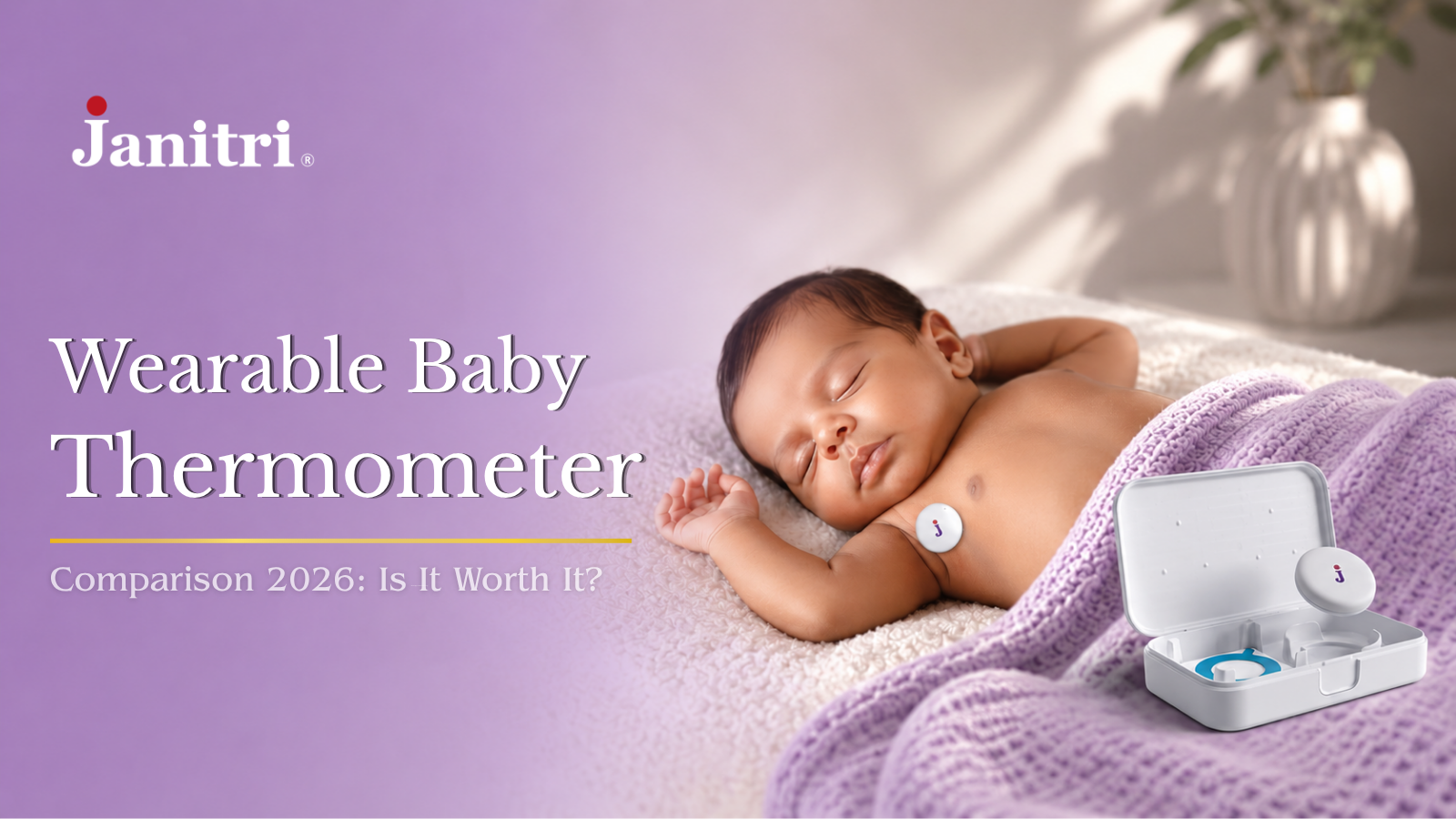
Table of Content
What a
What Actually Separates a Good One From the Rest
Placement and comfort
Battery life and replacement
App reliability
Availability and support where you live
Skin safety certification
Wearable Baby Thermometer Comparison
Price Comparison: What You'll Actually Pay
Note on Accuracy
Conclusion
Frequently Asked Questions
If you've spent any time researching baby health gadgets lately, you've probably come across the newer category of wearable thermometers, small patches that stick under a baby's arm and track temperature continuously, instead of giving you one reading at a time. They show up under a few different names: smart baby thermometer, wearable fever monitor, continuous temperature patch. Different branding, same basic idea.
The question most parents actually want answered isn't "what is this," though. It's simpler than that: is it actually worth buying, and which one should I get?
This guide compares how these devices generally work, what separates a good one from a gimmick, and where a purpose-built option like Navam TempLive fits into the picture especially for parents in India, where availability, support, and pricing can look very different from the mostly US-focused brands you'll find in a quick Google search.
What a Wearable Baby Thermometer Actually Does
Every device in this category works on the same basic principle. A small, soft sensor patch sits against the baby's skin, usually under the arm, and stays there for hours at a time. Instead of a single reading, it sends temperature data to a paired phone app continuously, often every 30 seconds to a couple of minutes and triggers an alert if the reading crosses a threshold you've set.
The appeal is straightforward. You're not waking a sleeping baby to check with a manual thermometer, and you're not relying on remembering to test every hour during an illness. The device handles the watching; you get told when something needs attention.
Where these products differ is in the detail and the details matter more than the marketing copy usually suggests.
What Actually Separates a Good One From the Rest
Before comparing specific products, it helps to know what to actually look for, since most of these devices look nearly identical in photos.
Placement and comfort
Underarm placement is generally considered the most practical and skin-safe option for continuous wear on an infant. Chest placement exists on some models too, but underarm tends to be gentler for extended wear.
Battery life and replacement
Some wearables use single-use, disposable patches (meaning an ongoing cost every time you use one). Others use a reusable sensor with replaceable coin-cell batteries and disposable adhesive stickers only, which tends to work out cheaper over time if you'll use it regularly rather than just during one illness.
App reliability
A continuous monitor is only as useful as its alert system. Bluetooth range, connection stability, and whether the app actually pushes a real-time notification (versus requiring you to open the app to check) vary a lot between brands.
Availability and support where you live
This is the detail most comparison articles skip. A well-reviewed US brand sounds appealing until you factor in international shipping costs, warranty support that doesn't apply outside its home market, and no local customer service if something goes wrong.
Skin safety certification
Since this touches a newborn's skin for hours at a time, hypoallergenic, medical-grade adhesive matters not just "safe for adults" labeling repurposed for babies.
Wearable Baby Thermometer Comparison
VAVA | Momcozy T31 | TempTraq | Navam TempLive (Janitri) | |
Placement | Underarm | Underarm | Underarm | Underarm (axillary) |
Sensor type | Reusable, silicone patch | Reusable, 3M hypoallergenic sticker | Single-use, fully disposable | Reusable sensor, replaceable CR2025 battery |
Battery life | Up to 24 hours per charge | Up to 180 hours | Single 24-hour patch (72-hour version available) | Up to 180 days (approx. 8 hrs/day use) |
Connectivity | Bluetooth app | Bluetooth app | Bluetooth app | Bluetooth Low Energy, Janitri for Mothers app |
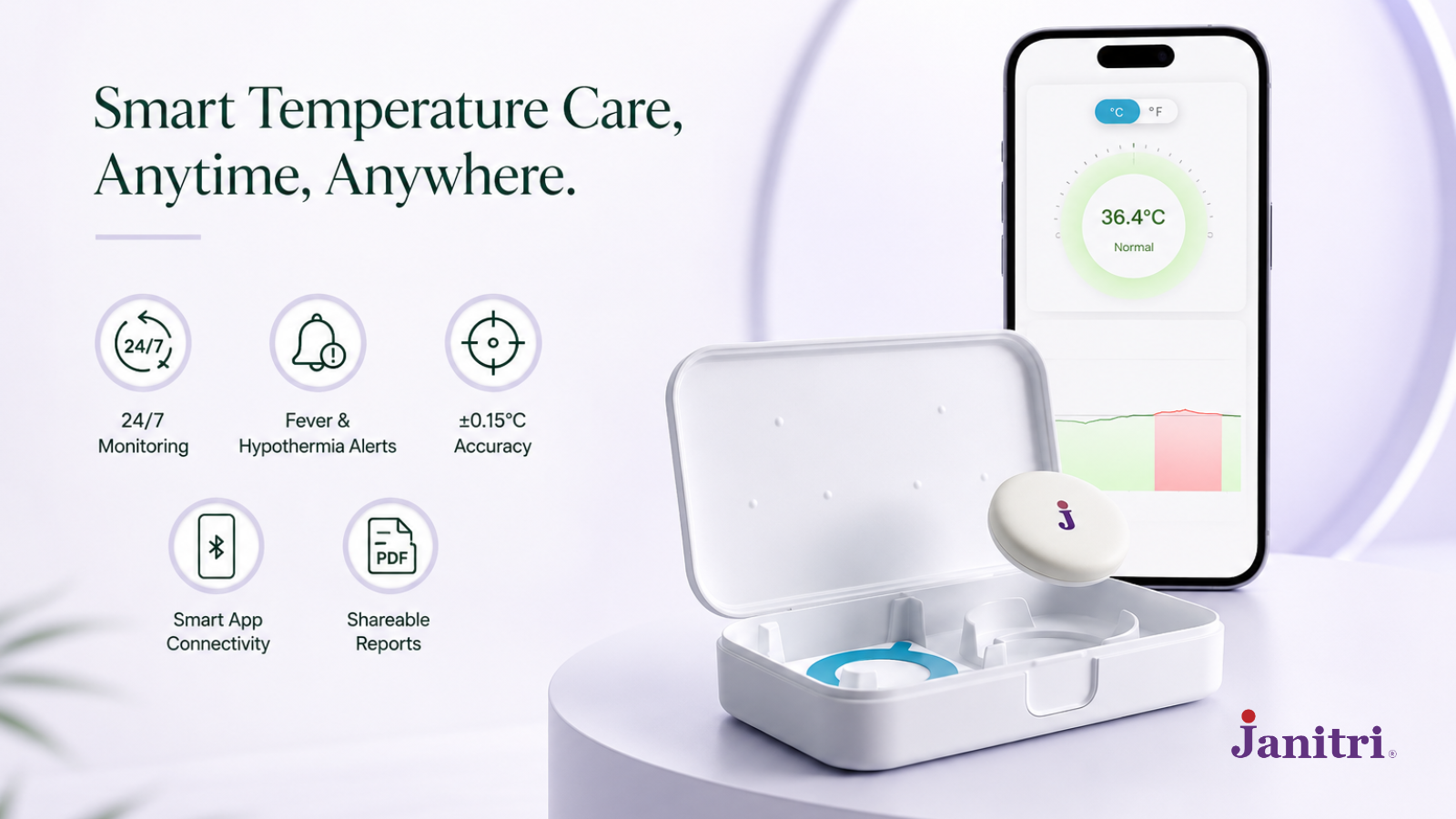
Alerts | Fever threshold alerts | Fever threshold alerts, temperature trend charts | Fever threshold alerts | Instant alerts for both fever and low temperature (hypothermia) |
Reports for doctors | Limited | Temperature trend charts in app | Limited | Live graphs, session summaries, PDF report export |
Availability & support in India | Imported, limited local support | Imported, limited local support | Not readily available in India | Built and supported for the Indian market, same-day delivery in Bengaluru |
A few things worth calling out honestly: disposable-patch brands can be more convenient for a single short illness, since there's no device to maintain. Reusable options like Navam TempLive tend to make more sense if you expect to use it repeatedly over the first year, since the ongoing cost is just the adhesive stickers rather than the whole sensor.
Price Comparison: What You'll Actually Pay
Wearable baby thermometers aren't priced the same way across brands. Some are a one-time device purchase; others charge per use. The table below reflects listed retail pricing as of July 2026, converted to INR at approximately ₹87 per USD. Exchange rates and retail prices change, so treat the INR figures as directional rather than exact.
Product | List Price (USD) | Approx. Price (INR) | Pricing Model |
VAVA Smart Baby Thermometer | $79.99 (frequently discounted to $39.95 to $60) | Approx. ₹3,470 to ₹6,960 | One-time device purchase, reusable |
Momcozy Smart Baby Thermometer (T31) | $44.99 | Approx. ₹3,915 | One-time device purchase, reusable, disposable stickers sold separately |
TempTraq (24-hour patch) | $19.99 to $24.99 per single-use patch | Approx. ₹1,740 to ₹2,175 per use | Fully disposable, a new cost every time |
Navam TempLive | ₹3,990 (Device plus 20 adhesive stickers included) | N/A | One-time device purchase, reusable sensor, replaceable battery |
Is a Wearable Baby Thermometer Worth Buying?
A Baby thermometer earns its cost in specific situations rather than for every household. It tends to be worth it when:
A parent is managing nights alone and can't realistically wake up every hour or two to check manually
The baby has been unwell recently and the parent wants ongoing reassurance without constant manual checks
A fever has previously spiked between checks and gone unnoticed longer than felt safe
The parent wants a trend log to show a pediatrician, rather than relying on memory
If the baby is healthy and the parent is comfortable with occasional manual checks, a good rectal or forehead thermometer remains a reasonable choice on its own. A wearable thermometer solves a specific problem; it isn't a mandatory newborn purchase.
Note on Accuracy
It's worth setting expectations correctly here. Wearable monitors placed under the arm are measuring surface/axillary temperature, which is a solid tool for spotting trends and catching a rising fever early but it isn't a direct substitute for a rectal reading when you need a precise number for a medical decision. Think of it as an early-warning layer. If an alert fires, that's the moment to take a proper spot reading and go from there, the same way you'd act on any other fever sign.
Conclusion
Wearable baby thermometers aren't a replacement for the thermometer you already trust they're a different tool solving a different problem, mainly the exhausting, unreliable gap between manual checks. If that gap is something you're actually dealing with, it's worth comparing the options properly rather than buying whichever one shows up first in a Google search.
Compare specs and pricing for Navam TempLive →
Frequently Asked Questions
Are wearable baby thermometers accurate enough to replace a regular thermometer?
Not entirely. They're strong for continuous trend monitoring and catching changes early, but a rectal or validated forehead reading is still the better tool for a precise number during an active decision, like deciding whether to call a doctor.
How long can a baby safely wear a temperature patch?
This depends on the specific device and adhesive. Navam TempLive's patch is designed for extended comfortable wear, including through sleep and feeding, but stickers are single-use and should be replaced after each monitoring session per the manufacturer's guidance.
Is it better to buy a disposable-patch thermometer or a reusable one?
It depends on how often you'll use it. Disposable patches can suit a single short illness, but if you expect to monitor regularly over the first year, a reusable sensor with replaceable stickers, like Navam TempLive, is typically more cost-effective over time.
Do these devices work without Wi-Fi?
Most, including Navam TempLive, connect via Bluetooth directly to your phone rather than requiring home Wi-Fi, so they work as long as your phone is nearby.
Why should I consider an India-specific brand over an international one?
Beyond the price difference, local availability means faster delivery, warranty support that actually applies to your region, and customer service that understands local buying and shipping realities details that matter more once something needs replacing or troubleshooting.