Mothers
Can Teething Really Cause Fever?
Apr 24 • 4 min read
Table of Content
Typical Infant Teething Symptoms
Signs That It’s Not Just Teething
There’s a very specific kind of anxiety that comes with parenting an infant, the kind that begins with a warm forehead and a quiet question in your mind: “Is this normal… or is something wrong?”
Teething often enters the picture around the same time babies become more vulnerable to infections. The overlap is not coincidental, and it’s where confusion begins. A slightly irritable baby, excessive drooling, disturbed sleep and then a temperature that feels just a bit higher than usual. Many parents instinctively connect the dots and assume teething fever is the cause.
But here’s where experience, evidence, and careful observation matter more than assumptions.
What Parents Mean by “Teething Fever”
When parents talk about teething fever, they are usually describing a mild rise in temperature that happens around the time a tooth is about to erupt. It’s important to define this clearly, because the term itself can be misleading.
A baby’s normal body temperature range typically falls around 36.5°C to 37.5°C. During teething, some babies may show a slight increase, which many describe as a low-grade fever in babies. This is often temporary and subtle.
However, the critical distinction is this:
Teething fever is not a true fever.
If the temperature crosses 38°C (100.4°F), it is no longer considered fever due to teething. At that point, medical guidelines shift your attention toward possible illness. Knowing the difference between feeling warm and actual fever in babies can help parents avoid confusion.
Can Teething Cause Fever Or Is That a Myth?
Let’s address this directly, because it’s one of the most searched and misunderstood questions:
Can teething cause fever? Does teething cause fever in the clinical sense?
The answer, based on pediatric evidence, is no.
Teething can cause:
Slight temperature elevation
Increased fussiness
Local discomfort from gum irritation in infants
But it does not cause:
High fever
Persistent fever
Systemic illness
When parents report fever during teething, what’s often happening is a coincidence. Around 6 months of age, a baby’s immune response is still developing, and maternal antibodies begin to decline. This is also when babies explore the world orally, putting hands, toys, and fabrics into their mouths, making them more exposed to infections.
So when you notice teething and fever together, it’s understandable to connect them. But medically, they are often separate processes happening at the same time.
Understanding Teething Symptoms vs Illness
A large part of managing teething fever concerns lies in distinguishing between normal teething symptoms and signs of illness.
Typical Infant Teething Symptoms
Excessive drooling and teething behavior
Chewing on objects or fingers
Mild baby irritability causes linked to gum discomfort
Slight sleep disturbance in babies
Reduced interest in solids
Visible gum swelling or tenderness
These are consistent with signs of teething, even in younger infants. Some parents report teething at 3 months or even earlier, though true eruption usually occurs closer to 6 months. Still, signs of teething 3 months or signs of teething 4 months, like chewing and drooling, can appear earlier without actual tooth eruption. Even concerns like 2 month old teething or questions like when does a newborn start teething often stem from these early oral behaviors rather than true teething.
Signs That It’s Not Just Teething
When evaluating infection vs teething symptoms, watch for:
Temperature above 38°C
Persistent or worsening fever
Cough, cold, vomiting, or diarrhea
Rash beyond the face
Refusal to feed (not just solids, but liquids too)
Unusual lethargy
These are not explained by teething symptoms fever patterns and require medical attention. If your baby develops a confirmed fever, it’s important to understand how to manage baby fever safely at home.
Why the Confusion Around Teething Fever Happens?
From a clinical standpoint, the confusion around does teething cause temperatures comes from timing and perception.
Teething creates inflammation in the gums. This localized inflammation can lead to a very slight increase in body temperature. At the same time, babies are developmentally at a stage where infections become more common.
To a parent, the sequence feels connected:
Baby becomes irritable
Sleep worsens
Drooling increases
Temperature rises
It feels logical to label it as fever due to teething, but medically, we must separate correlation from causation.
What Pediatric Fever Guidelines Recommend
According to standard pediatric fever guidelines:
Below 38°C: Monitor, observe behavior, ensure hydration
Above 38°C: Treat as fever, not teething
Above 39°C: Seek medical evaluation
The key is not just the number, but the pattern. A transient, mild rise may align with teething fever, but a sustained or rising temperature does not. This is where understanding how to measure baby temperature accurately at home becomes important.
Practical, Evidence-Based Tips for Parents
Focus on the whole baby, not just the thermometer
A mildly warm baby who is playful and feeding well is very different from one who is lethargic and irritable.Track patterns, not isolated readings
Temperature trends over time matter more than a single reading.Support comfort during teething
Use safe methods like gum massage or chilled (not frozen) teethers to ease gum irritation in infants.Don’t attribute everything to teething
This is one of the most common clinical oversights. If symptoms extend beyond typical infant teething symptoms, reassess.Understand your baby’s baseline
Knowing your baby’s usual behavior helps you detect subtle changes early.
The Role of Continuous Monitoring
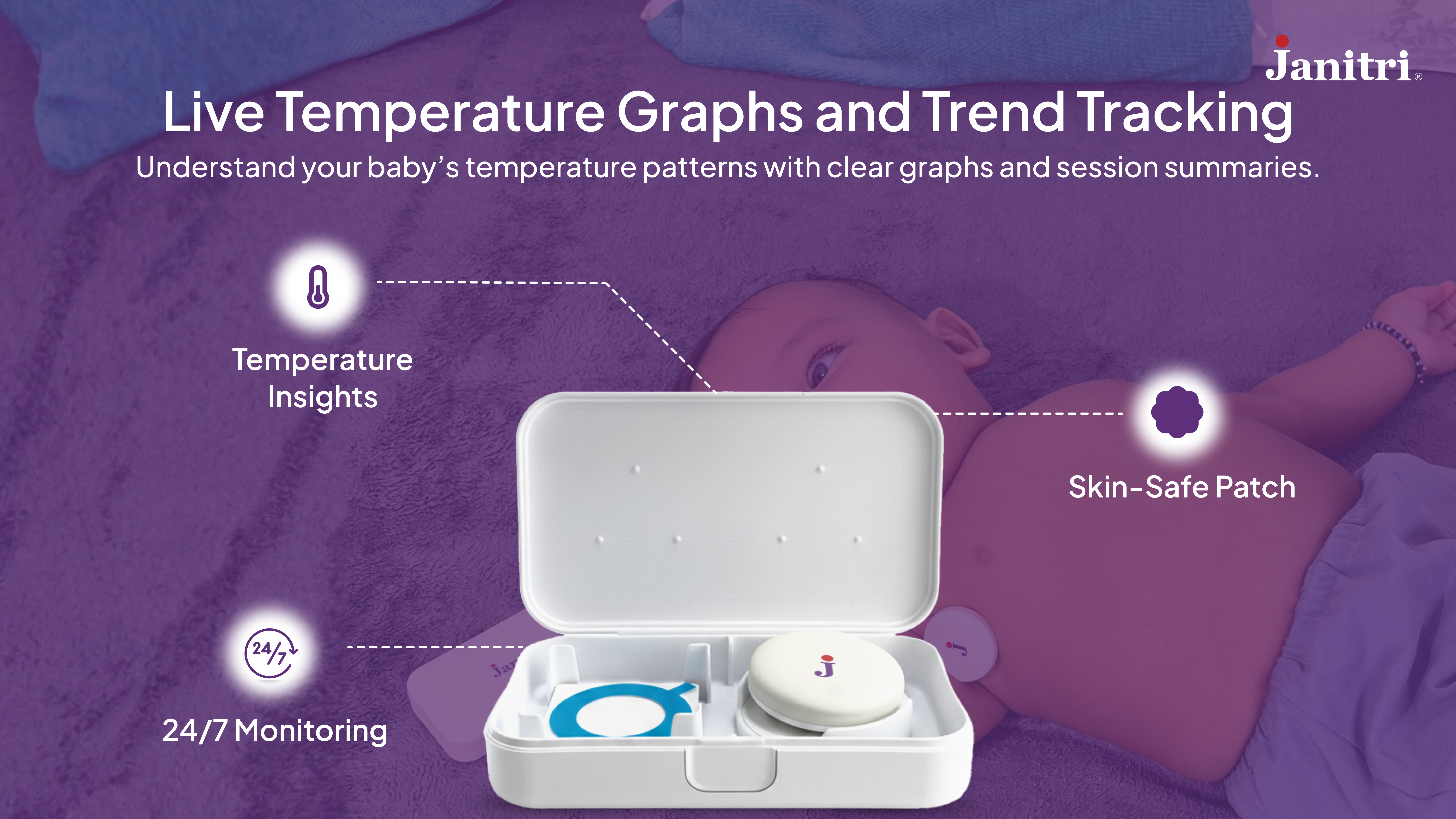
In recent years, there has been growing awareness around continuous temperature tracking in infants, not as a replacement for clinical judgment, but as a support tool.
Devices like Navam Templive offer the ability to monitor trends rather than isolated readings. This becomes particularly useful during phases like teething, where uncertainty is high and symptoms overlap. Many parents now prefer continuous baby temperature monitoring to better understand these patterns.
The value is not in the device itself, but in what it enables:
clarity over time, instead of guesswork in the moment.
Conclusion
Teething is often blamed because it’s visible; we see the drooling, the chewing, the discomfort. But fever is different. It is the body signaling something deeper.
So when you wonder about teething fever, pause and ask a more precise question:
Is this mild discomfort from a tooth coming in, or is my baby’s body responding to something else?
That distinction, quiet but critical, is what protects your child.
And as with most things in parenting, when in doubt, trust both your observation and your instinct, but let evidence guide your next step.