Mothers
When Does Morning Sickness Start?
Jun 11 • 6 min read
Table of Content
Key Takeaways
What Is Morning Sickness?
When Does Morning Sickness Usually Start?
Morning Sickness Timeline at a Glance
When Did Other Mothers Start Feeling Morning Sickness?
Why Does Morning Sickness Start So Early?
Pregnancy Hormones Begin Rising
Increased Sensitivity to Smells and Foods
Digestive Changes
Can Morning Sickness Start Before a Positive Pregnancy Test?
Is Morning Sickness a
Is It Normal Not to Have Morning Sickness?
What Does Morning Sickness Feel Like?
How to Reduce Morning Sickness Naturally
When Is Morning Sickness a Sign of Something More Serious?
Conclusion
Frequently Asked Questions
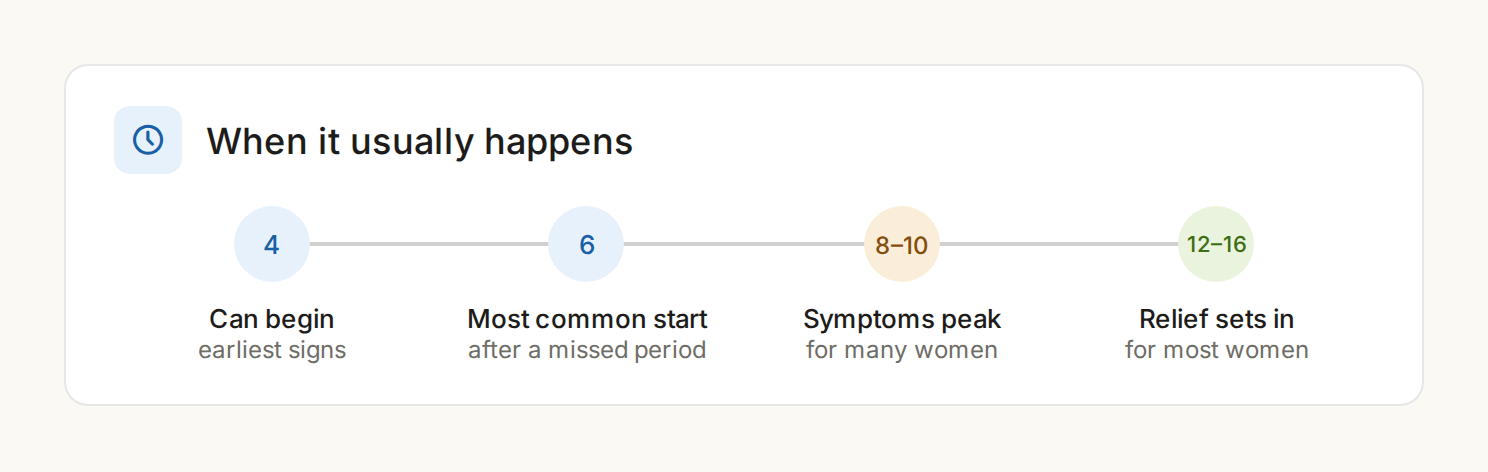
Morning sickness usually shows up between weeks 4 and 7. Week 6 is the most common starting point. It tends to be at its worst around weeks 8 to 10, and for most women it eases off somewhere between weeks 12 and 16.
"If I'm pregnant, shouldn't I be feeling sick by now?"
It's a question I hear all the time, usually in those first few weeks, sometimes even before a woman has had her first scan. And the honest answer? It depends. A few notice morning sickness as early as four weeks. Others feel nothing until week six or seven. Some never feel sick at all and go on to have a beautifully healthy pregnancy.
There just isn't one timeline that works for everyone. But once you know roughly when morning sickness tends to begin, why it happens, and how it shifts week by week, the first trimester stops feeling so scary.
Key Takeaways
Morning sickness can begin as early as week 4.
Most women first feel it around week 6.
Symptoms usually peak between weeks 8 and 10.
It can hit at any time of day, not only the morning.
Some women never feel sick, and that's perfectly healthy too.
What Is Morning Sickness?
It’s simply, morning sickness is the nausea, queasiness, or vomiting that often comes with pregnancy, mostly in the first trimester. The name is a little unfair, though. It can show up in the morning, halfway through the afternoon, late at night, or honestly, all day long.
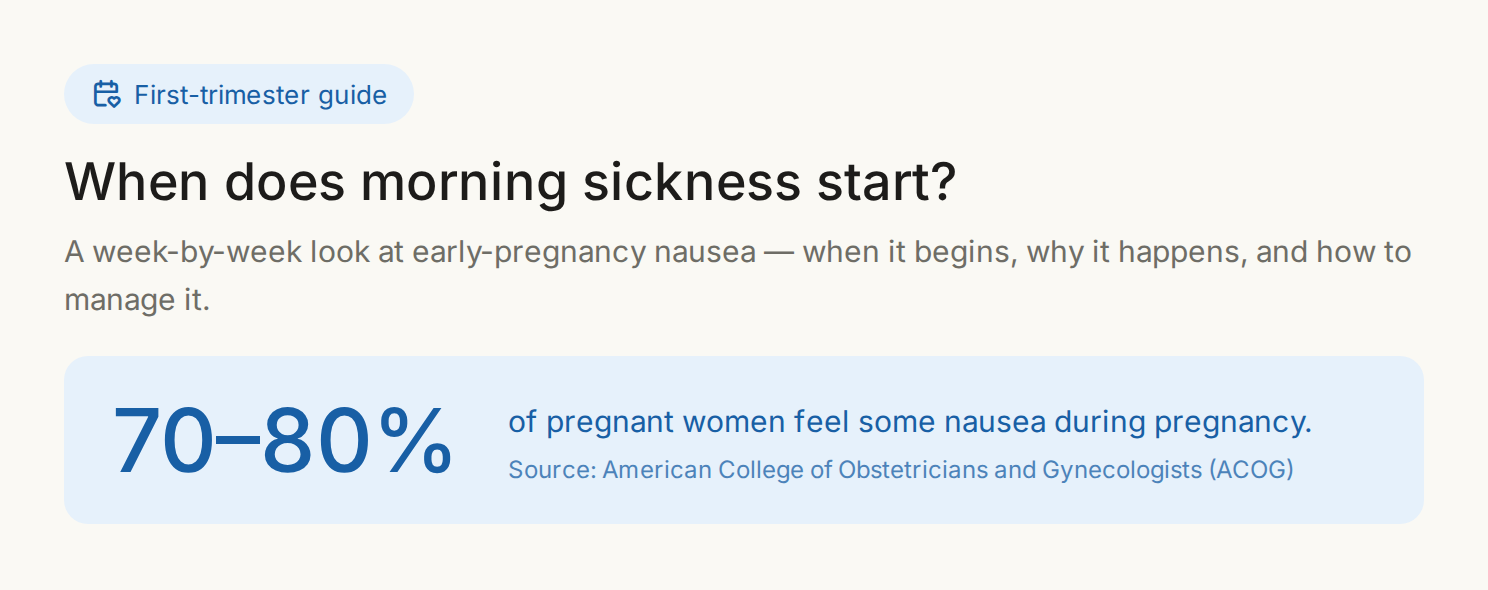
The American College of Obstetricians and Gynecologists (ACOG) says about 70 to 80% of pregnant women feel some nausea. It's actually and serious issue. But in most cases it's just the body reacting to the rush of hormonal changes in early pregnancy.
When Does Morning Sickness Usually Start?
For most women, it starts between weeks 4 and 7. Week 6 is the one that comes up again and again, and it usually hits soon after a missed period.
Morning Sickness Timeline at a Glance
Pregnancy Week | What You May Experience |
Week 4 | Mild nausea, food aversions, a sharper nose for smells |
Week 5 | Nausea that comes and goes, plus tiredness |
Week 6 | Symptoms start to feel more obvious |
Week 7–8 | Nausea and vomiting ramp up |
Week 9–10 | The peak for many women |
Week 11–14 | Things slowly start to settle |
Week 14–16 | Most women finally get real relief |
There's a reason for this pattern. Research from the National Institutes of Health found that nausea rises right alongside hCG, and hCG levels hit their high point around weeks 9 to 10.
When Did Other Mothers Start Feeling Morning Sickness?
A big part of the confusion is that no two experiences look the same, and that's true even for the same woman across different pregnancies.
In the clinic, I hear lines like:
"I felt sick before I'd even taken a test."
"Mine started right at six weeks, almost to the day."
"I was only ever queasy in the evenings."
"Neither of my pregnancies made me sick at all."
Every one of those is completely normal.
The biggest myth I keep bumping into is that your symptoms should match someone else's. They almost never do. When morning sickness shows up, how rough it gets, and how long it hangs around can swing wildly from one woman to the next, and sometimes even between two pregnancies in the same woman.
Why Does Morning Sickness Start So Early?
Basically, your body starts changing the moment you conceive, both in its hormones and in the way it works day to day.
Pregnancy Hormones Begin Rising
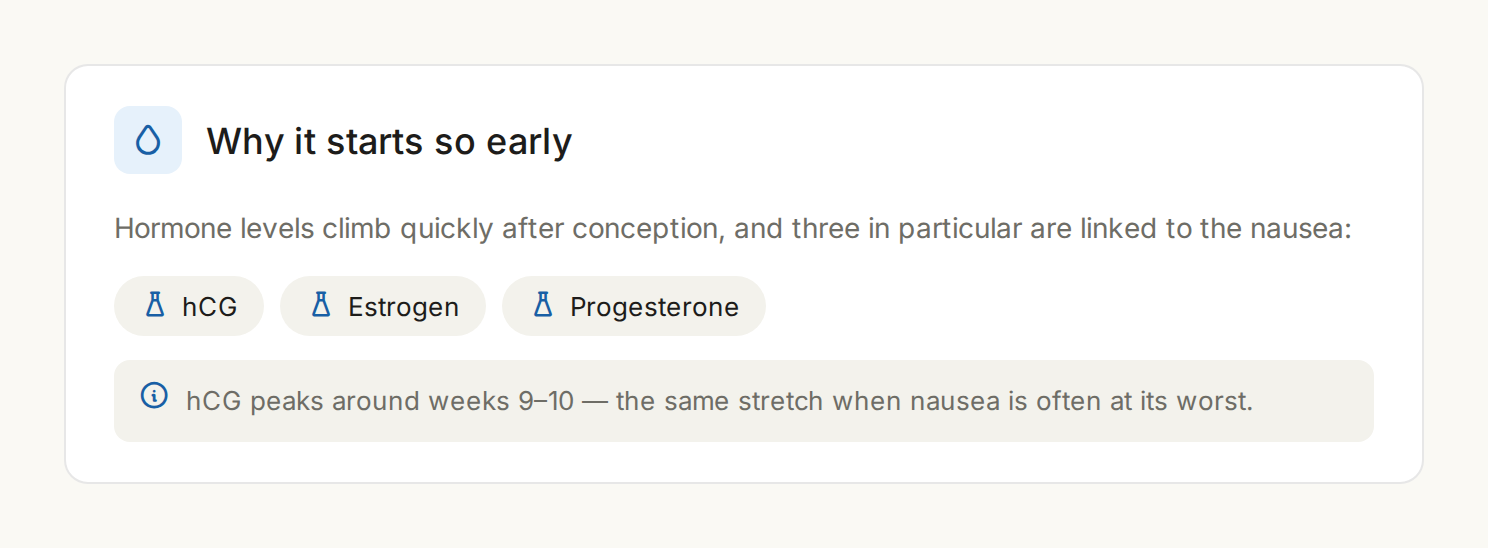
A few hormones seem to feed the nausea:
Human chorionic gonadotropin (hCG)
Estrogen
Progesterone
A 2024 study tied high hCG levels closely to pregnancy nausea. And here's the telling part. hCG usually peaks at the exact stretch when symptoms feel their worst.
Increased Sensitivity to Smells and Foods
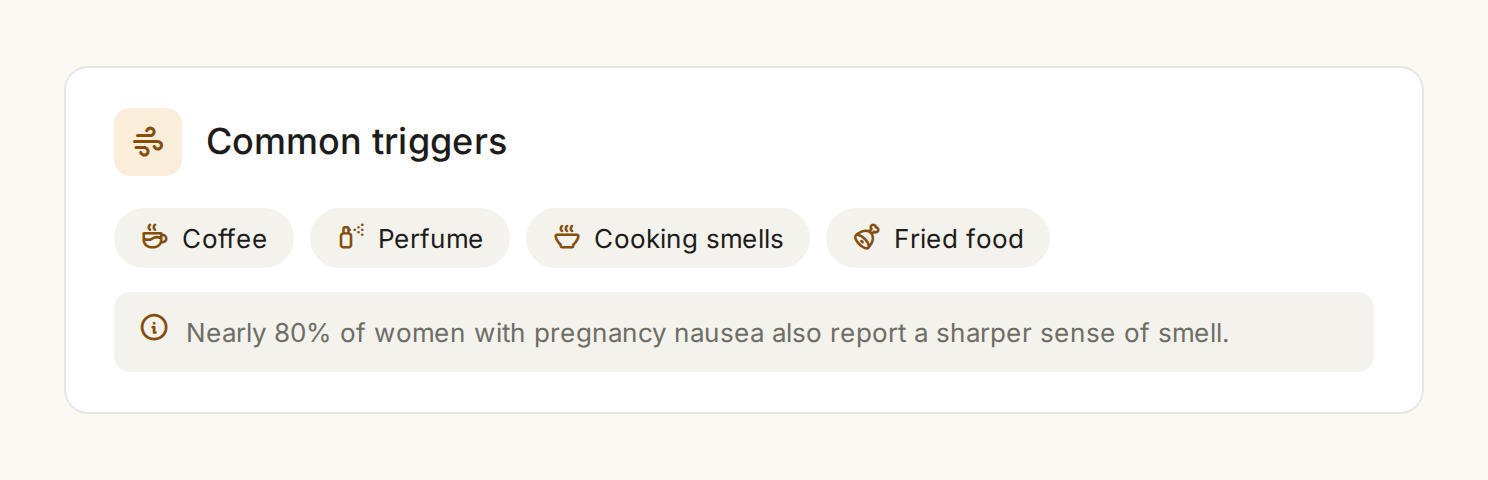
Then there's the smell thing. Plenty of women suddenly can't stand ordinary, everyday scents.
The usual offenders are:
Coffee
Perfume
Cooking smells
Fried food
In fact, studies suggest nearly 80% of women with pregnancy nausea also notice a much stronger sense of smell.
Digestive Changes
On top of that, progesterone slows down how fast food moves through your gut. The result can be:
Bloating
Acid reflux
A heavy, overly full feeling
Nausea
Can Morning Sickness Start Before a Positive Pregnancy Test?
Yes, it can.
Some women feel mild nausea around week 4, occasionally before they even know they're pregnant. Still, feeling queasy on its own doesn't prove anything, since loads of other things cause the same feeling.
But if that nausea turns up with:
A missed period
Sore or tender breasts
Unusual tiredness
Needing to pee more often
These symptoms will will indicate for taking a test for sure.
Is Morning Sickness a Sign of a Healthy Pregnancy?
What really matters is regular prenatal care, monitoring your baby's growth, and attending recommended tests. In some pregnancies, your doctor may suggest an NST Test During Pregnancy to assess fetal well-being, especially in the third trimester.
It can go hand in hand with the normal hormonal changes of pregnancy. It doesn't guarantee everything is fine, though.
A few studies have found that women who feel nauseous may have a slightly lower miscarriage rate. Even so, doctors don't treat morning sickness as a scorecard for a healthy pregnancy.
What really counts is:
Ultrasound findings
The baby's growth
Regular prenatal checkups
The mother's overall health
Bottom line, a healthy pregnancy can come with bad nausea, mild nausea, or none at all.
Is It Normal Not to Have Morning Sickness?
Usually, yes, and it's completely fine.
A handful of things shape whether you feel sick:
Genetics
Hormone levels
How sensitive you are as an individual
Earlier pregnancies
In my practice, plenty of women with healthy pregnancies start to worry the minute they aren't nauseous, mostly because a friend or sister was. On its own, though, not having morning sickness is rarely anything to fret over.
What Does Morning Sickness Feel Like?
It can take a few different shapes:
Nausea
Vomiting
Dry heaving
Food aversions
Loss of appetite
Extra saliva
Sensitivity to smells
And the timing? All over the place. It might show up:
First thing in the morning
During the afternoon
At night
Right through the day
Here's what catches a lot of women off guard: so-called "morning" sickness often feels worst in the evening.
How to Reduce Morning Sickness Naturally
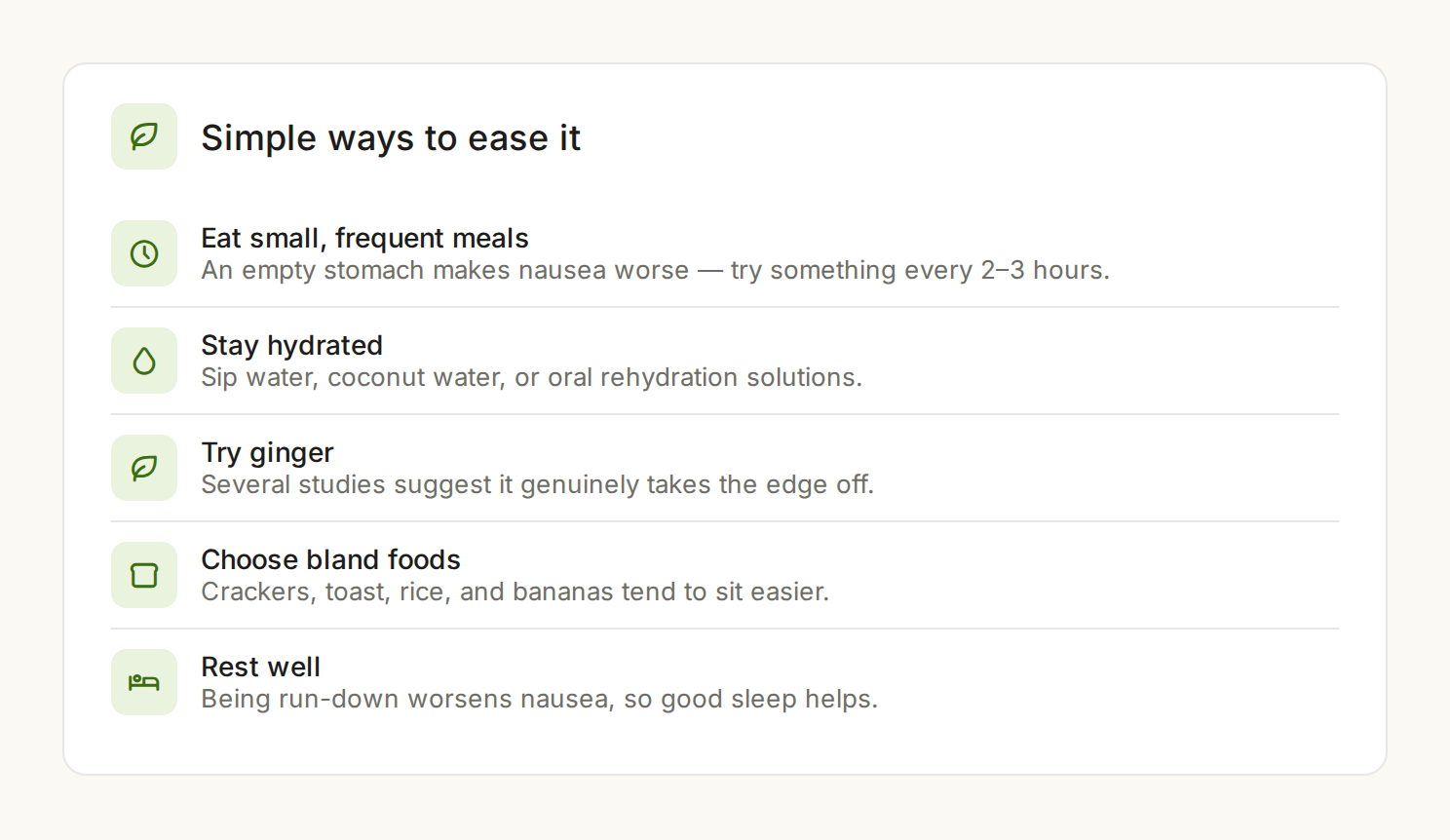
Eat Small, Frequent Meals
First off, an empty stomach usually makes nausea worse. Eating a little something every two to three hours can help keep things steady.
Stay Hydrated
Next, sip slowly on:
Water
Coconut water
Oral rehydration solutions
Try Ginger
Also worth a go, several studies suggest ginger can genuinely take the edge off pregnancy nausea.
Choose Bland Foods
For most women, these tend to sit easier:
Crackers
Toast
Rice
Bananas
Prioritise Rest
And finally, being run-down tends to make nausea worse, so good sleep and a bit of downtime really do help.
When Is Morning Sickness a Sign of Something More Serious?
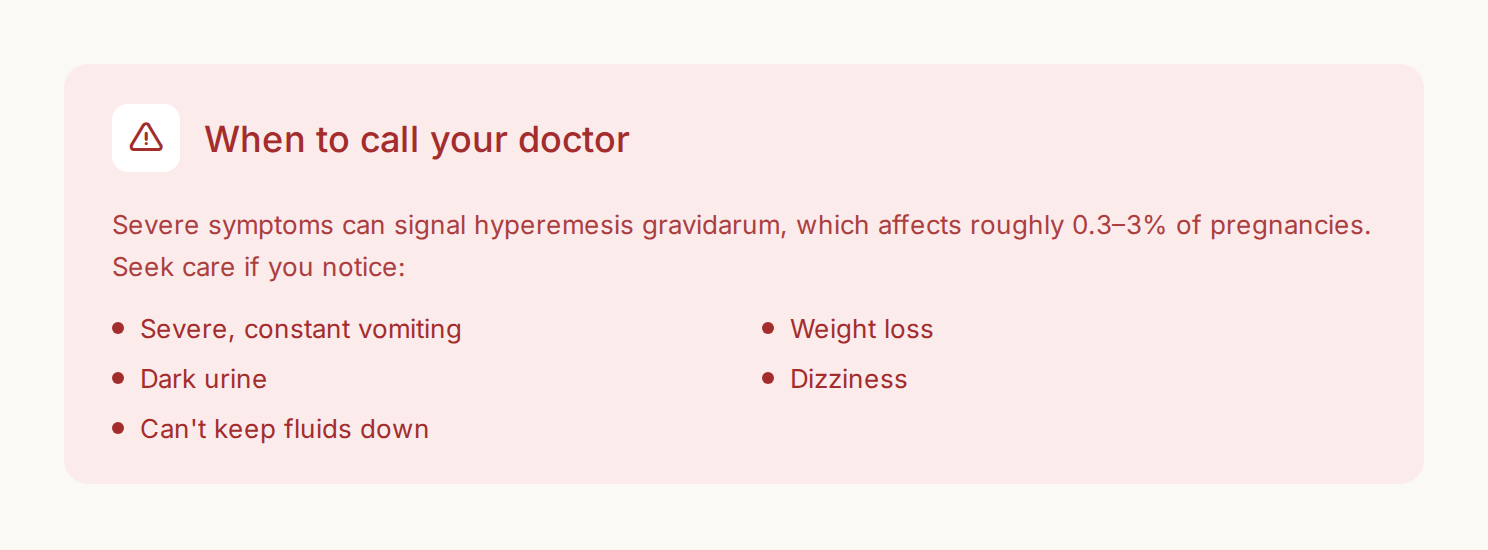
Most of the time it's harmless. But severe symptoms can be a sign of hyperemesis gravidarum, which affects somewhere between 0.3 and 3% of pregnancies.
While morning sickness itself is usually harmless, it's important to understand other pregnancy complications that require medical attention, such as Fetal Distress and Fetal Hypoxia.
So keep an eye out, and get medical help if you notice:
Constant vomiting
Weight loss
Dark urine
Dizziness
Not being able to keep fluids down
Catching it early helps head off dehydration and nutritional deficiencies.
Conclusion
So, to wrap it up, morning sickness usually starts between weeks 4 and 7, but there's no schedule that fits everyone. One mum feels sick before her test even turns positive. Another never feels a thing.
The one thing worth holding onto is this: pregnancy symptoms are deeply personal. Stacking yours up against someone else's tends to create worry you really don't need. Pour your energy instead into regular prenatal care, staying hydrated, and figuring out whatever eases your own symptoms.
And if the nausea ever turns severe or gets in the way of eating and drinking, reach out to your provider. With the right support, most women find things settle down as the weeks roll on.
Frequently Asked Questions
Can morning sickness happen at night?
Yes. It can strike at any time of day, and for some women the evenings are honestly the worst of it.
Do you have to vomit to have morning sickness?
No. Lots of women feel nauseous without ever actually being sick.
Does severe morning sickness mean I'm having a girl?
No. There's no solid scientific proof linking how sick you feel to the baby's sex.
Can morning sickness come and go?
Yes. It often changes from day to day and can shift as the pregnancy goes on.
How long does morning sickness last?
For most women, it gets better between weeks 12 and 16, though for some it lingers a bit longer.