Mothers
Viral Fever in Kids: Signs, Treatment & Temperature Guide
May 18 • 7 min read
Table of Content
What Is Viral Fever in Kids?
Common Symptoms of Viral Fever in Kids
What Causes Viral Fever in Children?
How Long Does Viral Fever Last in Kids?
Common Fever Pattern
Viral Fever Temperature Chart for Children
Age-Wise Warning Signs
How to Treat Viral Fever in Kids at Home
Home Care Tips for a Quick Recovery
Best Foods for Kids During Viral Fever
Febrile Seizures in Children
When Emergency Care Is Needed
How to Monitor Your Child’s Fever Correctly
When your child suddenly develops a fever, it can leave you really worried, tired, kinda unsure of what to do next. A viral fever in kids is, honestly, one of the most common reasons parents look for medical advice, especially when seasons shift and schools have outbreaks. The fever might show up along with cough, weakness, body aches, or just a simple refusal to eat, so the child feels clingy and parents get nervous fast
What makes it even more stressful is not knowing if the fever is “nothing big” or maybe a signal of something more serious. A lot of parents end up stuck trying to figure out, okay, is home care enough, or when should we actually go see a doctor
If you understand the symptoms, typical causes, the possible treatment options, and the key warning signs of viral fever, you can support your child with more calm and avoid unnecessary panic.
What Is Viral Fever in Kids?
Viral fever in kids is a common illness caused by viral infections that affect the body’s immune system. It can lead to symptoms like tiredness, irritability, seasonal changes, poor appetite, and a high fever in kids. Many parents wonder what the symptoms of viral fever are, especially when viral fever symptoms in children appear without cough and cold. In some cases, viral fever in babies and fever in toddlers may only show as Irritability or reduced feeding.
The difference between viral and bacterial fever is important because antibiotics do not work for viral infections. Viral fever usually spreads through cough droplets, touching contaminated surfaces, or close contact, especially during viral fever during monsoon season. Yes, viral fever can spread from person to person very easily among children.
Most cases improve with rest, fluids. However, parents should know when to see a doctor for viral fever if symptoms worsen or the viral fever temperature range stays high for several days.
Common Symptoms of Viral Fever in Kids
Viral fever symptoms in children can vary from mild discomfort to high fever in kids with weakness and irritability. Common signs include fever in children, runny nose, cough, sore throat, body pain, fatigue, vomiting, diarrhea, skin rash, and loss of appetite. Viral fever in babies and fever in toddlers may also cause excessive crying, sleepiness, or poor feeding. Some children may even develop viral fever without cough and cold, making it harder for parents to identify early.
Many parents ask, what are the symptoms of viral fever and how long does viral fever last. In most cases, symptoms improve within 3–5 days with proper rest, hydration, and viral fever treatment for kids.
Mild Symptoms | Severe Symptoms |
Low-grade fever | Viral fever temperature range above 103°F |
Runny nose | Difficulty breathing |
Tiredness | Persistent vomiting |
Mild body pain | Extreme sleepiness |
Parents should know when to see a doctor for viral fever if symptoms worsen or dehydration develops.
What Causes Viral Fever in Children?
The viral fever in children is caused by various viruses affecting the respiratory or digestive tract of the child. It is very common amongst kids as their immune system is not fully developed yet. Symptoms of viral fever in children include high fever in kids, fatigue, cough, sore throat, body pain, vomiting, or sometimes even without cough and cold in kids.
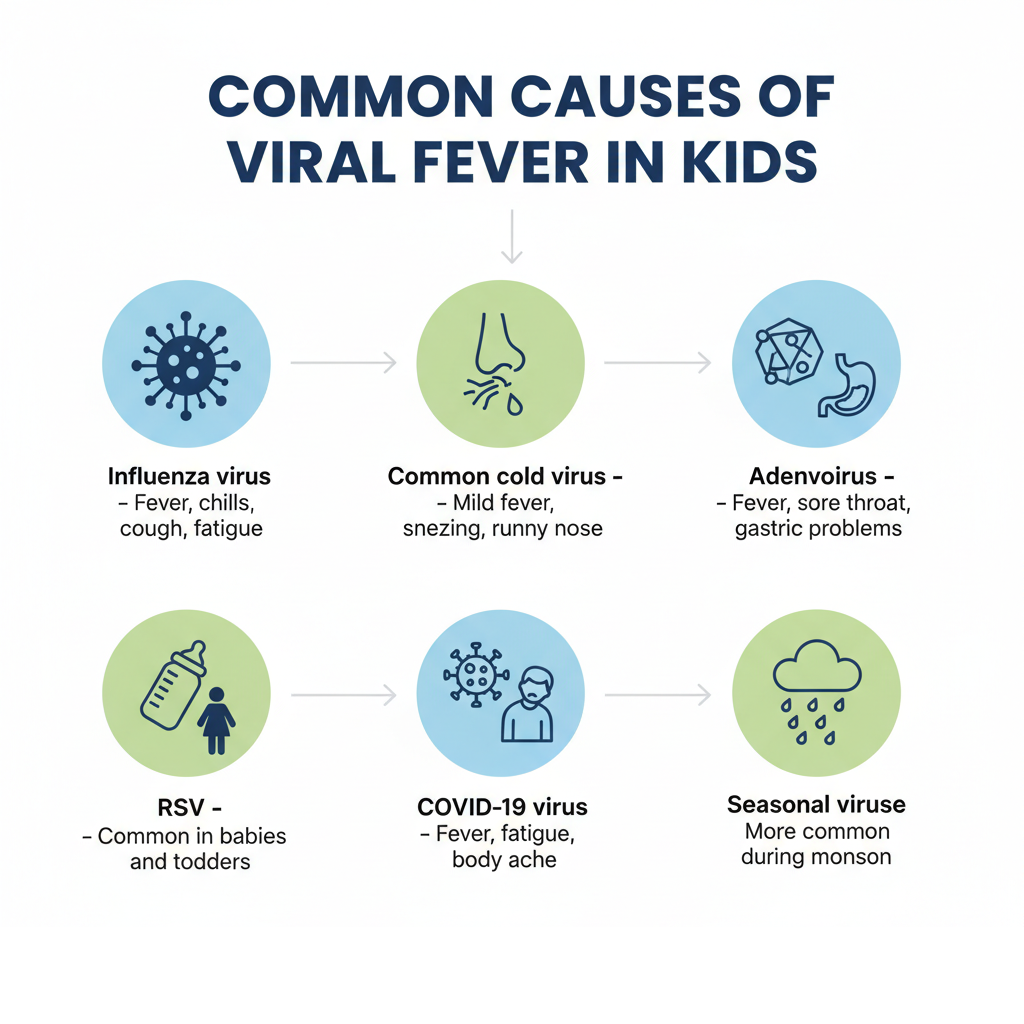
Common Causes of Viral Fever in Kids
Influenza virus – Leads to fever, chills, cough, and fatigue
Common cold virus – Causes mild fever, sneezing, and runny nose
Adenovirus – Results in fever, sore throat infection, and gastric problems
RSV – Common in viral fever in babies and toddlers
COVID-19 virus – Causes fever in child with fatigue and body ache
Seasonal viruses – More common during monsoon season viral fever in kids
Children often contract viral infections in kids via school, daycare, shared toys, etc. As it is a contagious disease, proper hygiene and hydration of kids is recommended. Children often recover within a few days with treatment in kids.
How Long Does Viral Fever Last in Kids?
Most cases of viral fever in kids last between 3 to 5 days. Viral fever symptoms in children usually start with high fever in kids, body pain, tiredness, and poor appetite. In some cases, viral fever without cough and cold can also occur.
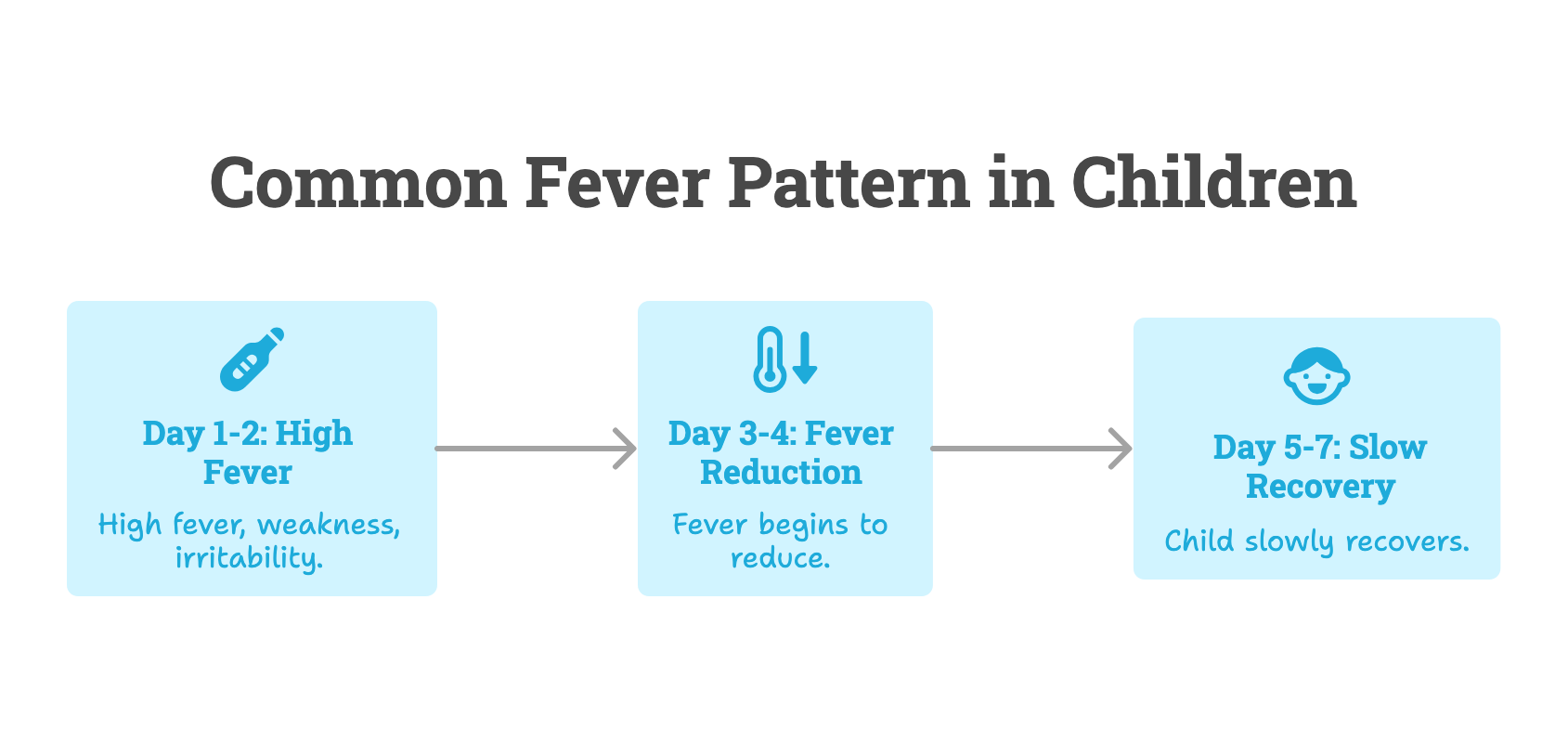
Common Fever Pattern
Day 1–2: High fever, weakness, irritability
Day 3–4: Fever begins to reduce
Day 5–7: Child slowly recovers
Many parents notice fever increases at night because the body’s immune response becomes more active in the evening.
Proper fluids, rest, and viral fever treatment for kids help recovery. Parents should know when to see a doctor for viral fever if the fever in a child lasts more than 5 days, crosses the viral fever temperature range of 103°F, or causes breathing trouble or dehydration.
Viral Fever Temperature Chart for Children
The fever temperature range can help parents know when a fever in a child is manageable at home and when medical care is needed. Viral fever in kids often causes mild to high fever in kids along with tiredness, cough, or body pain.
Temperature Range | Meaning |
97°F–99°F | Normal temperature |
100°F–100.9°F | Low-grade fever |
101°F–102.9°F | Moderate fever |
Above 103°F | Dangerous fever level |
Age-Wise Warning Signs
Below 3 months: Any fever needs immediate medical attention
3 months–3 years: Persistent fever or poor feeding should be checked
Older children: Seek help if fever lasts more than 5 days or breathing difficulty develops
Viral fever symptoms in children may worsen during the monsoon season. Parents should know when to see a doctor for viral fever, especially viral fever in babies and fever in toddlers. Proper hydration and treatment for kids can support faster recovery.
How to Treat Viral Fever in Kids at Home
Viral fever in kids is mostly self-limiting and can be treated effectively without any serious risks. Fever due to viral infections among kids including body pain, weakness, fever, and reduced appetite will go away in a couple of days' time.
Home Care Tips for a Quick Recovery
Hydrate your kid well using water, soups, ORS, and breast milk in viral fever in babies
Rest and have enough sleep will boost up your kid's body's defense system against viruses
Give sponge bath to your child using lukewarm water to bring down the temperature of child
Wear light clothes in viral fever to avoid body overheating
If your child catches cough during viral fever during monsoon, consider installing a humidifier at home
Parents usually ask how to get rid of fever quickly. The best cure for viral fever in kids is fluids, nutritious food, and rest. But you must know when to consult a doctor for viral fever when there is a persistent viral fever in kids or breathing problems.
Best Foods for Kids During Viral Fever
Good nutrition and hydration can help children recover faster from viral fever in kids. During viral fever symptoms in children, light and easy-to-digest foods are the best choice.
Recommended Foods | Benefits |
Water, ORS, coconut water | Prevent dehydration and restore electrolytes |
Soups and khichdi | Easy to digest and comforting |
Vitamin C-rich fruits | Support immunity and recovery |
Porridge, curd rice, boiled vegetables | Gentle on the stomach |
Foods to Avoid | Why Avoid Them |
Oily and fried foods | Hard to digest |
Sugary drinks | Can worsen dehydration |
Junk food | Low nutritional value |
Healthy meals, proper fluids, and rest are important parts of viral fever treatment for kids, especially in toddlers and babies.
Febrile Seizures in Children
Febrile seizures are sudden shaking or jerking movements that can happen in some children during high fever in kids. They are most common in children between 6 months and 5 years of age and are usually triggered by a rapid rise in body temperature during viral fever in kids.
What Parents Should Know | Details |
What are febrile seizures? | Short seizures linked to fever in child |
Why do they happen? | Rapid increase in fever due to viral infection in kids |
Common signs | Stiff body, shaking, rolling eyes, temporary unconsciousness |
What parents should do | Stay calm, place the child on their side, loosen clothing |
Avoid | Do not force food, water, or medicines during the seizure |
When Emergency Care Is Needed
Seek immediate medical help if:
The seizure lasts more than 5 minutes
Breathing difficulty develops
The child does not wake up properly afterwards
Viral fever symptoms in children continue worsening
Most febrile seizures are harmless, but medical evaluation is important.
How to Monitor Your Child’s Fever Correctly
Wearable Continuous Temperature Monitor for Babies is important during viral fever in kids, especially when symptoms like high fever in kids, body pain, or tiredness appear. Using the right thermometer helps parents track the viral fever temperature range and identify warning signs early.
Thermometer Type | Best For |
Forehead thermometer | Quick and non-invasive checks |
Oral thermometer | Older children who can hold it properly |
Ear thermometer | Fast readings in toddlers and older kids |
Smart thermometer | Continuous monitoring and fever tracking |
Parents should check the temperature every 4–6 hours or more frequently if the fever in the child becomes high or the child appears uncomfortable. One common mistake is checking temperature immediately after bathing, eating, or heavy blankets, which can affect accuracy. Smart fever monitoring devices like Navam TempLive allow parents to monitor temperature continuously and identify sudden fever spikes early, especially during the night. This can be particularly useful for babies and toddlers, where fever levels may change rapidly. Continuous tracking also provides a clearer fever history for doctors and reduces the need for repeated manual temperature checks while the child is resting.
Final Takeaway
The incidence of viral fever among kids is very common, and in most instances, it takes only a few days to recover from the disease. The symptoms of viral fever among children may include high fever, fatigue, cough, body pain, or others. However, parents should monitor their child carefully, as proper care and timely attention can help the child recover faster.
Parents must be observant and look out for any of these symptoms as listed: difficulty in breathing, dehydration, consistent vomiting or having fever beyond 5 days. Viral fever babies and viral fever infants need extra attention as early treatment will help them recover faster.
When you are wondering when to visit a doctor for viral fever, do not hesitate because your intuition will lead you the right way.