Mothers
How to Select the Best Baby Oximeter for Your Newborn?
Feb 2 • 7 min read

Table of Content
What Is a Newborn Oximeter?
When Is Oxygen Level Monitoring Commonly Advised?
What Should Parents Avoid When Buying a Baby Oximeter?
How to Choose the
1. Infant-Specific Sensor Design
2. What Makes a
3. Accuracy During Movement
4. Features That Actually Matter for Home Use
5. Comfort and Ease of Use Matter More Than You Think
6. Wireless and Comfortable Monitoring
Baby Oximeter Price
Why Choose Navam SpO2?
Conclusion
FAQ’s
Bringing your newborn baby home is one of the happiest moments of your life. Along with that joy, however, almost every parent experiences a quiet worry: Is my baby breathing normally?
This concern often becomes stronger at night, when the house is silent and parents find themselves repeatedly checking their baby’s chest just to be sure everything is okay.
Because of this, many parents today explore using a baby oximeter at home to monitor oxygen levels and heart rate. With so many options available in the market, choosing the right and safe baby oximeter can feel confusing and overwhelming.
What Is a Newborn Oximeter?
A newborn pulse oximeter is a small monitoring device used to measure:
Blood oxygen saturation (SpO₂)
Heart rate
For adults, these numbers are easy to understand and communicate. For babies, this is not the case, because newborns cannot tell us when something feels wrong.
This is why oxygen monitoring can be helpful. Drops in oxygen levels are not always visible, and early warning signs can be very subtle. A home infant pulse oximeter provides parents with an added layer of awareness, especially during sleep or after hospital discharge.
It does not replace a doctor but it can offer reassurance about your baby’s health.
When Is Oxygen Level Monitoring Commonly Advised?
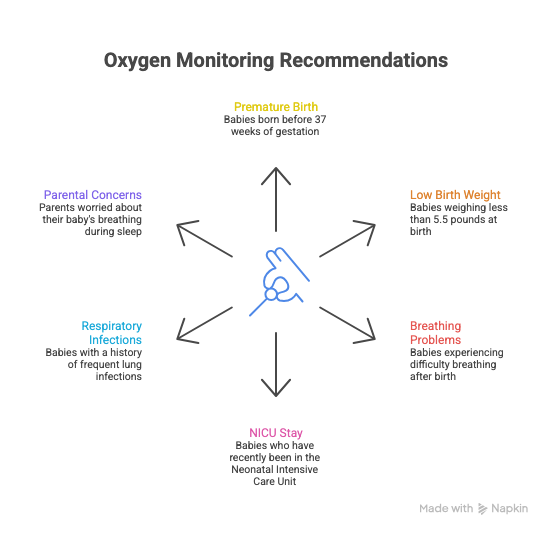
Not all babies require oxygen monitoring. However, pediatricians often recommend it in certain situations, such as:
Babies born prematurely
Babies with low birth weight
Babies who experienced breathing problems after birth
Babies recently discharged from the NICU
Babies with frequent respiratory infections
Parents concerned about their baby’s breathing during sleep
In these cases, a newborn oxygen saturation monitor allows parents to stay informed at home without frequent hospital visits.
What Should Parents Avoid When Buying a Baby Oximeter?
Parents should avoid:
Adult fingertip pulse oximeters
Devices without medical certification
Products with overly sensitive alarms that trigger frequently
Hard plastic sensors not designed for infant skin
How to Choose the Best Baby Oximeter for Your Infant?
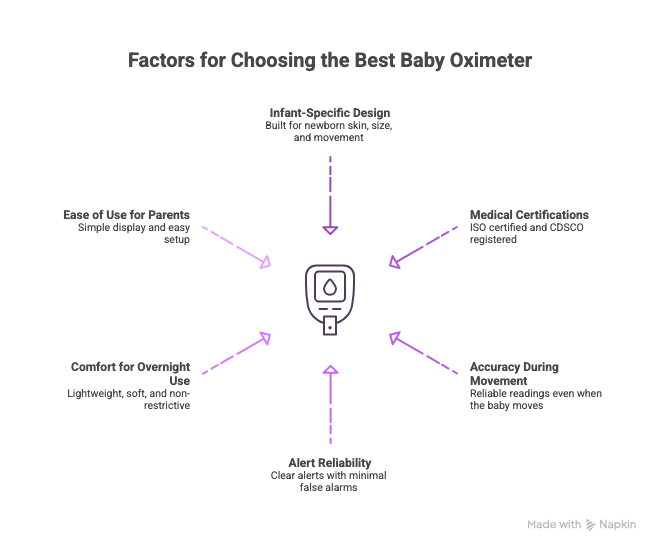
When selecting a baby oximeter, parents should evaluate the following factors:
Infant-specific design – Built for newborn skin, size, and movement
Medical certifications – ISO certified and CDSCO registered in India
Accuracy during movement – Reliable readings even when the baby moves
Alert reliability – Clear alerts with minimal false alarms
Comfort for overnight use – Lightweight, soft, and non-restrictive
Ease of use for parents – Simple display and easy setup
1. Infant-Specific Sensor Design
Babies are not small versions of adults. A safe baby pulse oximeter for newborns should:
Gently rest on a baby’s foot or hand
Be made from soft, non-toxic materials
Avoid tight pressure or sharp edges
Comfort affects not only the baby’s sleep but also the accuracy of the readings. An uncomfortable baby is more likely to move, which can affect measurements.
2. What Makes a Baby Oximeter Truly Safe?
When it comes to infants, safety is more important than functionality or price. A safe baby oximeter is one that is designed with a baby’s body, skin sensitivity, and natural movement in mind.
Medical and quality certifications
Parents should look beyond marketing claims and check for:
ISO certification
Registration under CDSCO guidelines (India)
Devices specifically designed for neonatal or infant use
These certifications help ensure the device meets established quality and safety standards.
Clinical research support
Pulse oximetry is supported by clinical research. A peer-reviewed review published in Obstetrics & Gynecology explains how pulse oximeters estimate blood oxygen saturation using light absorption principles and confirms that pulse oximetry is a non-invasive and generally accurate method for continuous oxygen monitoring. The review also notes that accuracy can be influenced by factors such as movement and blood flow, which highlights the importance of infant-specific sensor design.
(Source: PubMed, PMID: 2668828)
3. Accuracy During Movement
Newborn babies tend to move frequently, even while sleeping, and many devices fail to maintain accuracy during motion.
The best pulse oximeter for newborns is one that:
Does not trigger alarms every time the baby moves
Provides stable readings over time
Focuses on trends rather than single data points
This helps prevent unnecessary panic and alert fatigue for parents.
4. Features That Actually Matter for Home Use
Many products advertise long lists of features, but only a few truly matter for parents at home.
Clear and reliable alerts
A safe neonatal oxygen saturation monitor should:
Notify parents when oxygen levels fall below safe thresholds
Avoid frequent false alarms
Be audible enough to wake a caregiver if needed
5. Comfort and Ease of Use Matter More Than You Think
Even the most advanced device is not useful if it is uncomfortable or difficult to use.
A good baby oximeter should be:
Lightweight
Easy to wear and remove
Secure without being tight
Quiet during sleep
Devices developed in collaboration with doctors and parents often focus more on practical, real-world use rather than just technical specifications.
6. Wireless and Comfortable Monitoring
A wireless pulse oximeter for infants allows parents to:
Move freely while sleeping
Reduce disturbance to the baby
Monitor oxygen levels more easily at night
This makes long-term home monitoring more practical and comfortable.
Simple data visibility
Parents do not need complex medical interfaces. A useful baby oximeter should:
Display oxygen levels clearly
Show heart rate in simple numbers
Present trends in an easy-to-understand format
This makes discussions with a pediatrician easier and more productive.
Baby Oximeter Price: Understanding cost without Compromising Safety
Many parents are interested in baby oximeter price comparisons, but price is only one side of the coin.
What typically influences the price
Sensor technology
Comfort and longevity
Accuracy and alarm functionality
Continuous monitoring functionality
Generally, you'll find infant pulse oximeters in these price brackets:
Basic devices may be suitable for occasional spot checks, but they are not always ideal for continuous home monitoring in newborns.
Why Choose Navam SpO2?
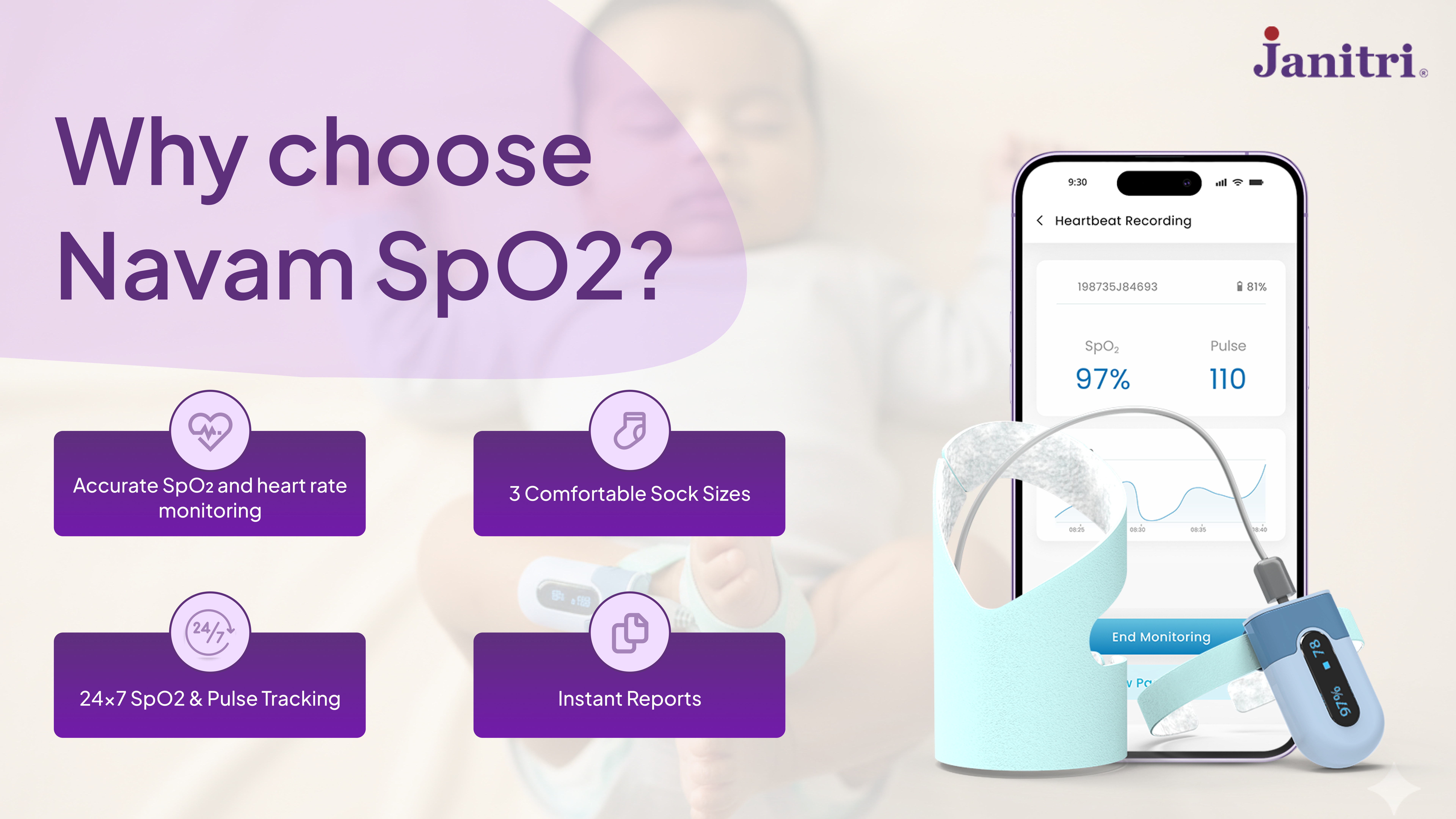
When choosing a baby oximeter, many parents look for a device that balances medical-grade accuracy, infant comfort, and simple home usability. Navam SpO₂ is designed to fit naturally into everyday newborn care.
Navam SpO₂ oximeter is a baby-specific pulse oximeter created with infant skin sensitivity, movement, and sleep comfort in mind. The soft, skin-delicate sensor is placed comfortably on the baby’s foot and is available in three sock sizes to ensure a secure yet gentle fit as your baby grows.
It offers reliable alerts and alarms to notify parents if oxygen saturation or heart rate moves outside safe ranges, helping reduce unnecessary anxiety from false alerts. Navam SpO₂ also enables instant report sharing with doctors, making it easier to discuss trends and observations during follow-ups especially after hospital discharge or during night-time monitoring.
Conclusion
Selecting the best baby oximeter is about finding the right balance between accuracy, comfort, ease of use, and trust. Parents should choose devices specifically designed for infants, supported by appropriate certifications such as ISO and CDSCO, and built for real home use.
A baby oximeter is not a replacement for medical care. It is simply a supportive tool that helps parents stay informed, calm, and reassured during the early months of their baby’s life.
For parents looking for a baby-safe, gentle way to monitor oxygen levels at home, Navam SpO₂ is designed to fit naturally into everyday newborn care.
FAQ’s
What should the oxygen saturation level be in a newborn?
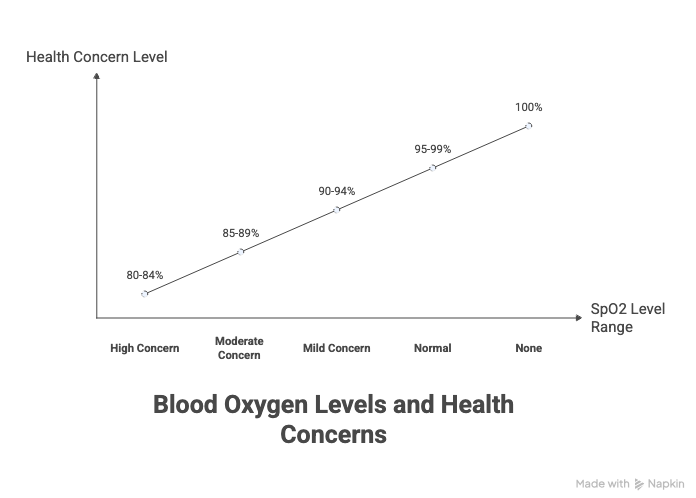
A normal newborn should have 95% to 100% oxygen saturation in the blood, indicating that the body and brain are receiving adequate amounts of oxygen.
What is the normal SpO2 level in a newborn?
The normal SpO2 level in a newborn should be 95% or higher. The newborn might have slightly lower readings immediately after birth, but these should normalize quickly.
How do I know if my baby is not getting enough oxygen?
You can check for signs such as:
Rapid or difficult breathing
Blue lips, tongue, or fingertips
Difficulty feeding or being very sleepy
Sucking in the chest with each breath
If you observe these symptoms, you should immediately consult a doctor.
Do oxygen levels decrease in babies when they sleep?
It is normal for babies to have a slight decrease in oxygen levels during deep sleep. However, the levels should still be in the safe zone and should normalize on their own.
Can I measure oxygen levels in my baby using a pulse oximeter?
Yes, but you should use a pulse oximeter specifically designed for newborn babies. This is because the pulse oximeter for adults might provide inaccurate readings because of the baby’s small fingers and different circulation patterns.