Mothers
When Can You Hear Baby’s Heartbeat With Doppler? A Week-by-Week Guide
Mar 2 • 6 min read
Table of Content
When can you hear a baby’s heartbeat with
What Is a
When Can You Hear
Week-by-Week: When Can You Hear Baby Heartbeat With Doppler?
Weeks 6–8: Too Early for Home Use
What Parents Should Expect
Weeks 9–12: Possible, But Not Guaranteed
What It May Sound Like
Helpful Tips
Weeks 13–20: Easier and More Reliable
Weeks 21–40: Strong and Clear
Benefits of Listening at Home
1. Emotional Reassurance
2. Stronger Bonding
3. Greater Pregnancy Awareness
4. Convenience Between Visits
5. Support After Previous Loss
6. Encourages Partner Involvement
7. Educational Value
Safety and Medical Reliability
Is It Safe?
Important Limitations
When to Call Your Doctor
Conclusion: Reassurance With Responsibility
Pregnancy is filled with small, magical milestones. One of the most emotional moments is hearing your baby’s heartbeat for the first time. Many parents quietly wonder:
When can you hear a baby’s heartbeat with Doppler at home?
That first tiny rhythm can bring tears, relief, and a deep sense of connection. A handheld Doppler allows you to listen to your baby’s heartbeat between doctor visits. It can be comforting but timing, expectations, and proper use really matter.
This guide walks you through exactly when you can hear baby heartbeat with Doppler, week by week, what’s medically realistic, and how to use it responsibly.
What Is a Fetal Doppler and How Does It Work?
A fetal Doppler is a small handheld device that uses low-intensity ultrasound waves to detect movement from the baby’s heart. It turns that movement into sound so you can hear the heartbeat in real time.
Unlike a medical ultrasound scan, it doesn’t create images. It simply:
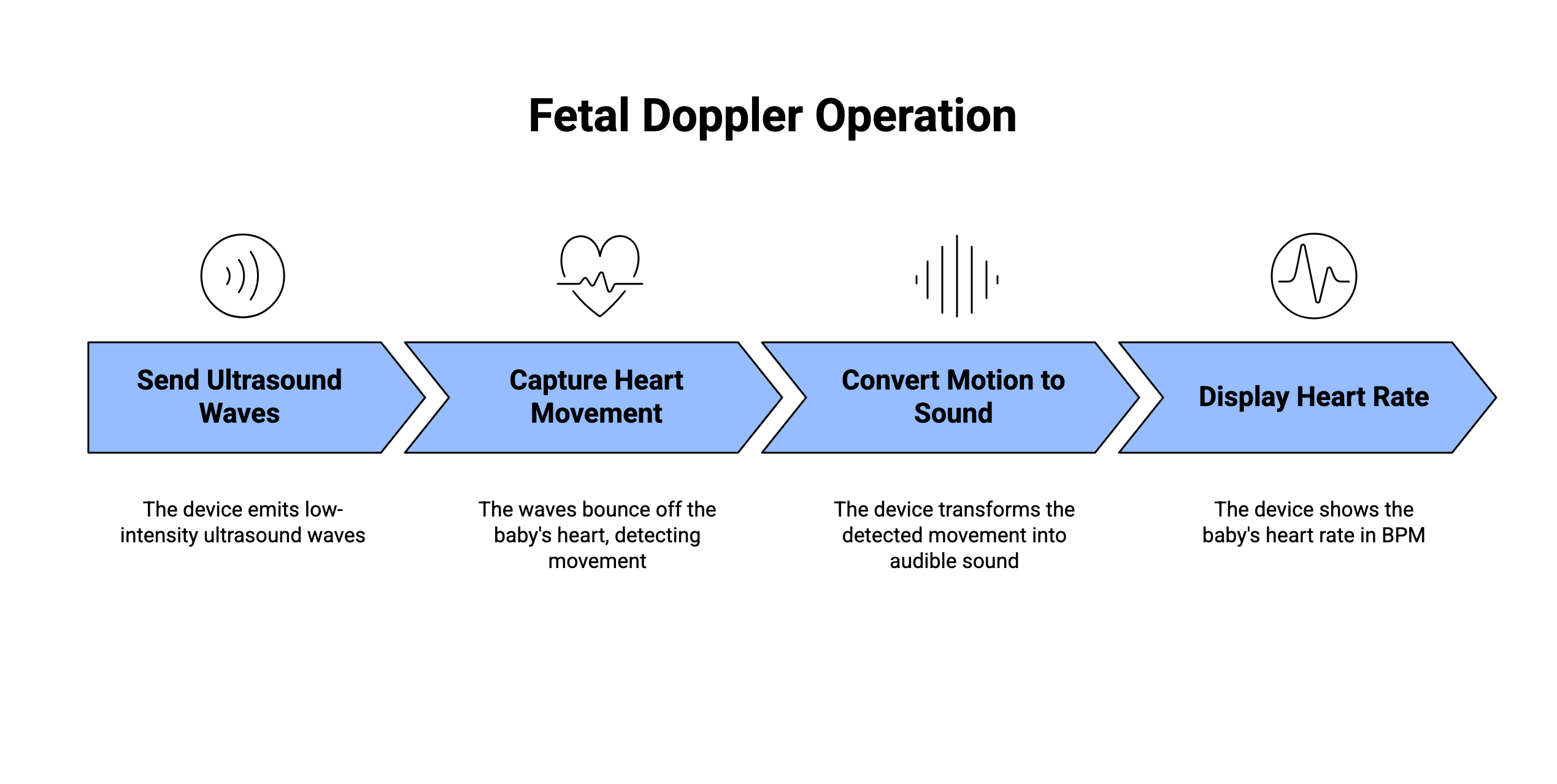
Sends low-intensity ultrasound waves
Captures movement from the baby’s heart
Converts motion into sound
Displays the heart rate in beats per minute (BPM)
A Normal Fetal heart rate is:
110–160 beats per minute (BPM)
Often described as a fast “galloping horse.”
According to the American College of Obstetricians and Gynecologists, checking the baby’s heart rate is an important part of prenatal care — but home devices should never replace professional evaluation.
When Can You Hear Baby Heartbeat With Doppler?
Most parents are able to hear the heartbeat at home:
Around 10–12 weeks (sometimes earlier in clinics)
More reliably after 12–14 weeks
Much easier as pregnancy progresses
Before 10 weeks, it can be very difficult to find the heartbeat at home — even if everything is perfectly normal.
A Doppler can support bonding and reassurance, but it does not replace medical appointments.
Week-by-Week: When Can You Hear Baby Heartbeat With Doppler?
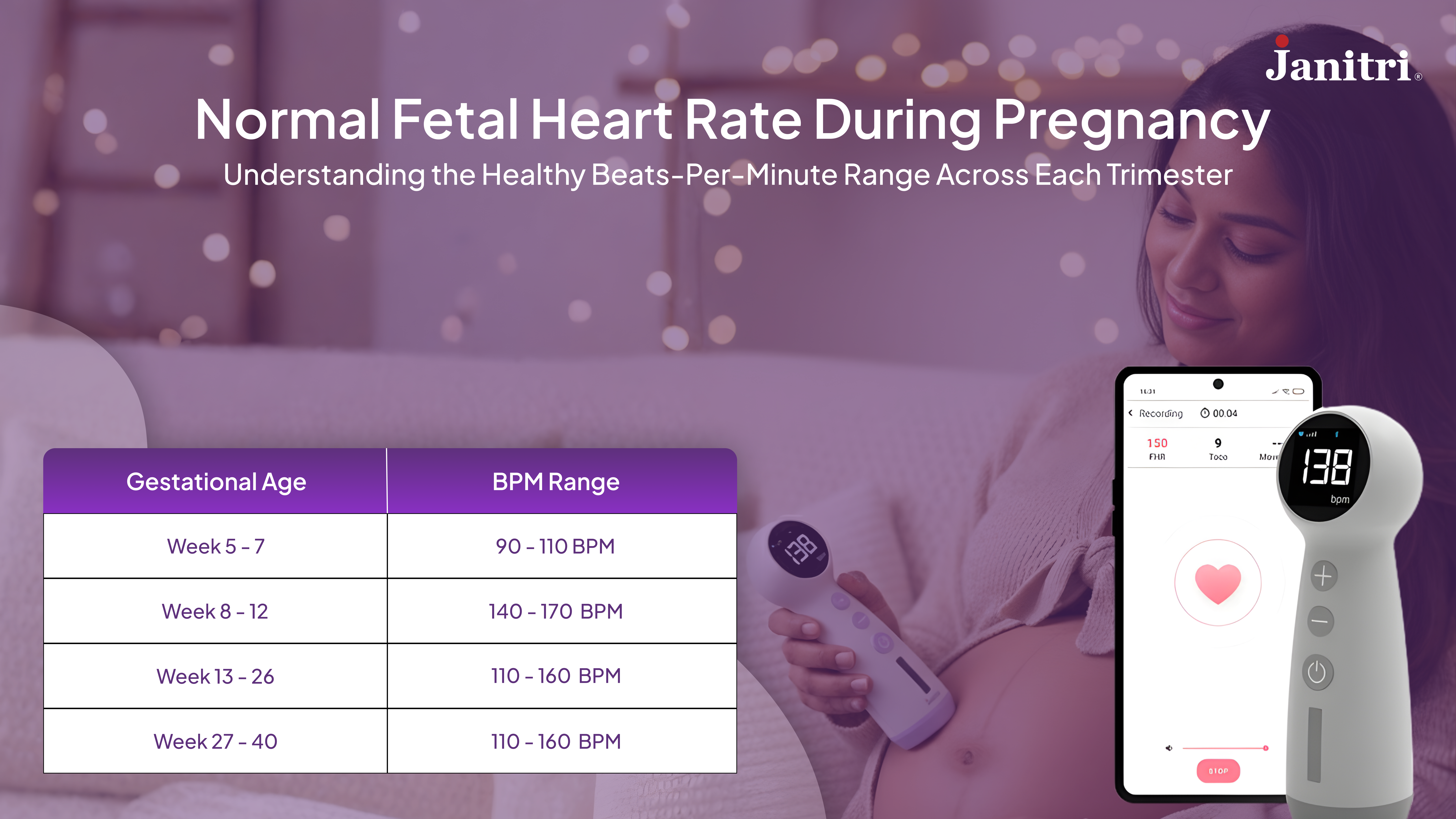
Hearing the heartbeat depends on gestational age, baby’s position, placenta location, and even body type. Every pregnancy is slightly different.
Let’s walk through it week by week.
Weeks 6–8: Too Early for Home Use
At 6–8 weeks, your baby’s heart has started beating. However, it’s usually detectable only through clinical ultrasound.
At this stage, it’s very unlikely you’ll hear anything at home.
Why?
Baby is extremely small
The heartbeat signal is faint
Uterus is still low in the pelvis
Positioning is difficult
Doctors typically confirm heartbeat at this stage using ultrasound — not a home Doppler.
What Parents Should Expect
It is completely normal not to hear anything.
This does NOT mean something is wrong.
Wait until at least 10–12 weeks.
Follow your doctor’s advice for early reassurance.
Early pregnancy confirmation should always come from medical scans.
Weeks 9–12: Possible, But Not Guaranteed
Between 9 and 12 weeks, some parents may begin to hear the heartbeat — especially closer to week 10 or 11.
However, success depends on:
Body type
Uterus position
Baby’s movement
Placenta placement
Device sensitivity
By 12 weeks, chances improve significantly. Many doctors begin checking the heartbeat in clinic visits around this time.
What It May Sound Like
Fast rhythm
120–160 BPM
Faster than the mother’s pulse
If you’re unsure whether you're hearing your own heartbeat, check your wrist pulse to compare.
Helpful Tips
Use ultrasound gel
Lie flat with a slight pelvic tilt
Try low on the abdomen near the pubic bone
Keep sessions short (5–10 minutes)
If you cannot find the heartbeat, avoid repeated long attempts. Instead, consult your doctor if you’re worried.
Weeks 13–20: Easier and More Reliable
This is when most parents successfully hear the heartbeat at home.
What changes?
Baby is larger
Uterus rises into the abdomen
Heart sounds are stronger
Placement becomes easier
Many families choose to listen occasionally during this phase for bonding and reassurance.
In certain pregnancies, doctors may recommend additional checks depending on medical history or risk factors.
Studies of first-trimester pregnancies demonstrate that the fetal heart rate increases rapidly in early gestation, peaking around 9–10 weeks before gradually stabilizing.”
PMID: 7658510
Weeks 21–40: Strong and Clear
In the second and third trimester, hearing the heartbeat becomes much easier.
You may notice:
Stable heart rate between 110–160 BPM
Movement sounds
Gentle whooshing noises
After 28 weeks, doctors often recommend tracking daily baby movements rather than relying only on heartbeat listening.
“Doppler ultrasound in early pregnancy should be used prudently and for medically appropriate reasons, keeping exposure as low as reasonably achievable.”
PMID: 22827103”
If there are concerns about reduced movement, clinical tests such as NST (Non-Stress Test) are used in hospitals for more complete evaluation.
Benefits of Listening at Home
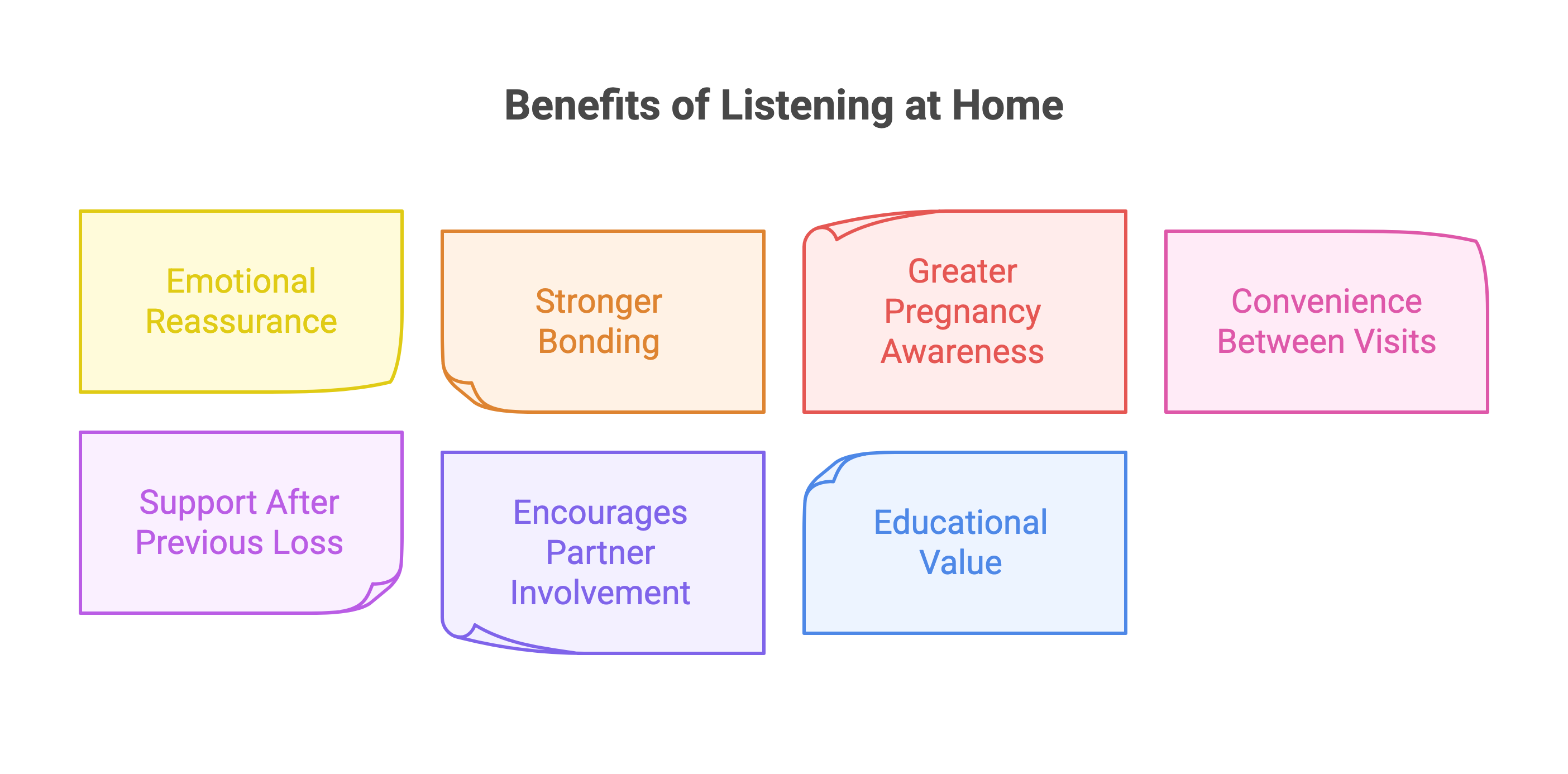
When used responsibly, a Doppler can provide emotional comfort and strengthen family bonding.
1. Emotional Reassurance
Hearing the heartbeat between appointments can reduce anxiety — especially in early pregnancy when movements are not yet regular.
2. Stronger Bonding
Partners, siblings, and grandparents often feel deeply connected when they hear the heartbeat together. Many families describe it as their first shared moment with the baby.
3. Greater Pregnancy Awareness
It encourages attentiveness to prenatal care, nutrition, and overall health habits.
4. Convenience Between Visits
It can be helpful when appointments are spaced far apart or travel to clinics is difficult.
5. Support After Previous Loss
Parents who have experienced miscarriage sometimes feel more secure hearing the heartbeat occasionally — alongside professional care.
6. Encourages Partner Involvement
It helps partners feel actively involved in the pregnancy journey.
7. Educational Value
Parents begin to understand what a normal heart rate sounds like and learn the importance of movement tracking later in pregnancy, as recommended by the Mayo Clinic.
Safety and Medical Reliability
At Janitri, we believe home pregnancy technology should always be used responsibly.
Is It Safe?
When used correctly, Dopplers are generally considered safe because they use low-intensity ultrasound similar to routine prenatal checks.
Safe use includes:
Keep sessions to 5–10 minutes
Avoid repeated long attempts
Use proper gel
Follow manufacturer guidelines
Organizations like the Mayo Clinic emphasize that home devices are for reassurance only and do not replace medical care.
Important Limitations
Does not assess oxygen levels
Cannot detect fetal distress
Cannot evaluate contractions
Does not confirm growth or development
Clinical tools used by hospitals provide far more detailed evaluation when medically necessary.
When to Call Your Doctor
Even if you can hear the heartbeat, contact your doctor immediately if you notice:
Reduced or no fetal movements
Vaginal bleeding
Severe abdominal pain
Fluid leakage
Sudden swelling, severe headache, or blurred vision
Hearing a heartbeat does not rule out complications. If something feels unusual, always seek medical advice.
Conclusion: Reassurance With Responsibility
So, when can you hear a baby 's heartbeat with Doppler?
For most parents:
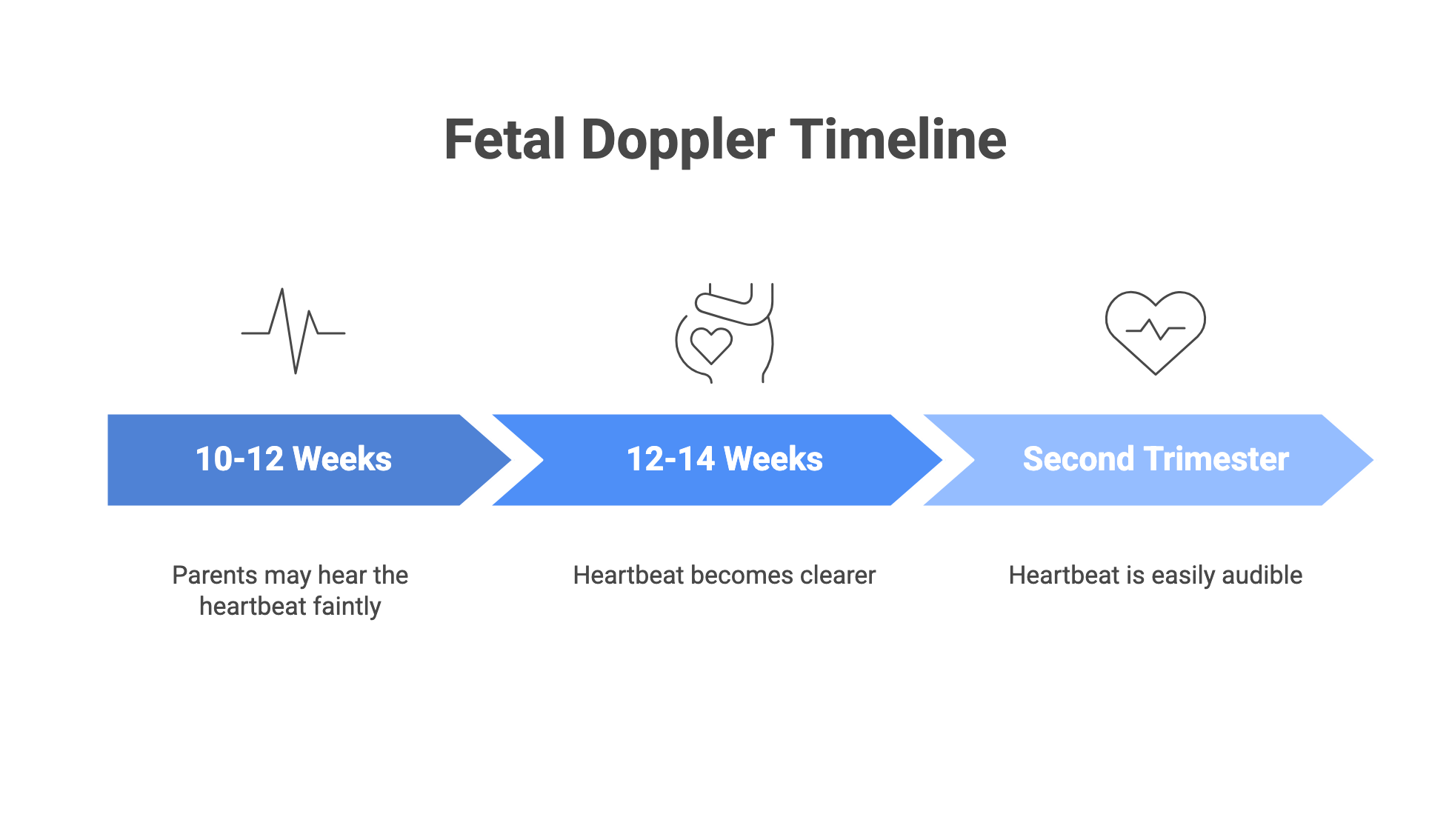
Around 10–12 weeks, sometimes later
More clearly after 12–14 weeks
Easily in the second trimester
Hearing that tiny rhythm is a beautiful milestone. It can bring comfort and connection during pregnancy.
Use it wisely:
Keep sessions short
Follow medical guidance
Never ignore symptoms
Attend regular antenatal visits
At Janitri, we believe technology should empower parents — while staying rooted in medical responsibility. Home listening supports care, but your doctor remains your most important partner throughout pregnancy.
FAQ’S
1. Is 7 Weeks Too Early to Hear a Heartbeat on a Doppler?
Yes. Home Dopplers rarely detect a heartbeat before 10–12 weeks. Not hearing one at 7 weeks doesn't mean something is wrong — the device simply isn't sensitive enough yet.
2. Can a Baby Be Alive at 8 Weeks With No Heartbeat?
Possibly. Late ovulation or implantation can make the embryo younger than expected. Doctors usually repeat the ultrasound 1–2 weeks later before drawing conclusions. Never rely on a home Doppler for this assessment.
3. Will I Miscarry If I Have No Heartbeat?
Only a medical ultrasound can confirm this. If a trained professional confirms no heartbeat after 8 weeks, the risk is high — but a home Doppler result alone is not a diagnosis. See your doctor immediately if concerned.
4. Is 9 Weeks Too Early to Use a Doppler?
It's still early. Some detect a heartbeat at 9 weeks, but it's not guaranteed. Wait until 10–12 weeks for more reliable results. No sound at 9 weeks is not a cause for alarm.
5. How Long Should You Use a Fetal Doppler?
Use from 10–12 weeks onward, keeping sessions to 1–2 minutes, once or twice a week. Never use it as a replacement for professional prenatal care.