Mothers
Benefits of Using a Fetal Doppler at Home for Pregnancy Monitoring
Feb 23 • 5 min read
Table of Content
Is It Safe to Use a
Why Parents Choose Home Fetal Doppler Monitoring
What Is a
Why Parents Use a Fetal Doppler at Home
Best Fetal Doppler Devices
How to use a Fetal Doppler at Home (Step-by-Step)
Safe Use of a Fetal Doppler at Home
Tips to Improve Accuracy When Using a
From which Month Can a Fetal Doppler be Used?
Using a Fetal Doppler in Early Pregnancy
Medical Uses and Limitation of a
Is a Fetal Doppler Safe for Regular Home Monitoring?
Research Insight
Fetal Doppler Price
Recommended Choice:
FAQ’s
Pregnancy is an exciting journey, but the quiet moments between doctor visits can sometimes bring anxiety for us especially for first-time parents. Many expectant parents look for safe and responsible ways to feel reassured at home. A fetal doppler allows parents to listen to their baby’s heartbeat, offering emotional comfort and connection while supporting calm pregnancy monitoring alongside professional prenatal care.
If the device is used properly and occasionally, a fetal doppler can be a reassuring tool but not a replacement for medical checkups.
Is It Safe to Use a Fetal Doppler at Home?
A fetal doppler is generally safe for intermittent home use, meaning for short lengths of time, and only for reassurance purposes. It enables the parents to hear the heartbeat of the baby in between prenatal visits; it should not replace medical advice, scans, or doctors' visits at all.
Why Parents Choose Home Fetal Doppler Monitoring
Parents commonly use fetal dopplers for reassurance rather than medical diagnosis. Hearing the baby’s heartbeat can be comforting, especially during long gaps between scans or appointments.
Common reasons parents use a fetal doppler at home:
Reassurance between prenatal visits
Emotional bonding with the baby
Reduced anxiety during pregnancy
Support for calm, informed pregnancy care
What Is a Handheld Fetal Doppler and How Does It Works?
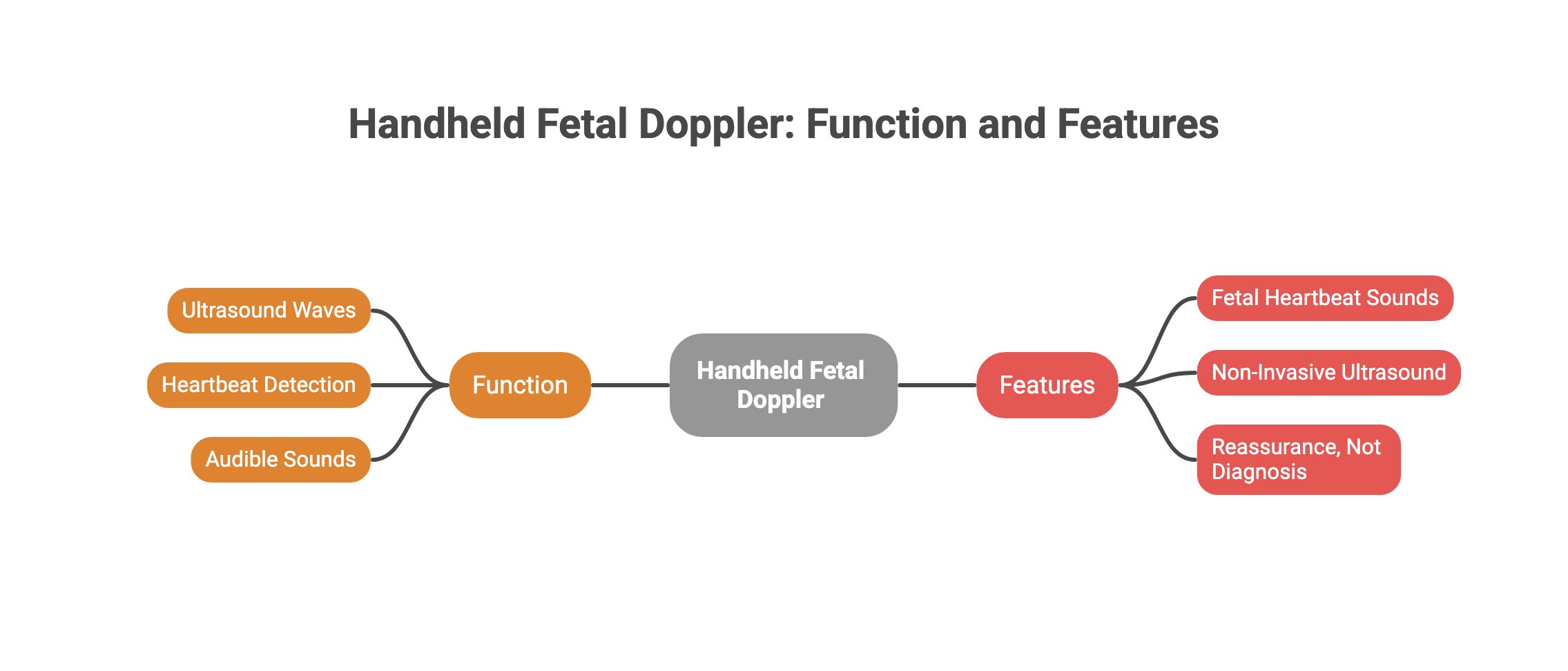
A handheld fetal doppler is a small, non-invasive device used for fetal heartbeat monitoring. It works by using low-intensity ultrasound waves that bounce off the baby’s heartbeat and convert them into audible sounds through a speaker or headphones.
This technology has been safely used in medical settings for decades and is adapted for limited, responsible home reassurance.
Key features:
Detects fetal heartbeat sounds
Uses non-invasive ultrasound technology
Designed for reassurance, not diagnosis
Why Parents Use a Fetal Doppler at Home
Using a fetal doppler at home can provide emotional comfort during pregnancy. Many parents experience anxiety at night or during the weeks between appointments. Listening to the heartbeat during such moments can be grounding and calming.
Important: A fetal doppler confirms the presence of a heartbeat only; it does not assess overall fetal health.
Benefits for parents:
Peace of mind between doctor visits
Reduced pregnancy-related stress
Stronger emotional connection with the baby
Best Fetal Doppler Devices for Home use in Pregnancy
The best fetal doppler for home use is one that is safe, simple, and intended specifically for pregnancy reassurance. Advanced hospital-grade features are unnecessary for home monitoring.
What to look for in a home fetal doppler:
Clear and consistent heartbeat audio
Simple, user-friendly controls
Certified medical safety standards
Trusted maternal or fetal health brand
How to use a Fetal Doppler at Home (Step-by-Step)
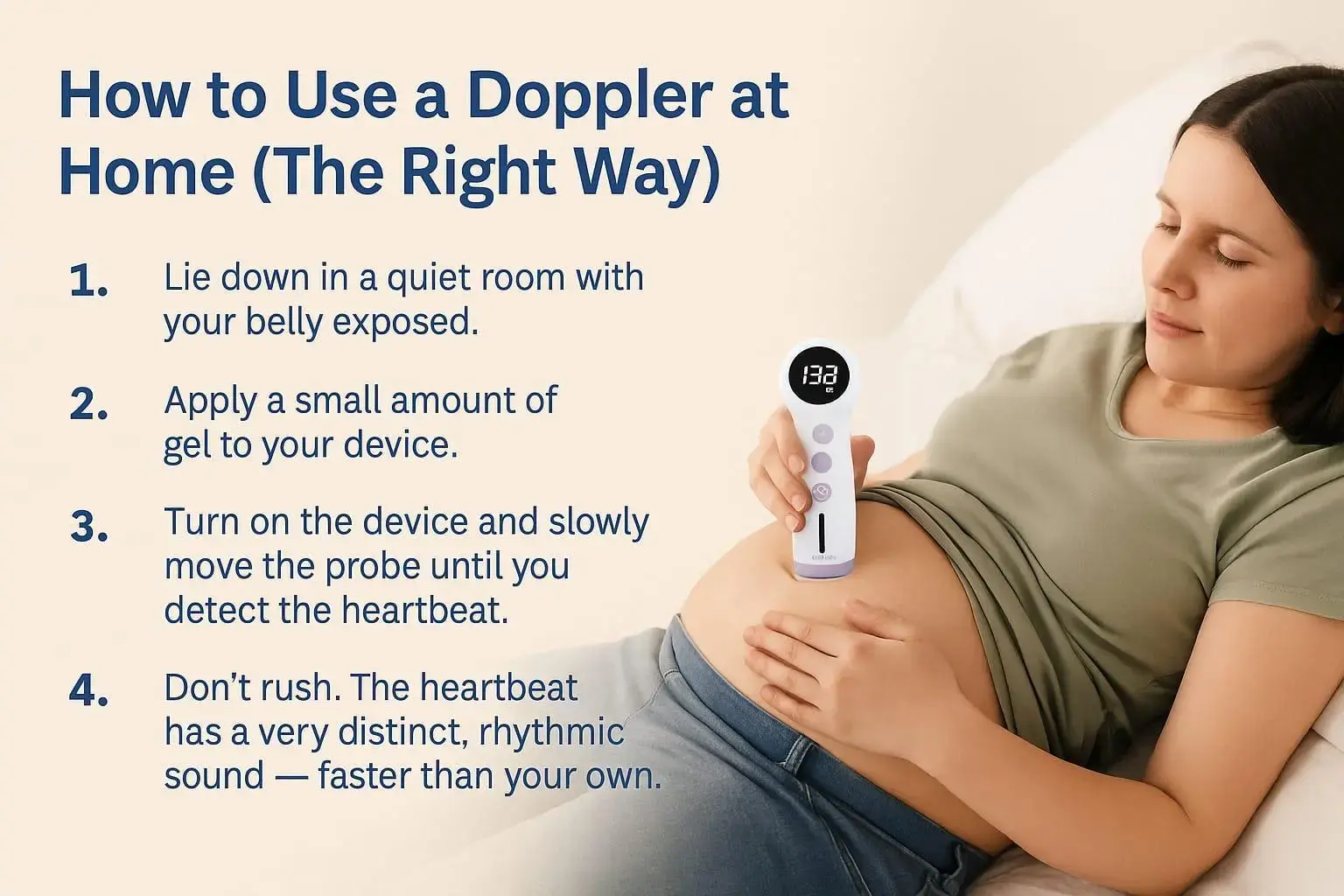
Using the right technique helps ensure a calm and confident experience.
Basic steps:
Apply ultrasound gel to the lower abdomen
Gently place the doppler probe on the skin
Move slowly and calmly
Listen for a steady, rhythmic heartbeat
Short, relaxed sessions are more effective than repeated searching.
Safe Use of a Fetal Doppler at Home
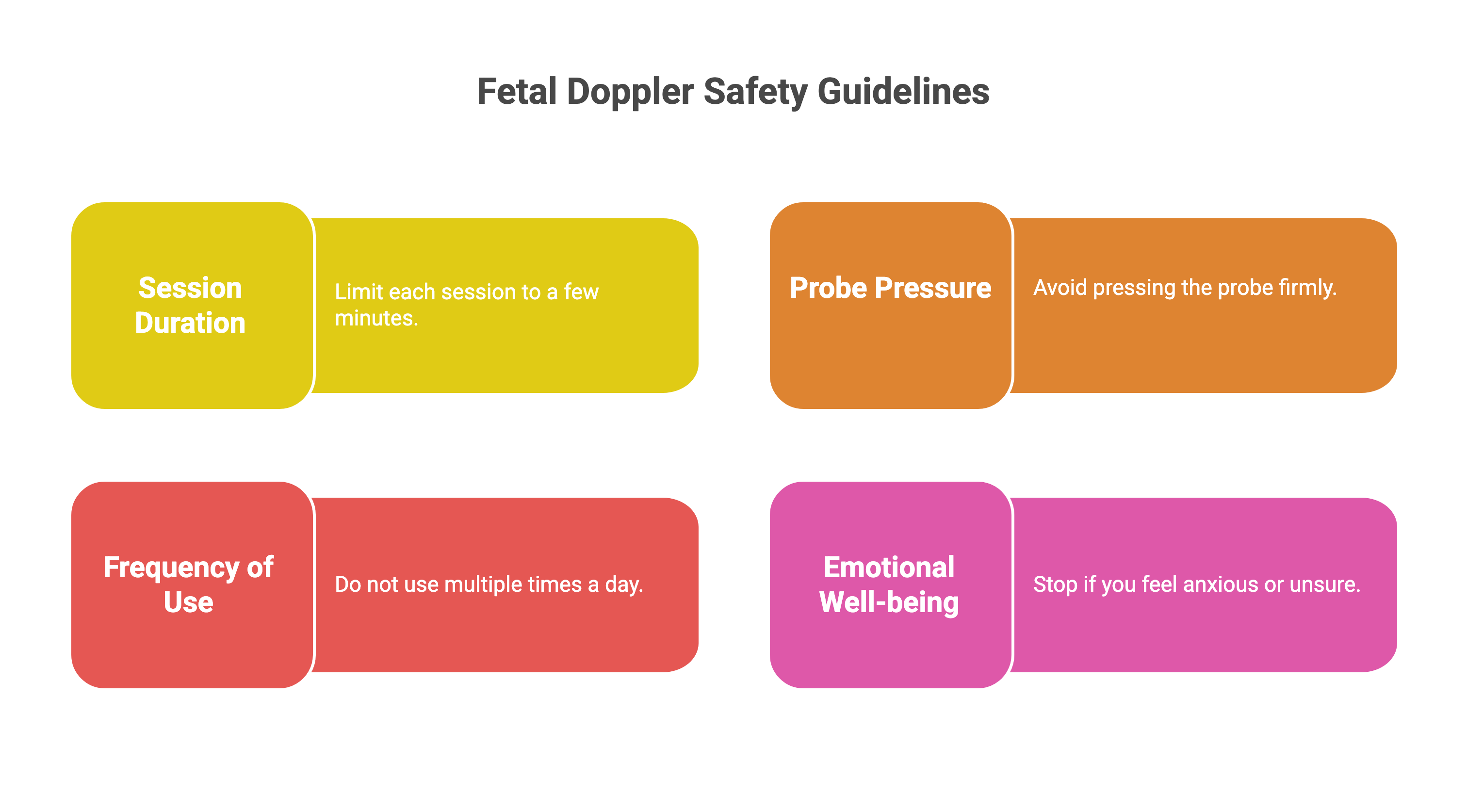
A fetal doppler should always be used responsibly and only for reassurance.
Safety guidelines:
Limit each session to a few minutes
Avoid pressing the probe firmly
Do not use multiple times a day
Stop if you feel anxious or unsure
If concerns persist, medical consultation is always recommended.
Tips to Improve Accuracy When Using a Fetal Doppler
Heartbeat detection can depend on gestational age, baby’s position, and placenta placement.
Helpful tips:
Use after 12–14 weeks when possible
Try different body positions
Use sufficient ultrasound gel
Stay relaxed and patient
From which Month Can a Fetal Doppler be Used?
In many pregnancies, the fetal heartbeat may be audible between 12 and 14 weeks. Early detection can be inconsistent and does not indicate a problem. The ideal and more reliable time to clearly hear the fetal heartbeat is from the 18th week onward.
Important points:
Baby’s position affects sound clarity
Placenta placement matters
Patience is key
Using a Fetal Doppler in Early Pregnancy
In early pregnancy, heartbeat sounds may be faint or difficult to locate. This is normal and does not necessarily indicate an issue. Medical confirmation should always be relied upon if there is uncertainty.
Medical Uses and Limitation of a Fetal Doppler Test
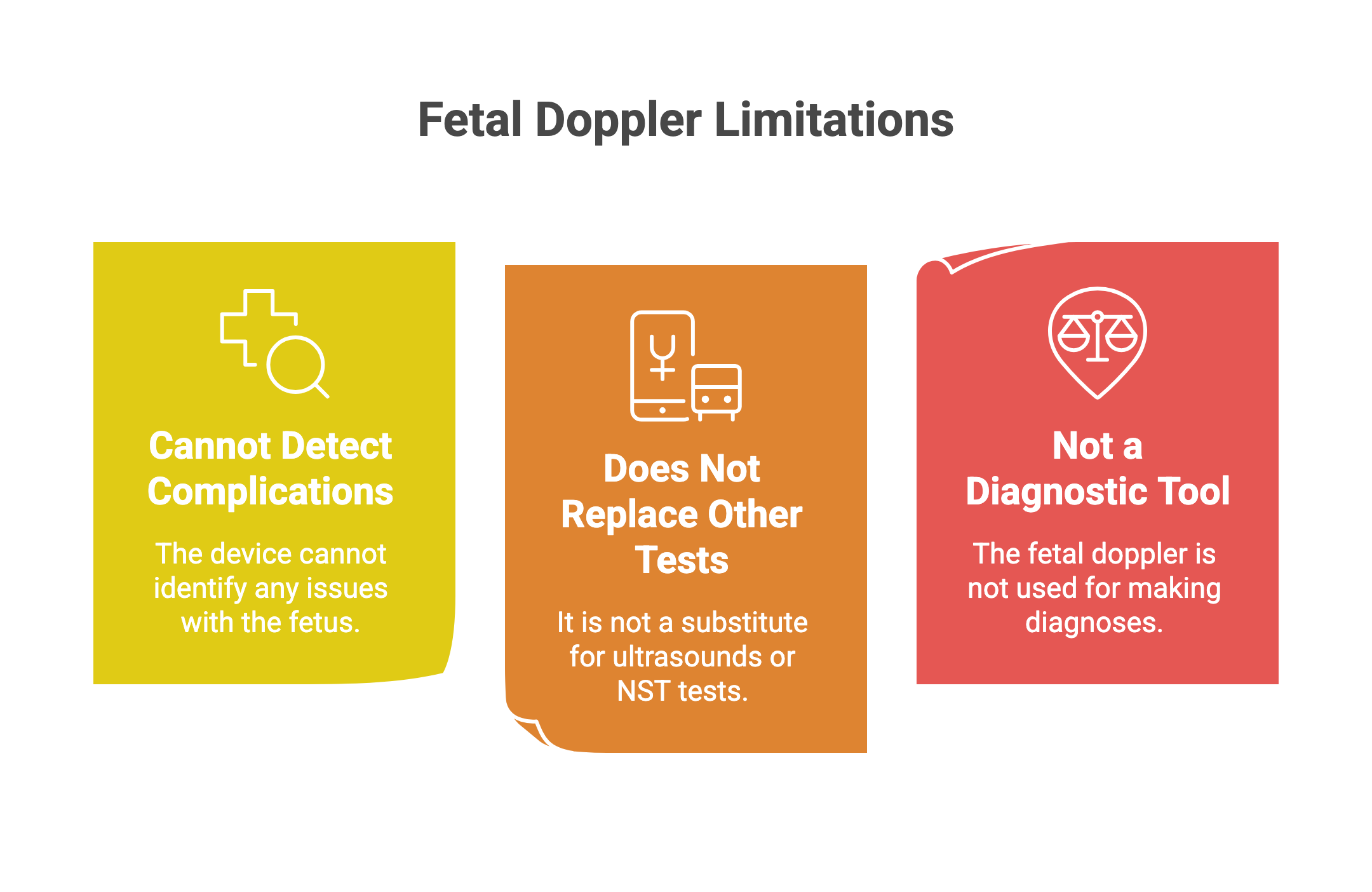
A fetal doppler can confirm the presence of a heartbeat but does not measure oxygen levels, growth, or fetal distress.
Limitations:
Cannot detect fetal complications
Does not replace ultrasounds or NST tests
Not a diagnostic tool
Is a Fetal Doppler Safe for Regular Home Monitoring?
A fetal doppler is safe for occasional home use when used as directed. Overuse may increase anxiety rather than reassurance.
Doctor recommendations:
Use occasionally, not daily
Follow manufacturer instructions
Continue routine prenatal visits
Research Insight
Clinical studies published in peer-reviewed medical journals show that portable fetal heart rate monitors can reliably detect a baby’s heartbeat at home when used correctly, with strong agreement compared to clinical monitoring methods.
https://pubmed.ncbi.nlm.nih.gov/33706351/
Ongoing research continues to evaluate the reliability and usability of handheld fetal heart monitoring devices for home use.
https://pubmed.ncbi.nlm.nih.gov/39454353/
Fetal Doppler Price and Costing in India
Fetal doppler prices in India vary based on brand, certification, and intended use. Home-use devices are more affordable than clinical equipment.
Device Type | Typical Use | Price Range (INR) |
Handheld fetal doppler (home use) | Pregnancy reassurance | ₹2,500 – ₹6,000 |
Advanced handheld doppler | Enhanced audio clarity | ₹6,000 – ₹10,000 |
Clinical fetal doppler | Hospital monitoring | ₹15,000 – ₹40,000+ |
Recommended Choice: Janitri Keyar Echo Handheld Fetal Doppler
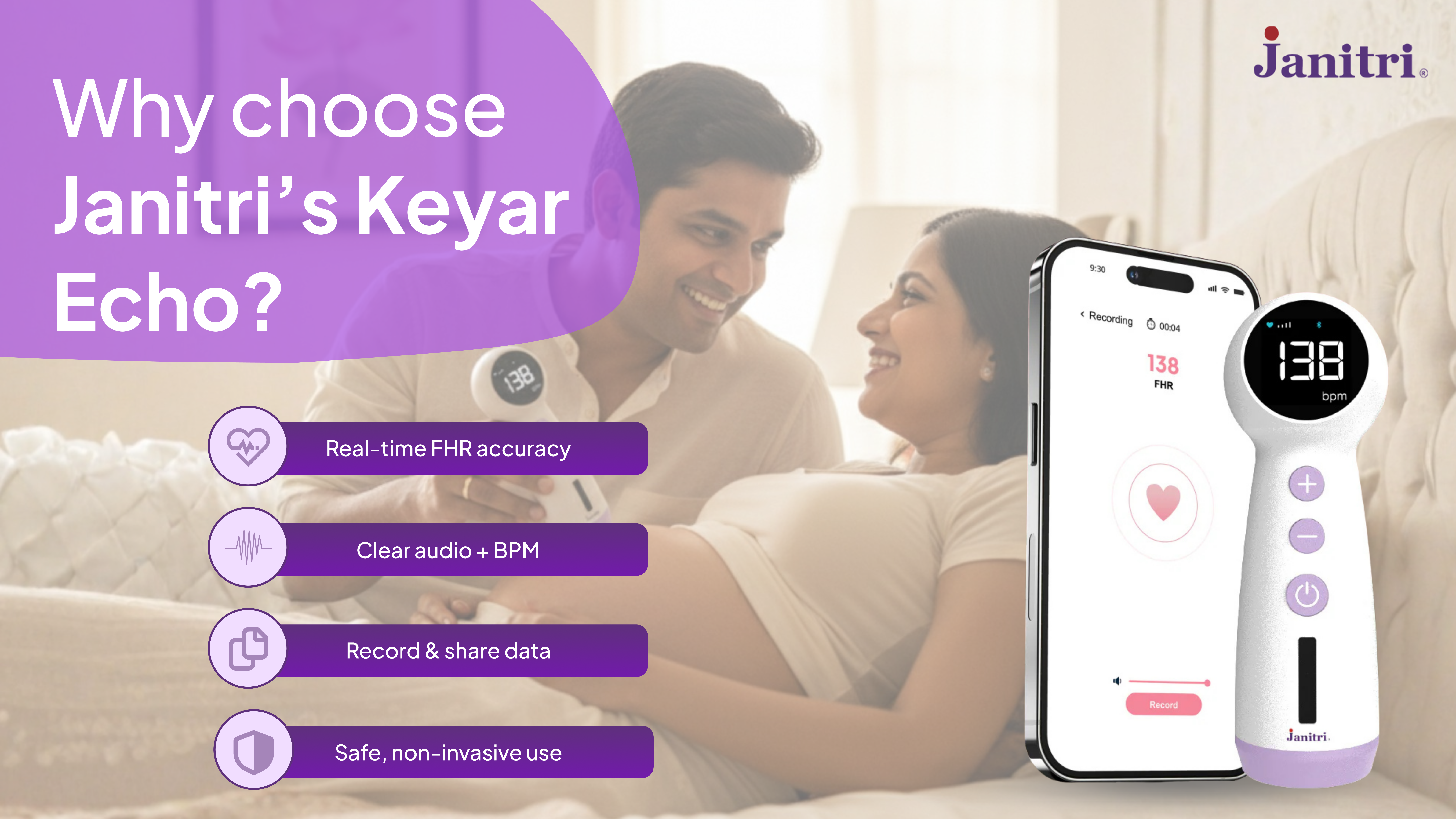
Pregnancy often brings moments of uncertainty, especially between scheduled check-ups. Keyar Echo is designed to support parents during those moments; simply, gently, and responsibly. Developed by Janitri, a brand trusted in clinical maternal monitoring, Keyar Echo brings that same credibility into safe and comfortable home use.
From the 18th week onward, it allows parents to hear, view, record, and share their baby’s heartbeat with ease. With clear audio, an easy-to-read digital display, a built-in speaker for shared listening, and Bluetooth app connectivity, it offers reassurance without medical complexity.
For parents who value clarity, confidence, and peace of mind, Keyar Echo is a dependable choice; helping you stay gently connected to your baby throughout your pregnancy journey.
FAQ’s
How Early Can You Use One?
Home fetal Dopplers are not reliable before 12 weeks. Most parents get consistent results at 16+ weeks. Before that, the uterus sits too low in the pelvis for a consumer device to pick up a signal.
Are Home Fetal Dopplers Safe?
Used briefly and infrequently after the first trimester, risks appear low — but they are not FDA-approved for home use and should never replace professional prenatal care.
Can You Hear a Heartbeat at 7 Weeks?
Not with a home Doppler. At 7 weeks, the embryo is the size of a blueberry and sits behind the pubic bone. Only a transvaginal ultrasound performed by a provider can confirm cardiac activity at this stage.
Is it safe to use a Doppler in the first trimester?
Yes, FDA-approved Dopplers are safe in the first trimester with low ultrasound output, but limit to 5-10 minute sessions to avoid any potential risks.
Misuse or frequent checks can heighten anxiety from unclear readings.