Mothers
How to Choose the Best Fetal Doppler at Home for Expecting Parents?
Feb 19 • 8 min read
Table of Content
How to Choose the
Doppler vs Hospital Machine What’s the Difference
Is It Safe to Use a Fetal Doppler at Home?
How Often Is Safe to Use
Doctors suggest once or twice a week unless advised otherwise.
Common Myths About Home Doppler
7 Things to check Before Buying a Home Fetal Doppler
Things to check Before Buying
Types of Fetal Doppler You Can Buy
Fetal Doppler Price Comparison in India
When Is the Right Time to Use a Doppler in Pregnancy?
How to Use a Fetal Doppler Correctly at Home
Common Problems and Easy Fixes
Signs You Should Talk to Your Doctor Instead of Using a Doppler
Home dopplers cannot detect all problems. Knowing warning signs helps parents seek medical care quickly and safely.
Contact your doctor if you notice these
Doctors may use ultrasound or CTG for full assessment
Checklist before you but Fetal Doppler
A Doppler is for Bonging Not Diagnosis
Conclusion
FAQ’s
Feeling a tiny life growing inside you is one of the most magical parts of pregnancy. From the very beginning, it’s natural to wonder how your baby is developing, how big they’re getting, how they’re moving, and especially how that little heart is beating day by day.
Today’s technology makes it easier than ever to feel close to your baby even between doctor visits. An at-home fetal doppler is a small, simple device that lets expecting parents listen to their baby’s heartbeat from the comfort of home, creating a reassuring and emotional connection with their little one. Instead of waiting for your next appointment, you can share these special moments anytime you choose.
In this guide, we’ll explore how fetal dopplers work, what features to look for before buying one, and how to use them safely and responsibly at home.
How to Choose the Best Fetal Doppler
The best fetal doppler is safe, easy to use, and clinically reliable. Parents should look for trusted brands, clear sound quality, and proper guidance while remembering home monitoring supports care not replaces doctors.
Choose a doppler that is:
Clinically tested or doctor-recommended
Easy to use with clear sound
Safe ultrasound power level
From a trusted maternal monitoring brand
Within your budget but reliable
Also remember:
Use after 18 weeks unless advised earlier
Use occasionally, not daily
Contact your doctor if you cannot find the heartbeat
Doppler vs Hospital Machine What’s the Difference
Home dopplers and hospital machines both use ultrasound, but they serve different roles. Understanding the difference helps parents use home devices calmly and trust medical visits for complete pregnancy monitoring.
A home fetal doppler heartbeat monitor helps you hear heartbeat sounds. Hospital machines like cardiotocography track detailed heart patterns and baby movement.
Doctors use hospital tools to diagnose problems. A home doppler is for reassurance and bonding.
Comparison
Home doppler → bonding and listening
Hospital machine → medical diagnosis
Home doppler → occasional use
Hospital machine → supervised testing
Parents should always attend prenatal checkups even when using a doppler at home.
Is It Safe to Use a Fetal Doppler at Home?
Fetal dopplers are considered safe when used correctly and occasionally. Parents should follow instructions, limit use, and understand that home monitoring supports prenatal care but never replaces professional medical advice.
Doctors say fetal dopplers use low-energy ultrasound similar to clinic devices. But overuse can create worry or false reassurance.
Baby position, placenta location, and early pregnancy can make detection difficult. Parents should stay calm if they cannot hear their heartbeat immediately.
Safety Tips
Use after 12–14 weeks
Limit sessions to 5–10 minutes
Follow instructions carefully
Talk to your doctor if unsure
How Often Is Safe to Use
Many parents feel tempted to check their heartbeats daily. Doctors recommend occasional use instead, because frequent checking can increase anxiety and may not provide extra medical reassurance.
Doctors suggest once or twice a week unless advised otherwise.
Babies move often
Heartbeat may be hard to find
Frequent checking can cause worry
Tracking baby movement is often more helpful than repeated doppler use.
Common Myths About Home Doppler
Online advice about dopplers can be confusing. Understanding common myths helps parents stay calm, avoid fear, and use their baby heart monitor in a safe and balanced way.
Myths and Facts
Hearing heartbeat means baby is fully healthy → Not always
Dopplers replace doctor visits → No
No heartbeat means emergency → Not always
Understanding these myths helps parents use dopplers responsibly.
7 Things to check Before Buying a Home Fetal Doppler
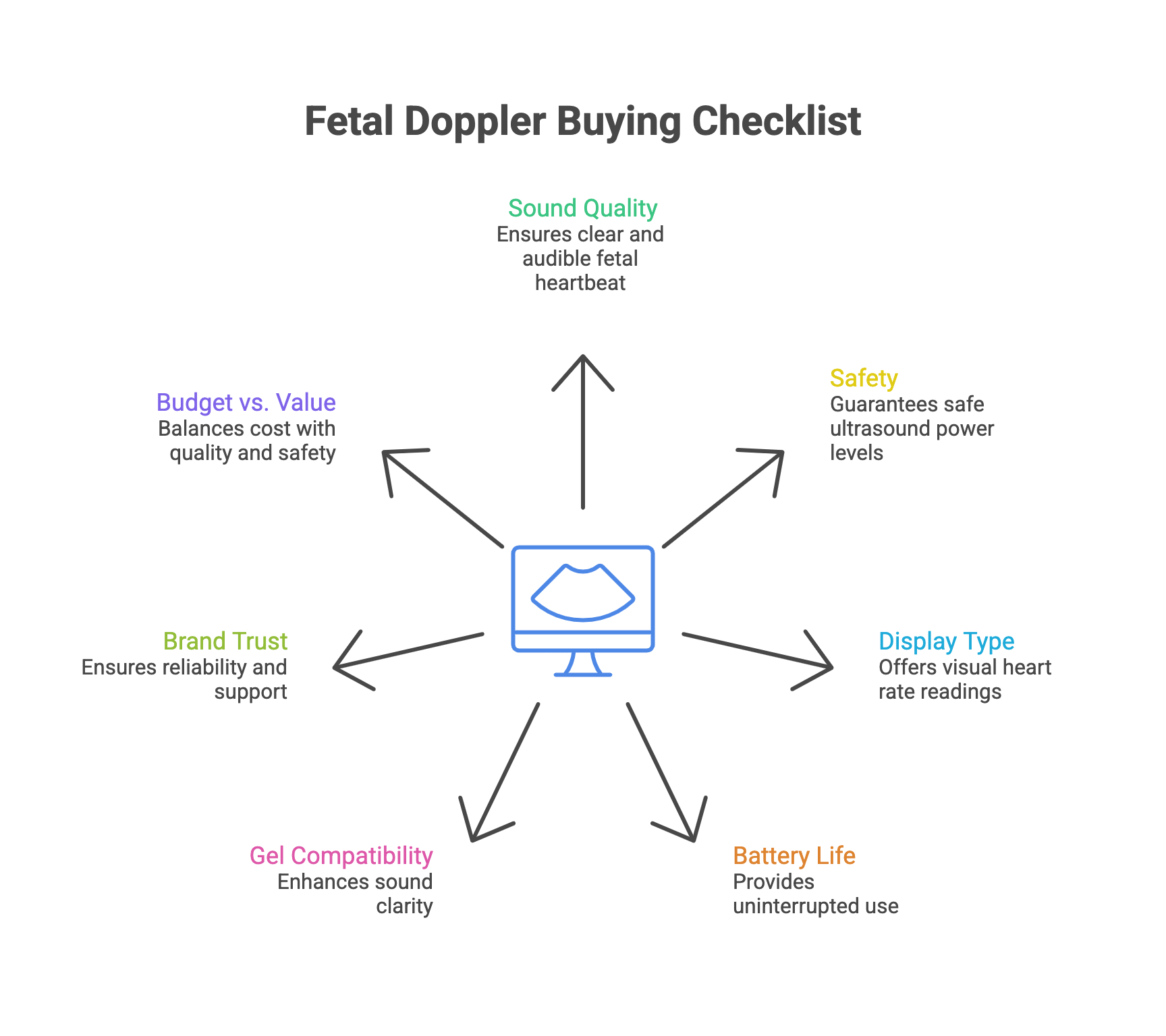
Choosing the best fetal doppler is about safety, clarity, and peace of mind. Parents often focus only on price, but features and medical reliability matter more. A good handheld fetal doppler should be easy to use, clinically safe, and from a trusted brand. Checking a few key points before buying helps you avoid confusion, reduce stress, and enjoy safe bonding moments with your baby.
Things to check Before Buying
Clear sound quality & noise filter
Look for devices with strong speakers and noise reduction. Clear audio helps you find the baby’s heartbeat faster and reduces confusion with your own heartbeat.Safe ultrasound power level
Choose dopplers designed for pregnancy with safe output levels. Avoid unknown brands without safety details or testing information.Display screen vs audio-only models
Display models show heart rate numbers, while audio-only models play sound. Numbers may vary slightly, so don’t panic if readings change.Battery life & charging type
Rechargeable batteries with USB charging are convenient. Good battery life prevents interruptions during use.Gel compatibility & probe quality
Good probes and recommended ultrasound gel improve sound clarity. Poor-quality probes can give static or weak sound.Warranty, service & brand trust
Choose brands known for maternal monitoring support, good reviews, and service options. This ensures help if the device has issues.Budget vs long-term use
Low-cost devices may have poor sound or durability. Compare fetal doppler price with quality, safety, and reliability before buying.
Types of Fetal Doppler You Can Buy
Different families prefer different features. Understanding doppler types helps parents choose a device that fits their comfort level, budget, and safe home monitoring needs.
Fetal Doppler Price Comparison in India
Prices vary based on brand, features, and clinical testing.
When Is the Right Time to Use a Doppler in Pregnancy?
Timing matters when using a fetal heart doppler. Knowing when heartbeat detection is easier helps parents avoid worry and use the device calmly and safely.
How to Use a Fetal Doppler Correctly at Home
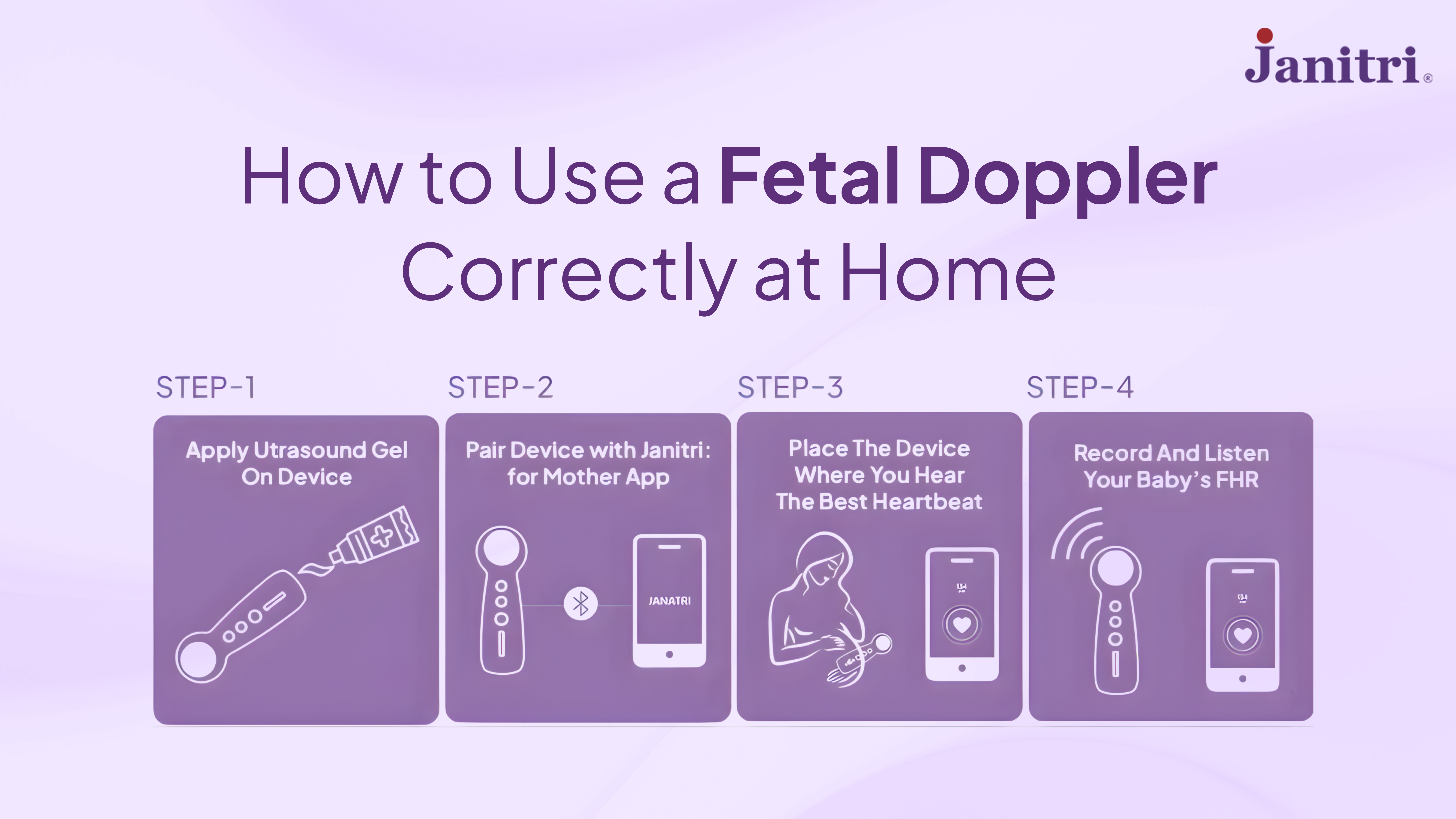
Proper use improves sound clarity and keeps parents calm. Following simple steps helps you hear the heartbeat safely while avoiding confusion or unnecessary worry.
Step-by-Step Guide
Lie comfortably
Apply ultrasound gel
Turn on doppler
Move probe slowly
Listen for fast heartbeat
Common Problems and Easy Fixes
Parents often face small issues when using a doppler. Simple adjustments usually solve them and help you continue monitoring calmly.
If unsure after 16 weeks, call your doctor.
Signs You Should Talk to Your Doctor Instead of Using a Doppler
Home dopplers cannot detect all problems. Knowing warning signs helps parents seek medical care quickly and safely.
Contact your doctor if you notice these
Less baby movement
Bleeding or severe pain
High-risk pregnancy symptoms
Anxiety from checking too often
Doctors may use ultrasound or CTG for full assessment.
Checklist before you but Fetal Doppler
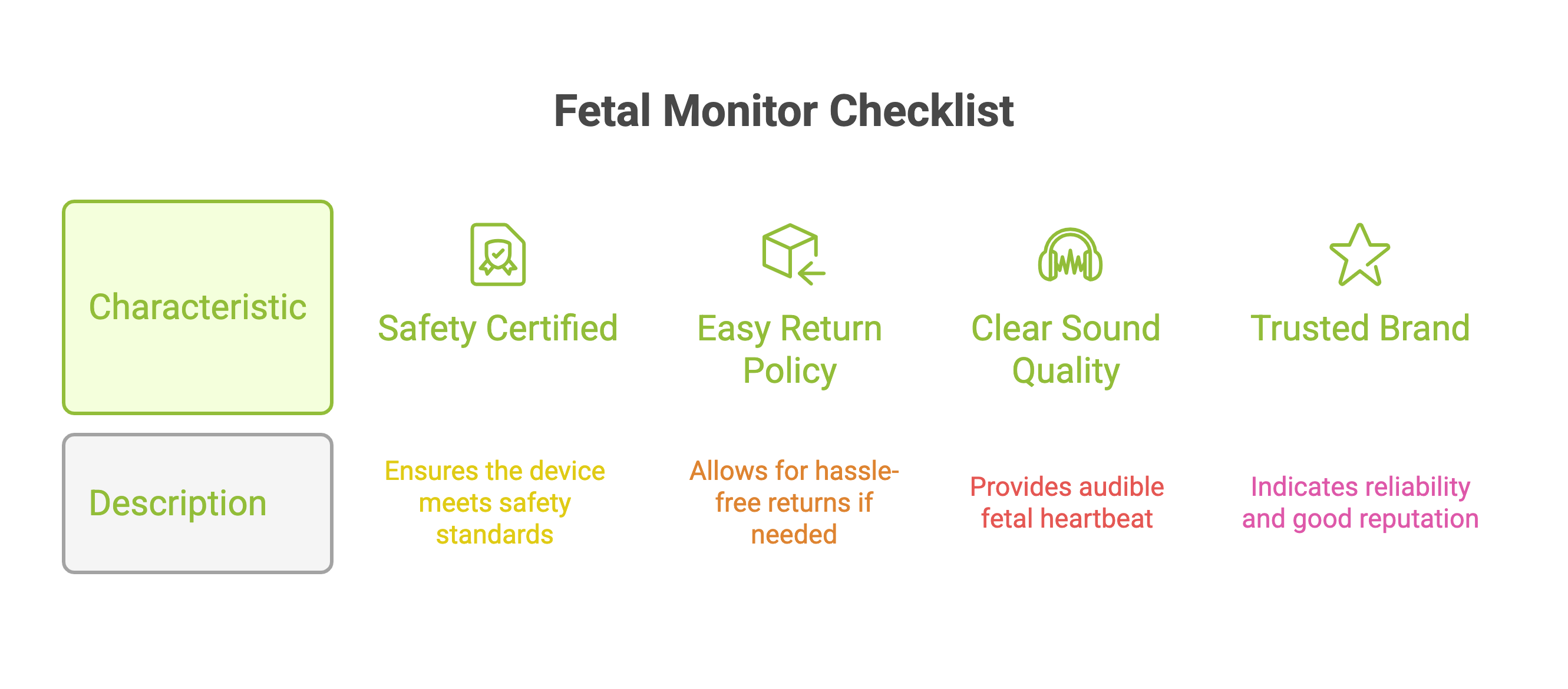
A quick checklist helps parents make confident choices. Checking safety, reviews, and ease of use ensures your fetal monitor at home supports safe pregnancy bonding.
Safety certified
Easy return policy
Clear sound quality
Trusted brand
A Doppler is for Bonging Not Diagnosis
Hearing your baby’s heartbeat can be magical. With safe use and the right guidance, a home doppler becomes a beautiful bonding tool while prenatal visits continue to protect your baby’s health.
A fetal heart doppler brings comfort and connection. But it cannot diagnose medical problems.
Doctors recommend regular prenatal visits and safe doppler use. Parents often feel calmer when they understand this balance.
With trusted guidance, simple expectations, and reliable devices, home monitoring can be a reassuring part of your pregnancy journey.
Conclusion
As your pregnancy journey unfolds, every heartbeat feels like a quiet reminder of the beautiful life growing inside you. A home fetal doppler can bring comfort and connection between doctor visits; but choosing a safe, reliable device truly matters. Safety, clarity, and clinical trust should always come first.
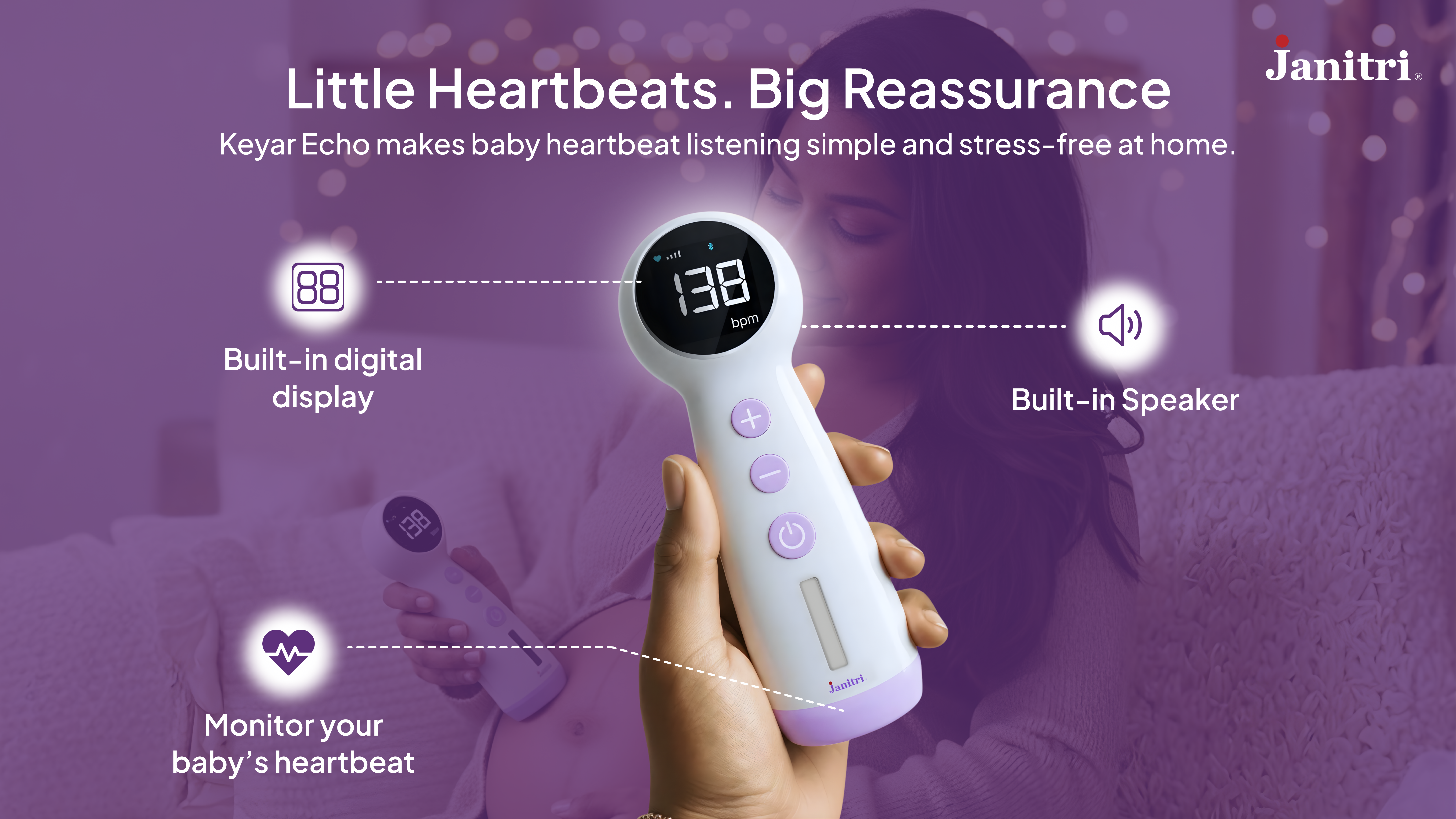
Keyar Echo Fetal Doppler is created for expecting parents who want reassurance without confusion. Designed with clinically safe technology, clear sound quality, and a simple, easy-to-use format, it helps you listen to your baby’s heartbeat calmly at home while always continuing regular prenatal checkups.
If you’d love to turn those small heartbeat moments into lasting memories, explore Keyar Echo Fetal Doppler and keep reassurance close to your heart. 💛
FAQ’s
1.What Can a Fetal Doppler Detect?
A fetal Doppler primarily detects the baby's heart rate through sound waves bouncing off moving blood cells, typically picking up a rapid "whooshing" beat of 110-160 bpm after 10-12 weeks. It doesn't assess blood flow details like clinical Doppler scans (e.g., umbilical artery) or NST reactivity—those require medical-grade tools for deeper insights.
When Should You Start Using a Fetal Doppler?
Start around 12-14 weeks when the heartbeat is audible at home, though reliability improves after 16 weeks; earlier use risks confusing maternal vessels for fetal sounds. For high-risk cases, pair with professional NST from 28 weeks via portable options like advanced home monitors.
Is It Okay to Use a Fetal Doppler Every Day?
Daily use is generally safe with FDA-approved devices (under 10-15 minutes per session), as ultrasound energy is low, but avoid excess to prevent unnecessary anxiety from ambiguous readings—consult doctors for frequent checks, especially with wireless NST alternatives for consistent tracking.
Why Do I Need a Doppler Scan in Pregnancy?
A Doppler scan reassures fetal viability, monitors heart rate patterns in high-risk pregnancies (e.g., diabetes, multiples), and flags issues like poor placental flow early; home versions complement but don't replace clinical NST for comprehensive well-being checks.
What Sounds Does a Fetal Doppler Pick Up?
It captures the fetal heartbeat (fast, rhythmic whoosh), sometimes maternal pulse or whooshing from placenta/umbilical cord; no contractions or movements like NST belts detect—modern wireless systems enhance clarity with real-time FHR graphs.