Mothers
Painless Normal Delivery: What No One Tells You Before Your Due Date
Jun 9 • 6 min read
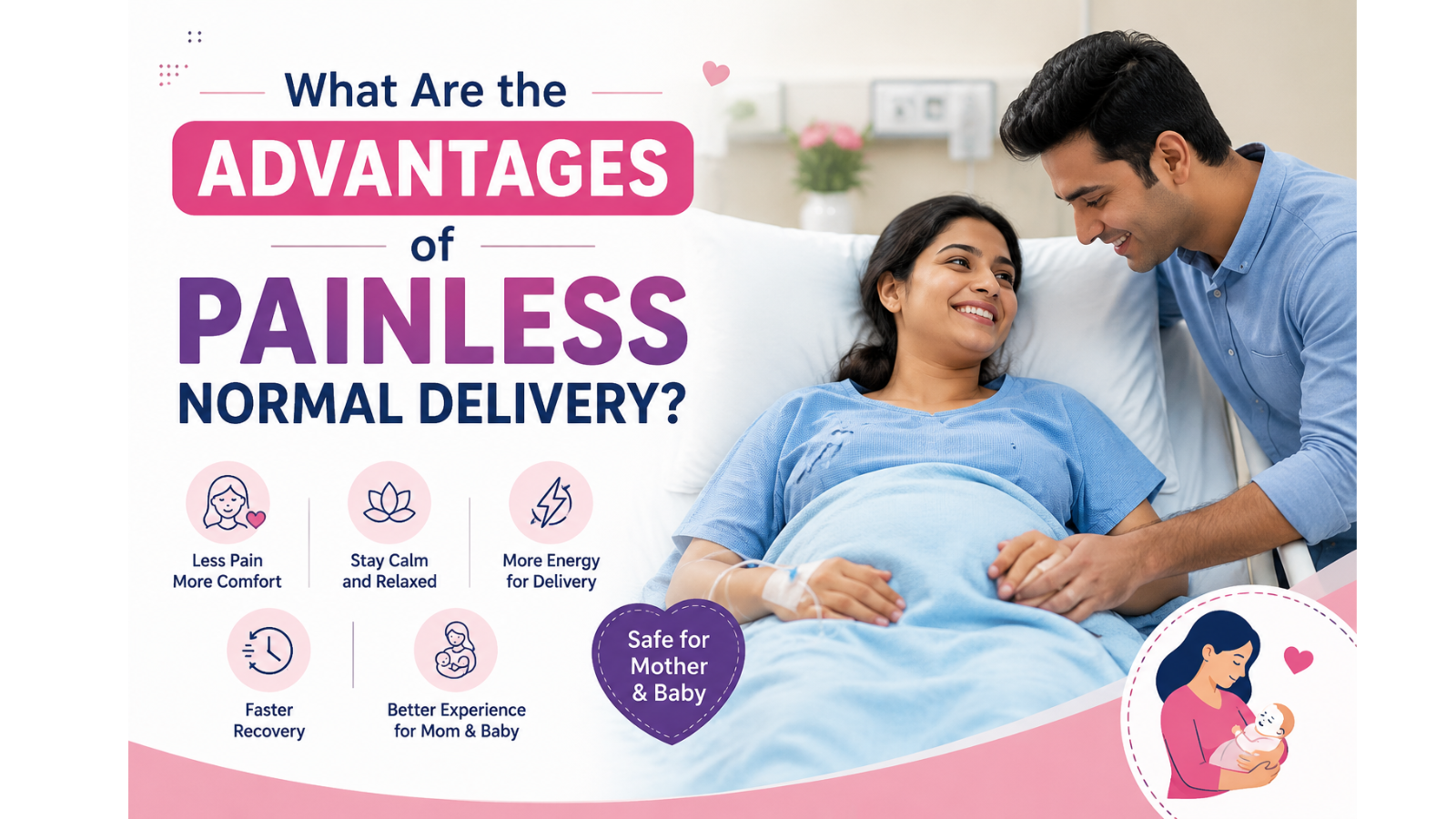
Table of Content
What “Painless Normal Delivery” Actually Means
How the Epidural Works — Step by Step
The Real Advantages — Beyond “Less Pain”
1. Enhances the natural progress of labor
2. Helps Save Energy for Pushing
3. Provides a positive birth experience
4.
5.
6.
Is It Safe? What the Research Shows
For the mother:
For the baby:
On C-section rates:
Who Should Ask About Painless Delivery?
How to Prepare for a Smoother Experience
Always active in the third trimester
Understand your preferences in advance
Regular attend your prenatal checkup
The first contraction doesn’t feel like what you expect. The first contraction is different from what you expect. It begins as pressure, dull and distant, and then builds into something that grips your bedsheet as you forget to breathe. It is at that moment that many women experience their greatest fear. Not of childbirth itself, but of hours more of this.
It is a fear that is completely valid. And it is also one that modern obstetric care has found meaningful ways to address.
Painless normal delivery — most commonly achieved through epidural analgesia — is not about avoiding the experience of giving birth. It can help you stay calm and relaxed during labour. When you feel calm, your body can handle labor more easily. You may feel calm and more comfortable during labour.
In this blog, we will explain how normal delivery works, what research shows, and what you should know before talking to your doctor.
What “Painless Normal Delivery” Actually Means
The term can be a little misleading — and worth unpacking before we go further.
Painless delivery" does not mean you will feel nothing at all. You may still feel pressure, contractions, and the urge to push during labour. The epidural helps reduce the strong pain, making labour more comfortable.
The delivery itself remains vaginal. You are not being moved to a C-section. You are not being put to sleep. You are awake, aware, and involved in birthing your child — just without the level of pain that otherwise makes that nearly impossible to endure calmly.
In clinical terms, this is called epidural analgesia (different from epidural anesthesia used in surgery, which causes complete numbness). The dosing in labor epidurals is carefully calibrated to reduce pain while preserving the motor function you need to push.
How the Epidural Works — Step by Step
Many Women often feel worried about an epidural because they dont know what will happen during the procedure. Here you can read the process step by step.
When is it given?:- Once labour pain started doctor given epidural also contractions are regular. Sometimes ,it may be given earlier
How will you sit or lie?:- Sitting and bending forward a little, or lying on your side is more comfortable position, it helps the epidural be placed correctly.
What happens during the injection?:- The doctor first numbs the skin on your back. Then, the epidural is placed in your lower back.
A small tube is left in place:- A thin, soft tube is left in your back after the needle is removed. Medicine is given through this tube during labour.
When does it start working?:- The epidural usually starts reducing pain within 10–20 minutes. The tube stays in place until after your baby is born.
The whole process takes about 10–15 minutes. Most women say the hardest part is staying still during a contraction while the doctor places the epidural.
The Real Advantages — Beyond “Less Pain”
The benefits of epidural-assisted delivery go deeper than comfort. Here is what the evidence and clinical experience show:
1. Enhances the natural progress of labor
Labor can become more challenging when the body is in too much pain. A comfortable labor can be achieved by managing pain.
2. Helps Save Energy for Pushing
Many women feel tired during labor. An epidural can help them rest and save energy for pushing the baby.
3. Provides a positive birth experience
Pain relief can help women feel calm and comfortable during labor, it makes birth experience more positive.
4. Makes Emergency Care Easier
If an emergency C-section is needed, an epidural can make it easier for the preparation process.
5. Helps Manage Blood Pressure During Labor
Many women have a high blood pressure problem during pregnancy, an epidural may help reduce stress in women with high blood pressure during labor.
6. Faster Recovery Than a C-Section
Women who have a vaginal birth with an epidural often recover faster than women who have a C-section
Is It Safe? What the Research Shows
An epidural is one of the most researched methods of pain relief during childbirth. Decades of studies have helped doctors understand how it works and how it affects labor.
For the mother:
At the time of labor, doctors closely examine blood pressure because it is possible that some women might experience a small drop in blood after getting an epidural so it is necessary to manage it. There is a possibility that you will feel some soreness or mild pain for a few days after the injection. If a needle accidentally touches the spinal cord membrane, it can lead to a headache for about one in 100 women.Many people think epidurals cause back pain later, but studies do not support this.
For the baby:
The medications used in labor epidurals are administered locally and absorbed into the bloodstream in very small amounts. They do not significantly affect the baby’s heart rate, APGAR scores, or breastfeeding outcomes when used as directed.
On C-section rates:
Many women have this question that an epidural can reason a C-section. Research shows that it does not.Some women with an epidural may need help during delivery, such as forceps or a vacuum. This can vary between hospitals.An epidural does not cause a C-section. C-sections are usually needed because of the baby's position, slow labor, or signs that the baby is in distress.These problems can happen with or without an epidural.
Who Should Ask About Painless Delivery?
You can discuss to your doctor about painless delivery if:
It is your first baby and you feel scared of pain
You want to know about pain relief options
You cannot tolerate much pain
You have health issues like high BP, diabetes, or twins pregnancy
Your doctor thinks your labor may take a long time.
Painless delivery is not for everyone.It is not always safe. such as certain health conditions, infections, or very fast labor.Your doctor will decide what is best for you and your baby.
How to Prepare for a Smoother Experience
Regardless of your pain management choices, the following make a measurable difference in labor outcomes:
Always active in the third trimester
The third trimester is very important for women . If she does regular walking and yoga it help feel stronger and more comfortable. These activities is make labour pain less and shorter
Practise breathing before you need it
Breathing techniques do not take away labor pain,Good breathing techniques can reduce stress and help you cope better with labor pain.
Understand your preferences in advance
Labor can be unpredictable. If you make a birth plan before the delivery, it can help your hospital team to proceed how you would like your labor and delivery to be.
Ask your doctor any questions
If you want any questions related to your pregnancy or delivery you have to ask your doctor. Do not hesitate to ask about epidurals. It feels more confident and motivated about your labor and delivery choices.
Regular attend your prenatal checkup
Do not miss your doctor appointments because if you miss your regular check up there is a chance that some medical conditions during pregnancy may affect labor and delivery. If it is any health related problem it appears so it comes early through the regular prenatal care and it is managed safely by doctors.
Frequently Asked Questions
Does an epidural affect pushing?
No. Most women can still push their baby normally.
Can I ask for an epidural during labor?
Yes. But if the baby is coming very soon, it may be too late.
What if the epidural works on only one side?
The doctor can fix it or give more medicine.
How much does painless delivery cost?
It depends on the hospital. It usually costs extra.
Can I decide during labor?
Yes. But it is better to think about it before labor starts.
What if I do not want an epidural?
That is okay. You can have a normal delivery without it.
Giving birth is not about how much pain you can handle.Using pain relief is okay.What matters most is that you and your baby are safe.If you want a painless delivery, talk to your doctor and choose what is best for you.