Hospitals
What Is a Transcutaneous Bilirubinometer and How Does It Help Detect Newborn Jaundice?
Feb 6 • 5 min read
Table of Content
What Is a
What is Newborn Jaundice?
Types of
Normal Range of
Why is Bilirubin Monitoring Important in Newborns?
How Does a Transcutaneous Bilirubinometer Work?
How Does It Help Detect Newborn Jaundice?
6 Common Causes of High Bilitubin
How the Bilirubin Test Was Done Previously
Transcutaneous vs Blood Bilirubin Testing
Benefits Of Using a Navam Bilirubin Max.
Expert Insights on
Conclusion
FAQ’s
Newborn jaundice is a common condition caused by Increased bilirubin levels during the first days of life. While it is usually temporary, delayed detection can lead to serious complications if bilirubin becomes excessively elevated. A transcutaneous bilirubinometer enables fast, non-invasive bilirubin screening through the skin, helping healthcare providers detect jaundice early and monitor it safely without the need for repeated blood tests.
What Is a Transcutaneous Bilirubinmeter?
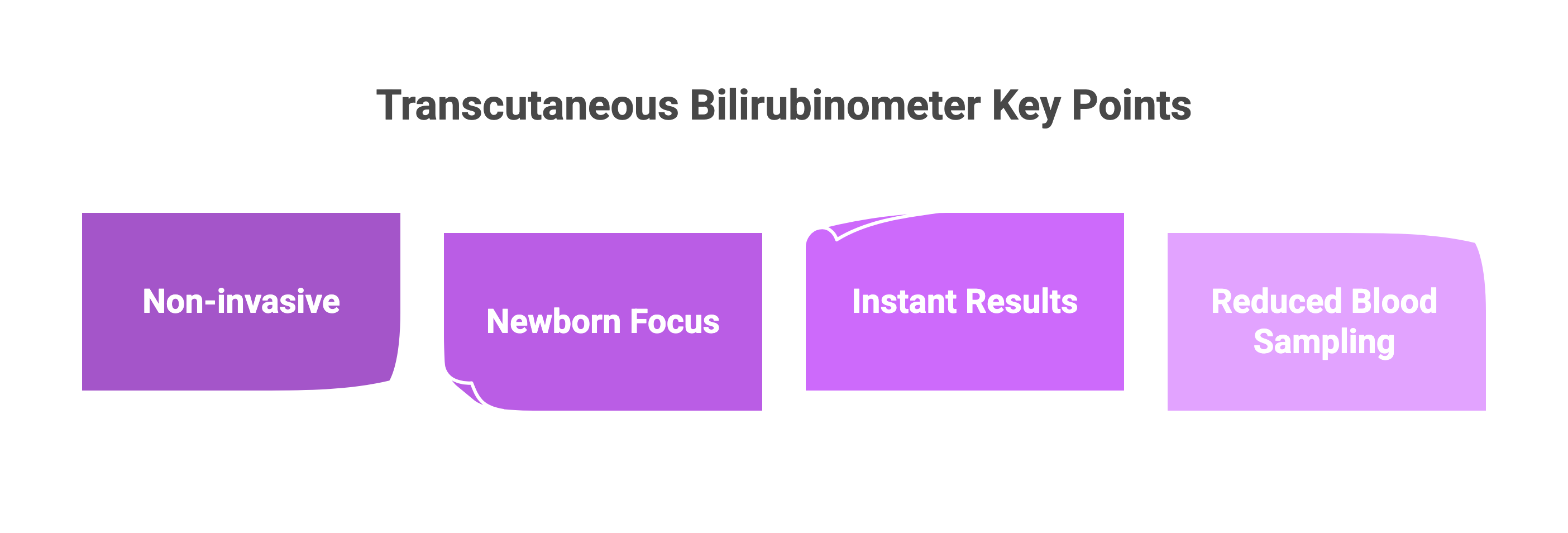
A transcutaneous bilirubinometer is a non-invasive medical device used to estimate bilirubin levels in newborns by measuring light reflected from the skin. It allows jaundice screening to be performed quickly, painlessly, and reliably.
Key points
Non-invasive bilirubin testing device
Designed specifically for newborns
Provides instant digital results
Reduces the need for blood sampling
What is Newborn Jaundice?
Newborn jaundice develops when bilirubin accumulates more quickly than a baby's developing liver is capable of processing and removing it. This leads to yellowing of the skin and eyes, typically appearing within the first week after birth.
What to know
Very common in early newborn life
Usually temporary but needs monitoring
Can worsen if bilirubin rises rapidly
Requires regular bilirubin screening
Types of Newborn Jaundice

Physiological Jaundice
Physiological jaundice is the most common type of neonatal hyperbilirubinemia and usually does not cause serious complications. In this condition, bilirubin is present in an unconjugated form, and serum levels generally remain below 15 mg/dL.
Appears 24–72 hours after birth
Peaks around the 4th or 5th day
Gradually disappears by 10–14 days of life
Typically resolves without medical intervention
Pathological Jaundice
Pathological jaundice occurs when bilirubin levels rise abnormally high and require medical intervention. In this condition, serum bilirubin levels increase by more than 5 mg/dL per day or appear within the first 24 hours after birth.
Rapid bilirubin rise
Higher risk of complications
Requires close monitoring and treatment
Early detection is critical
Normal Range of Bilirubin in Newborn Babies
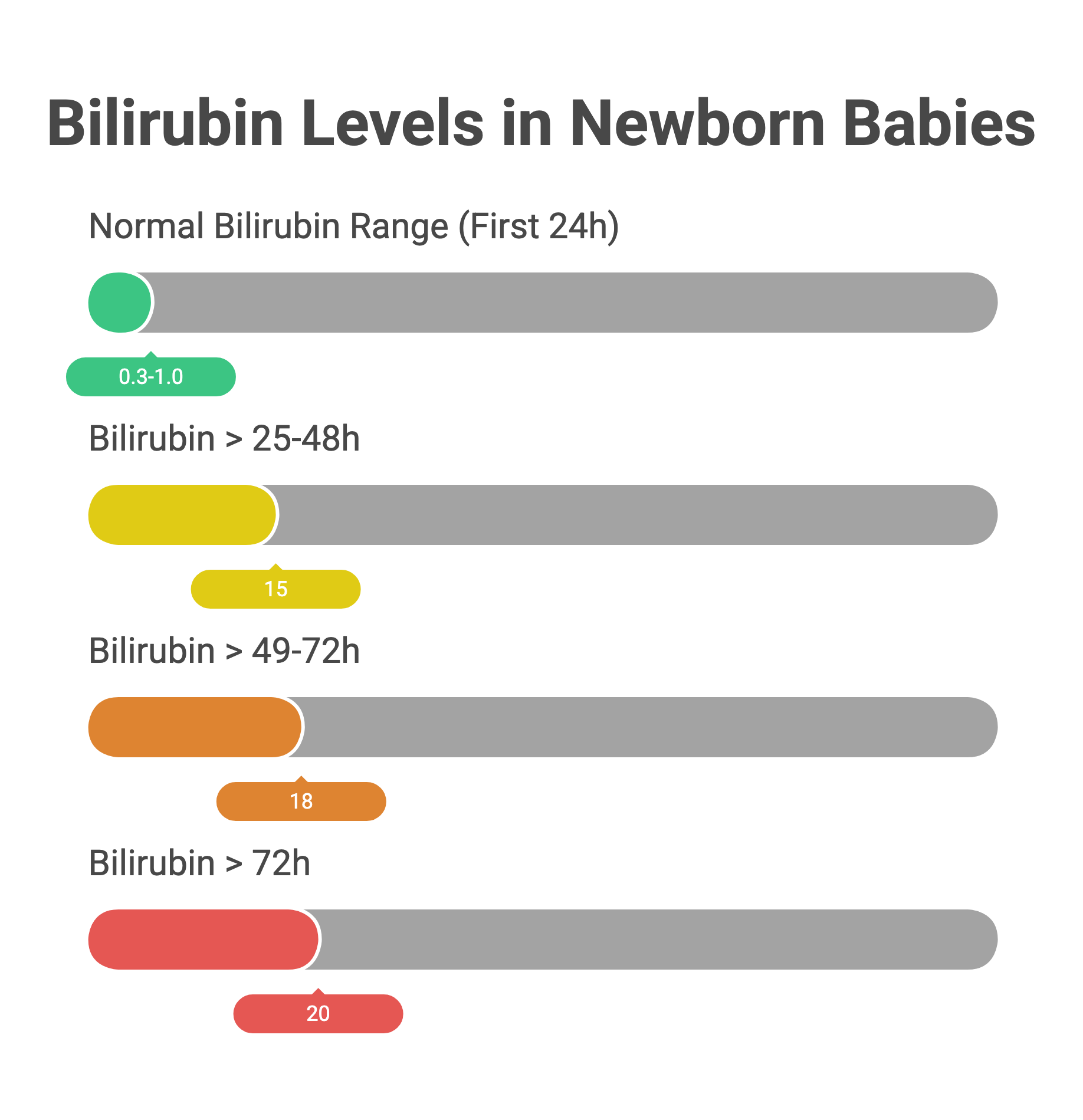
The normal bilirubin range in newborns during the first 24 hours after birth is 0.3 mg/dL to 1.0 mg/dL. When bilirubin levels exceed safe thresholds, treatment such as phototherapy may be required.
Phototherapy is typically initiated when:
25–48 hours old: Total serum bilirubin > 15 mg/dL
49–72 hours old: Total serum bilirubin > 18 mg/dL
>72 hours old: Total serum bilirubin > 20 mg/dL
Regular bilirubin monitoring helps determine when treatment is necessary.
Why is Bilirubin Monitoring Important in Newborns?
Monitoring bilirubin levels allows healthcare providers to identify jaundice early—often before visible symptoms appear. Early screening supports timely treatment and prevents severe hyperbilirubinemia.
Why monitoring matters
Detects rising bilirubin early
Prevents severe jaundice complications
Guides treatment decisions
Improves overall newborn safety
How Does a Transcutaneous Bilirubinometer Work?
A transcutaneous bilirubinometer emits specific wavelengths of light onto the newborn’s skin. The device analyzes how the light is absorbed and reflected to calculate an estimated bilirubin level.
Clinical research supports the accuracy of transcutaneous bilirubin measurement. For example, the study “Accuracy of Transcutaneous Bilirubinometry in Predicting Serum Bilirubin Levels in Newborns” (PubMed) demonstrates strong correlation between transcutaneous readings and serum bilirubin, confirming its reliability as a non-invasive screening tool. Another article, “Evaluation of Transcutaneous Bilirubinometer Performance Compared with Serum Bilirubin Measurement” (PubMed), further validates this method in neonatal care.
How it works
Light penetrates the skin surface
Reflected light is analyzed
Bilirubin concentration is calculated
Results appear instantly on screen
How Does It Help Detect Newborn Jaundice?
By providing immediate bilirubin readings, a transcutaneous bilirubin monitor helps detect jaundice even before visible yellowing occurs. This enables trend tracking and early intervention.
Detection benefits
Early identification of jaundice
Enables frequent repeat screening
Reduces dependence on lab tests
Supports proactive newborn care
6 Common Causes of High Bilitubin
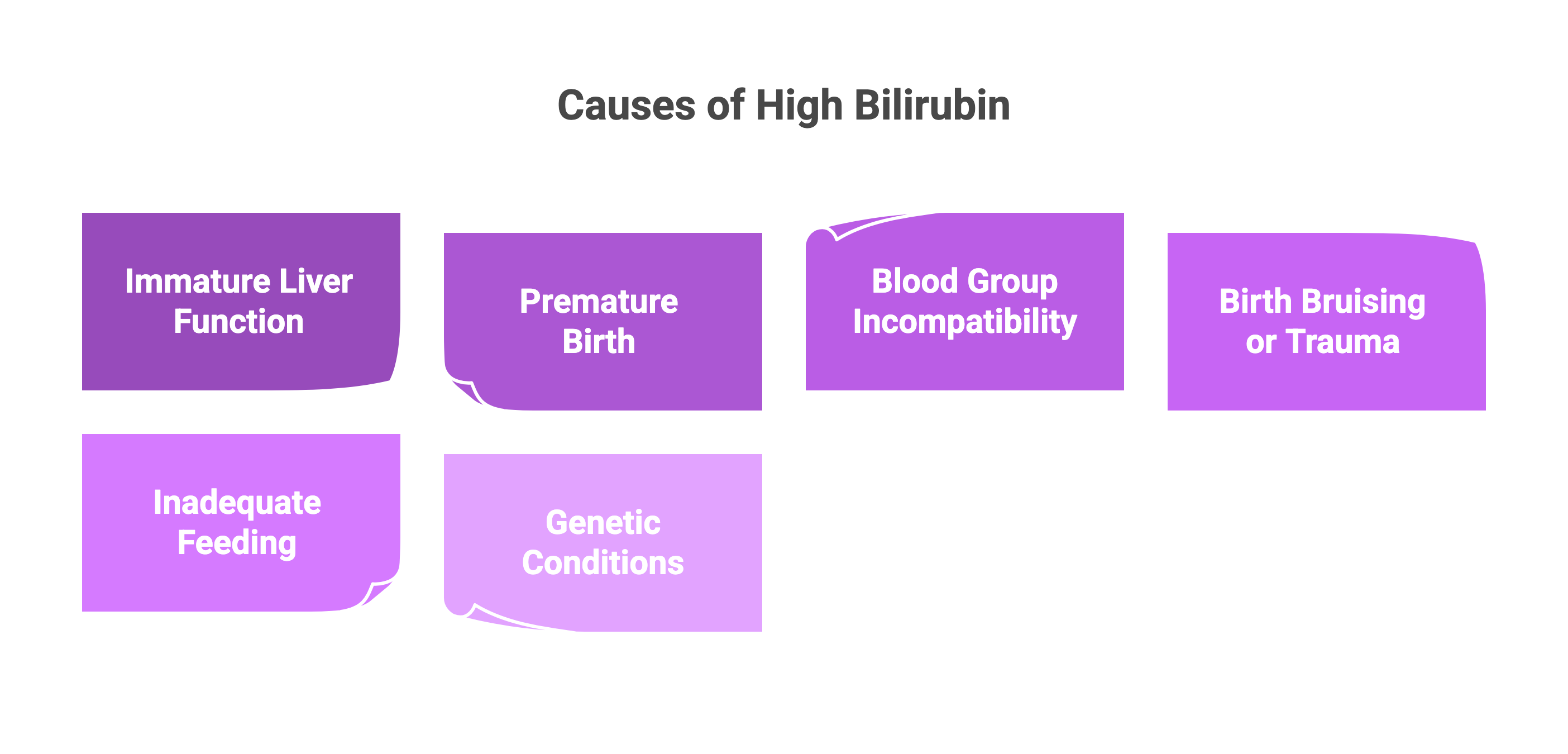
High bilirubin levels occur when production exceeds the newborn’s ability to eliminate it. Identifying these causes helps determine when closer monitoring is needed.
Common causes
Immature liver function
Premature birth
Blood group incompatibility
Birth bruising or trauma
Inadequate feeding
Certain genetic conditions
How the Bilirubin Test Was Done Previously
Before transcutaneous bilirubin devices, bilirubin levels were measured using serum blood tests. These required blood collection and laboratory analysis, often delaying clinical decisions.
Previous testing method
Heel-prick blood collection
Laboratory-based analysis
Longer result turnaround time
Limited repeat testing
Increased discomfort for newborns
Transcutaneous vs Blood Bilirubin Testing
Transcutaneous bilirubin measurement is mainly used for screening, while blood tests are used for confirmation when bilirubin levels are high or treatment is required.
Key differences
Non-invasive vs invasive testing
Instant vs delayed results
Painless vs needle prick
Ideal for routine screening
Transcutaneous vs Serum Bilirubin: Quick Comparison
Feature | Transcutaneous Bilirubinometer | Blood Test |
Invasiveness | Non-invasive | Invasive |
Result Time | Seconds | Minutes–Hours |
Pain | None | Yes |
Repeat Testing | Easy | Limited |
Benefits Of Using a Navam Bilirubin Max.
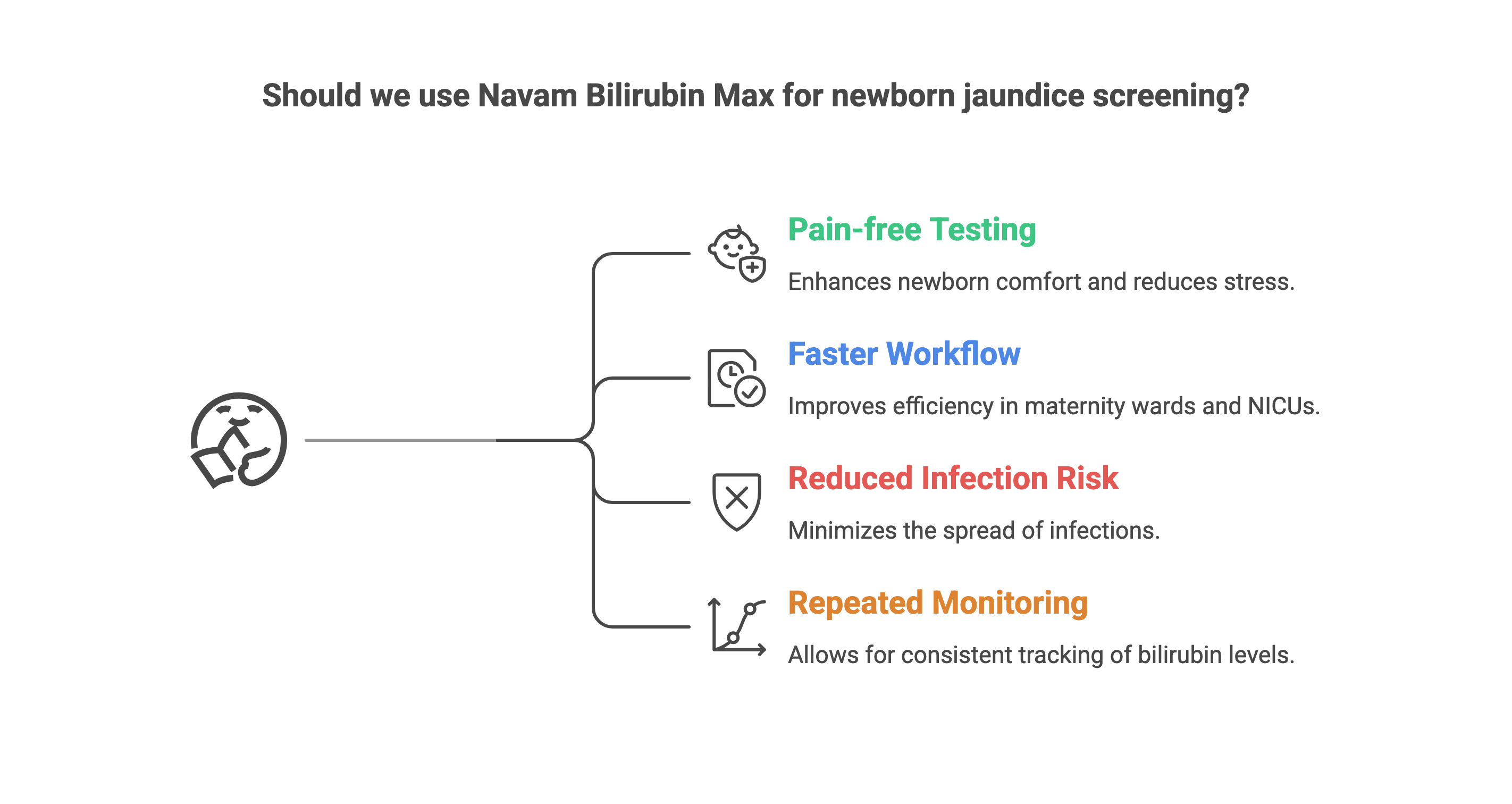
Navam Bilirubin Max is a non-invasive bilirubinometer that improves newborn comfort while maintaining clinical accuracy. It supports consistent jaundice screening in maternity wards and NICUs.
Main benefits
Pain-free testing
Faster clinical workflow
Reduced infection risk
Suitable for repeated monitoring
Expert Insights on Navam Bilirubin Max
Neonatal experts emphasize that early bilirubin screening is essential for preventing severe jaundice-related complications. Non-invasive bilirubin monitoring is widely recommended as a first-line screening method.
Expert consensus
Early screening reduces risk
Non-invasive tools improve compliance
Frequent monitoring enables early treatment
Screening before discharge is critical
Conclusion
As neonatal care continues to move toward gentler, evidence-based practices, non-invasive bilirubin screening is becoming a standard of care rather than an option. Transcutaneous bilirubinometry allows clinicians to screen early, monitor trends confidently, and reduce unnecessary blood sampling without compromising accuracy.
Janitri’s Navam Bilirubin Max are designed to seamlessly integrate into routine newborn assessments, enabling faster decision-making, smoother workflows, and improved newborn comfort. By supporting frequent, pain-free screening, Janitri helps healthcare teams identify jaundice early and intervene at the right time.
Early detection. Gentle monitoring. Better neonatal outcomes.
That’s the future of bilirubin screening with Janitri.
FAQ’s
What is the purpose of a transcutaneous bilirubinometer?
A transcutaneous bilirubinometer is used to measure bilirubin levels in newborns non-invasively through the skin. It helps healthcare providers screen, monitor, and detect early signs of neonatal jaundice without the need for blood sampling, enabling quicker and safer decision-making.
What is a bilirubin test used to diagnose?
A bilirubin test is used to diagnose and assess jaundice by measuring the amount of bilirubin in the blood or through the skin. In newborns, it helps identify hyperbilirubinemia, determine its severity, and guide timely treatment to prevent complications.
When is transcutaneous bilirubin testing needed?
Transcutaneous bilirubin testing is needed when a newborn shows visible signs of jaundice, within the first 24–72 hours after birth, or during routine newborn screening. It is especially useful for early monitoring, follow-up after phototherapy, and reducing unnecessary blood tests.
Is a Bilirubin Level of 19 mg/dL High in Newborns?
Bilirubin levels are closely monitored in the first few days of life. A newborn is generally considered to have hyperbilirubinemia if bilirubin levels rise more than 5 mg/dL per day or exceed 17 mg/dL within the first 24 hours after birth. A level of 19 mg/dL is therefore considered high and requires prompt medical evaluation and appropriate treatment.