Hospitals
Difference Between CTG and NST Test in Pregnancy: A Complete Guide
Apr 6 • 7 min read
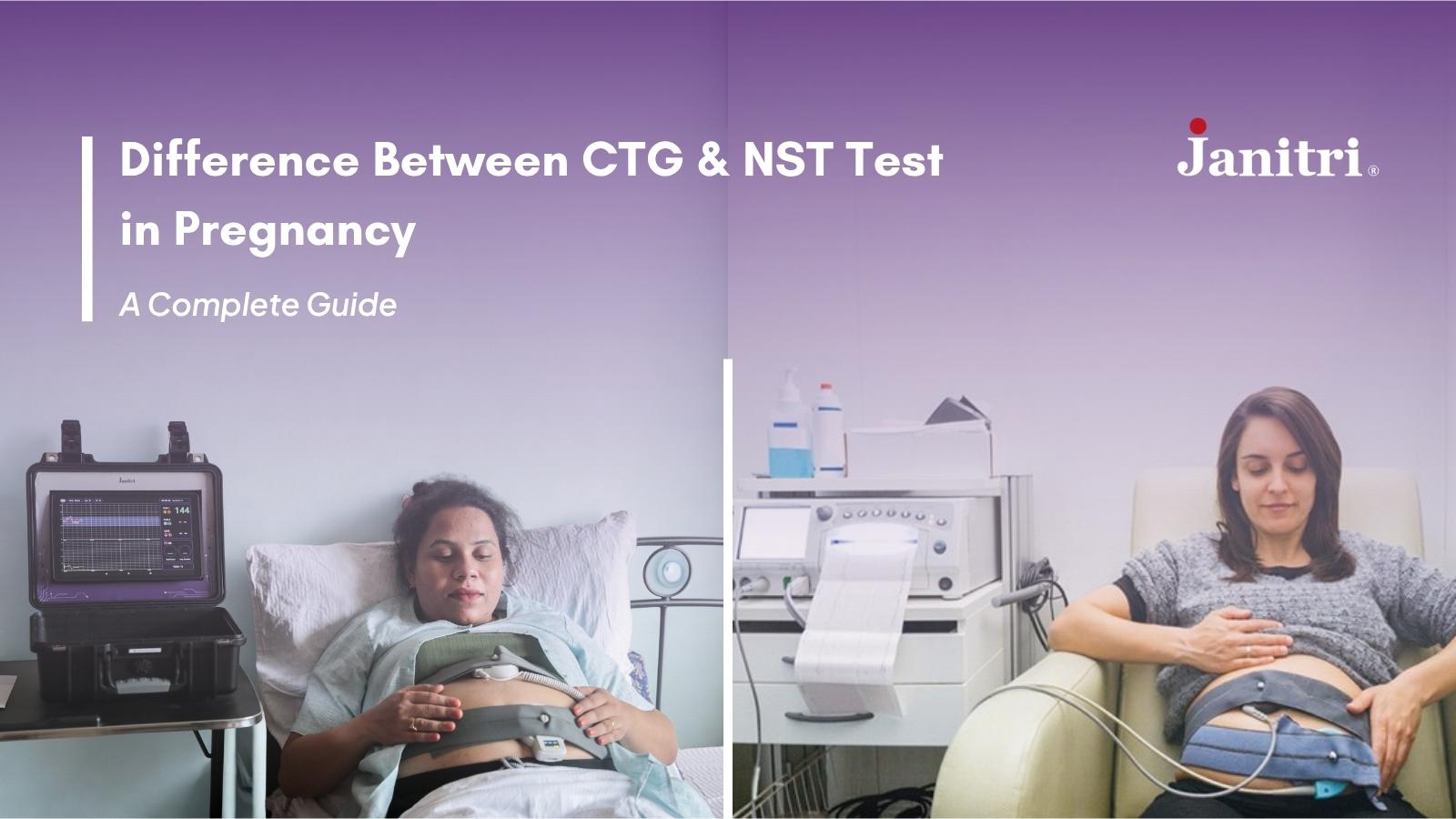
Table of Content
What Is an
Key facts about NST:
What Is a CTG Test in Pregnancy?
Key facts about CTG:
When Is NST Recommended?
When Is CTG Recommended?
How Each Test Is Performed
NST (Non-Stress Test) Steps
CTG (Cardiotocography) Steps
What Do NST Results Mean?
What Do CTG Results Mean?
Key CTG parameters assessed include:
Can NST Be Done at Home
How Janitri's Keyar Devices Support Both NST and CTG Monitoring
Keyar DT (Wireless & Portable NST/CTG Machine for Hospitals)
Keyar DT Lite (Home NST Device for High-Risk Pregnancy)
Keyar DT Max (Plus Premium Hospital-Grade Monitoring)
Is NST and CTG the same test?
Which is better NST or CTG?
At what week is the NST test done?
Can I do NST at home in India?
CTG (Cardiotocography) and NST (Non-Stress Test) are both fetal monitoring tests used during pregnancy, but they serve different purposes. NST monitors the baby's heart rate in response to its own movements typically used during the prenatal period (after 28 weeks). CTG monitors fetal heart rate alongside uterine contractions and is primarily used during labour to detect fetal distress in real time. In many clinical contexts, NST is performed using a CTG machine, which is why the terms are often used interchangeably but they are not the same test.
What Is an NST Test in Pregnancy?
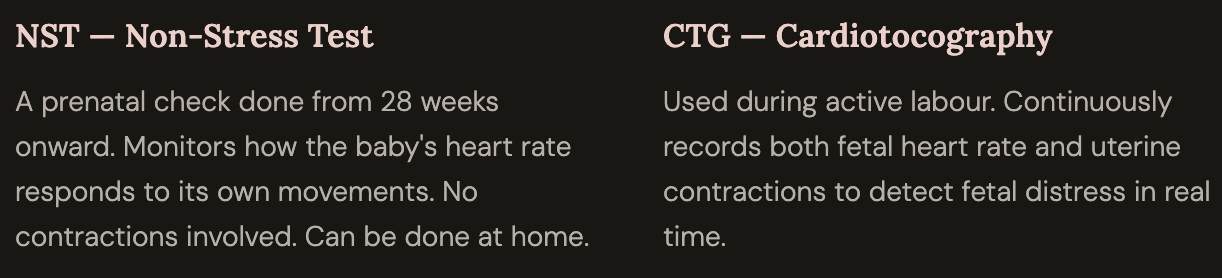
A Non-Stress Test (NST) is a prenatal test used to monitor a baby's heart rate and overall fetal well-being. The term "non-stress" refers to the fact that no stress is deliberately induced on the baby there are no contractions, no medications, and no physical intervention involved.
The test measures how the fetal heart rate responds to the baby's own movements. A healthy baby's heart rate will typically accelerate when it moves, similar to how a healthy adult's heart rate increases during physical activity. This accelerating response is called a reactive NST and indicates that the baby is receiving adequate oxygen.
Key facts about NST:
Recommended from 28 weeks of pregnancy onward
Uses a fetal Doppler that works on ultrasound technology to measure fetal heart rate
Particularly important for high-risk pregnancies (gestational diabetes, hypertension, reduced fetal movement)
Typically takes 20 to 40 minutes to complete
Can be performed in a hospital, clinic, or at home with certified devices
What Is a CTG Test in Pregnancy?
Cardiotocography (CTG) is a continuous electronic monitoring technique that simultaneously records two key parameters:
Fetal Heart Rate (FHR) the baby's heartbeat pattern
Uterine Contractions (UC) the frequency, duration, and intensity of contractions
CTG uses two external probes placed on the mother's abdomen: a Doppler ultrasound transducer to detect the fetal heartbeat and a tocometer (TOCO) to measure uterine activity. The combined recording is called a cardiotocogram and is displayed as a continuous graph.
CTG is primarily a labour monitoring tool, enabling obstetricians and midwives to detect early signs of fetal distress and make timely clinical decisions including emergency caesarean sections when necessary.
Key facts about CTG:
Used routinely during labour and delivery
Monitors both fetal heart rate and uterine contractions simultaneously
Provides parameters including: baseline FHR, accelerations, decelerations, and short-term variability (STV)
Results are interpreted using standardised classification systems (FIGO, NICE guidelines)
Advanced CTG machines (like Janitri's Keyar series) provide automated digital interpretation and remote access for doctors
CTG vs NST: Key Differences at a Glance
Parameter | NST (Non-Stress Test) | CTG (Cardiotocography) |
Full Form | Non-Stress Test | Cardiotocography |
Primary Use | Prenatal fetal well-being check | Labour monitoring |
When Performed | After 28 weeks (antepartum) | During active labour |
What It Measures | Fetal heart rate vs. baby's movement | Fetal heart rate + uterine contractions |
Contractions Involved? | No | Yes |
Duration | 20–40 minutes | Continuous throughout labour |
Setting | Hospital, clinic, or home | Hospital/labour ward |
Result Categories | Reactive / Non-Reactive | Normal / Suspicious / Pathological |
Purpose | Assess placental function & oxygen supply | Detect fetal distress in real time |
Can It Be Done at Home? | Yes (with certified device) | Not typically |
When Is NST Recommended?
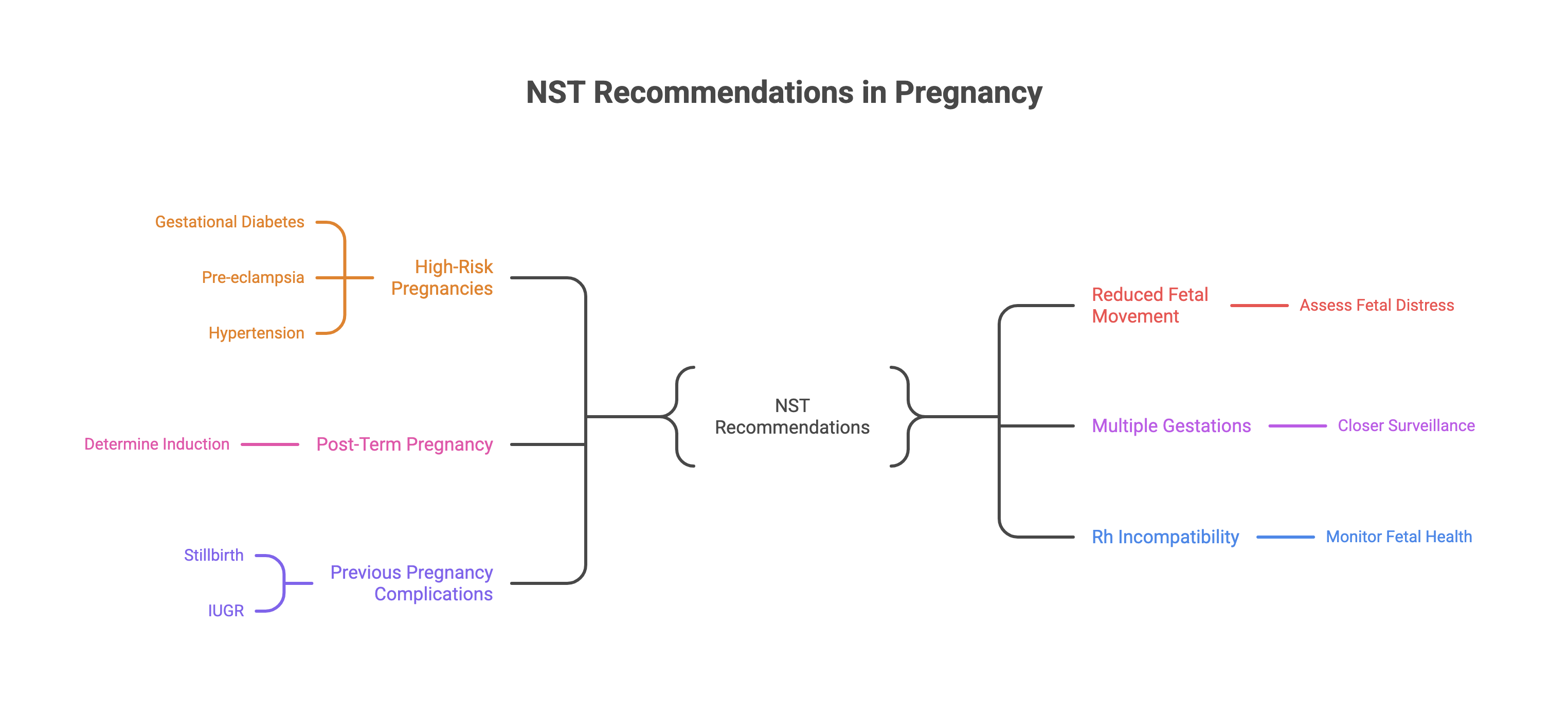
Doctors typically recommend an NST in the following situations:
High-risk pregnancies: Women with gestational diabetes, pre-eclampsia, or hypertension are often asked to undergo weekly or bi-weekly NSTs from their third trimester.
Reduced fetal movement: If a mother notices fewer baby kicks than usual, an NST helps quickly assess whether the baby is in distress.
Post-term pregnancy: When a pregnancy extends beyond 40 weeks, NSTs help determine whether induction is necessary.
Multiple gestations: Twin or triplet pregnancies require closer fetal surveillance.
Previous pregnancy complications: Women who have experienced stillbirth, IUGR (Intrauterine Growth Restriction), or other complications in prior pregnancies.
Rh incompatibility or fetal anaemia: Where ongoing monitoring of fetal health is critical.
When Is CTG Recommended?
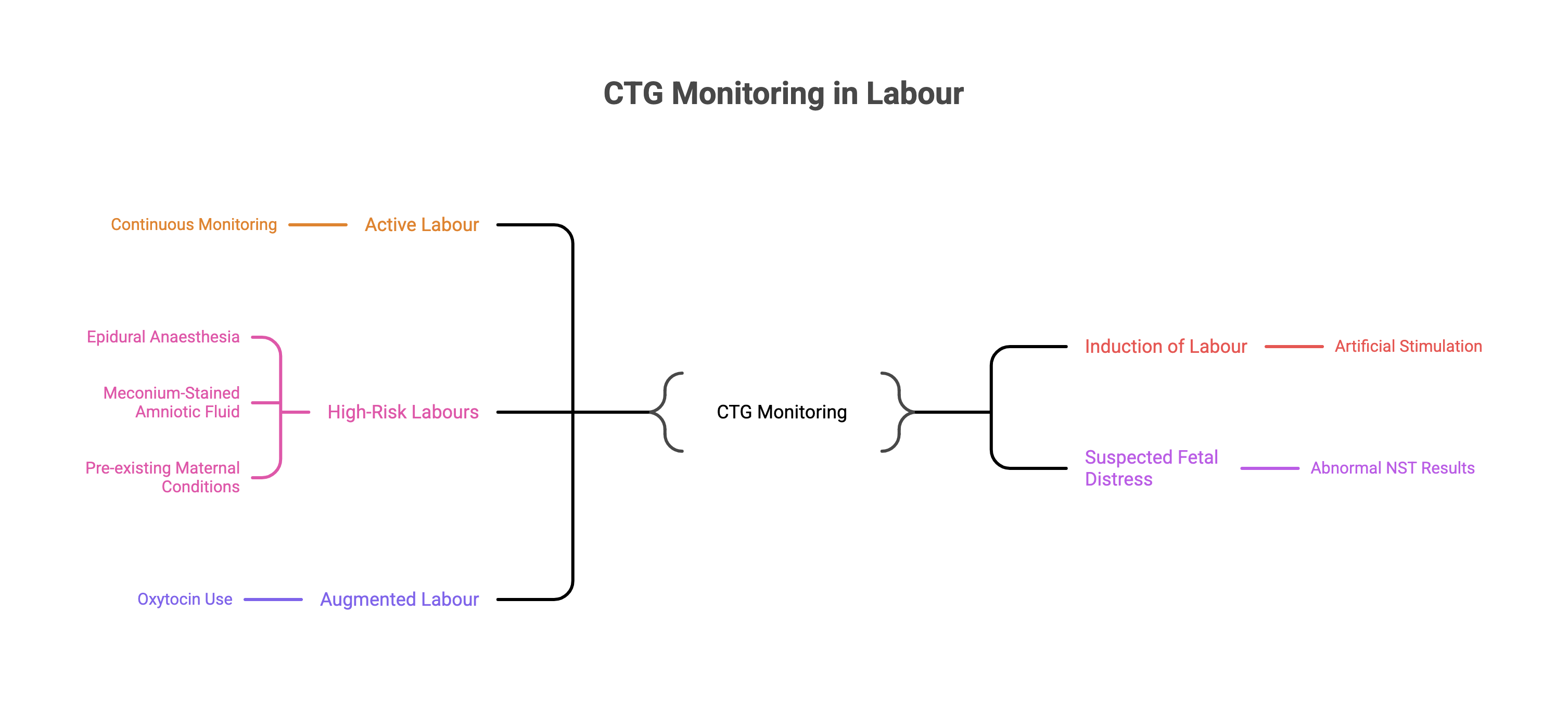
CTG is standard practice in the following situations:
Active labour: Continuous CTG monitoring is the global standard for tracking fetal well-being during contractions.
Induction of labour: When labour is being artificially stimulated, CTG ensures the baby is tolerating the process.
High-risk labours: Epidural anaesthesia, meconium-stained amniotic fluid, or pre-existing maternal conditions require continuous CTG.
Suspected fetal distress: Abnormal NST results may lead the doctor to initiate continuous CTG monitoring.
Augmented labour: When oxytocin is used to strengthen contractions, CTG is mandated to ensure fetal safety.
How Each Test Is Performed
NST (Non-Stress Test) Steps
Mother is seated reclined or lying on her left side
Gel is applied and a Doppler probe is placed to detect fetal heart rate
She may press a button when she feels fetal movement
Heart rate is monitored for 20 - 40 minutes
A reactive (normal) test shows at least two accelerations of 15 bpm lasting 15 seconds within 20 minutes
CTG (Cardiotocography) Steps
Mother lies in a semi-recumbent position
Two probes are attached: one for fetal heart rate and one (TOCO) for uterine contractions
The machine records both on a continuous trace
A clinician evaluates baseline rate, variability, accelerations, and decelerations
Monitoring continues throughout labour or until delivery
What Do NST Results Mean?

Result | What It Means | What Happens Next |
Reactive (Normal) | At least 2 accelerations in 20 minutes; baby appears healthy | Routine monitoring continues |
Non-Reactive | Fewer than 2 accelerations in 40 minutes; inconclusive | Additional tests (BPP, Doppler study) ordered |
Sinusoidal Pattern | Smooth, wave-like FHR; rare but serious | Immediate clinical evaluation |
A non-reactive NST does not always mean the baby is in danger the baby may simply be asleep. Doctors typically extend the test or use a buzzer (vibroacoustic stimulation) to wake the baby before drawing conclusions.
What Do CTG Results Mean?
CTG results are classified using international guidelines (FIGO / NICE) into three categories:
Category | Description | Clinical Action |
Normal | Reassuring baseline, good variability, accelerations present, no decelerations | Continue labour normally |
Suspicious | One non-reassuring feature | Correct reversible causes, increase surveillance |
Pathological | Two or more non-reassuring features | Urgent intervention; possible emergency C-section |
Key CTG parameters assessed include:
Baseline FHR: Normal range is 110 –160 bpm
Variability (STV): Beat-to-beat fluctuations; reduced variability can indicate fetal compromise
Accelerations: Rises in FHR associated with movement; a reassuring sign
Decelerations: Falls in FHR; classified as early, late, or variable each with different clinical significance
Can NST Be Done at Home?
Yes, with the right device and clinical oversight, NST can be safely performed at home. This is especially valuable for high-risk pregnant women who would otherwise need to travel to a hospital every few days for routine monitoring.
Home NST allows:
Real-time monitoring of fetal heart rate from the comfort of home
Digital reports shared directly with the attending doctor
Reduced hospital visits, particularly valuable for women in the third trimester with mobility challenges
Immediate alerts if a concerning pattern is detected
However, home NST tests must always be conducted under a doctor's guidance, with results reviewed by a qualified healthcare professional. The device used must be medically certified and capable of accurate Doppler-based fetal heart rate detection.
How Janitri's Keyar Devices Support Both NST and CTG Monitoring
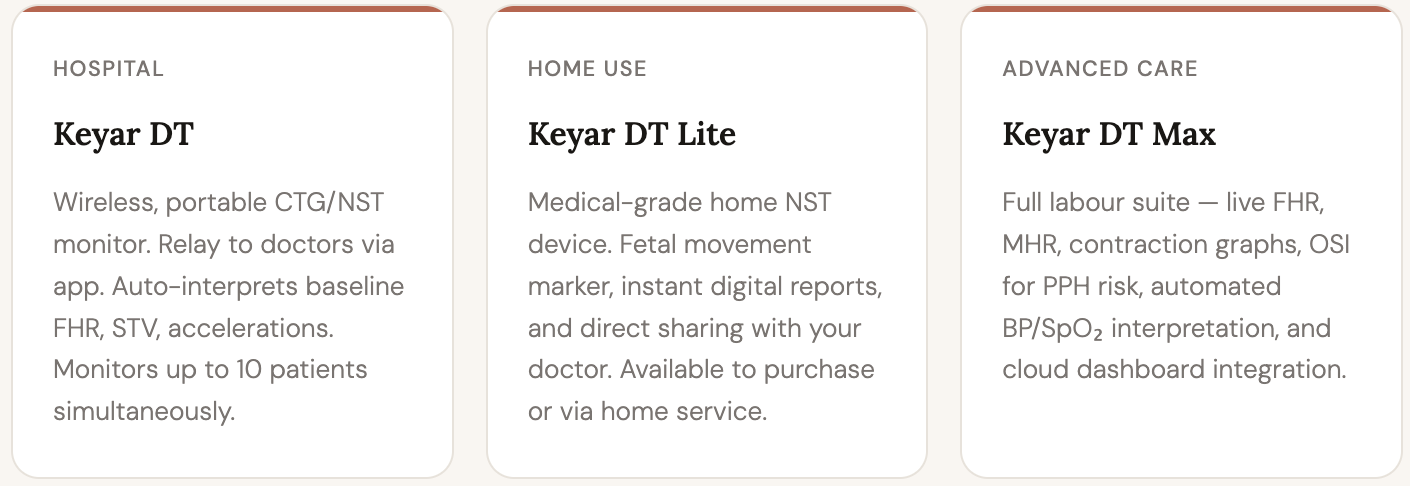
Janitri is an India-based maternal and fetal health technology company with over 5 years of R&D in pregnancy monitoring. Their Keyar range of devices bridges the gap between hospital-grade CTG monitoring and accessible home-based NST making comprehensive fetal surveillance available to more mothers across India.
Keyar DT (Wireless & Portable NST/CTG Machine for Hospitals)
The Keyar DT is a wireless, portable fetal monitor equipped with familiar Doppler and TOCO probes. It is designed for:
Prenatal NST monitoring before labour
Electronic Fetal Monitoring (EFM) / CTG during labour
Real-time data relay to doctors via a mobile app, enabling remote clinical decision-making
Auto-interpretation of CTG parameters: baseline FHR, accelerations, STV, and more
Digital partograph updates following WHO guidelines
Monitoring up to 10 patients simultaneously
Unlike conventional CTG machines, Keyar DT is wireless and portable, offering the same monitoring quality with significantly greater flexibility for both patients and healthcare staff.
Keyar DT Lite (Home NST Device for High-Risk Pregnancy)
The Keyar DT Lite is designed specifically for home-based NST monitoring. Key features include:
Medical-grade fetal Doppler with NST functionality
Ultrasound technology to detect and record fetal heartbeat
Fetal movement marker for accurate NST recording
Instant digital reports shared with the attending doctor
Available for purchase via Janitri's website or for use with Janitri's at-home service
Janitri also offers an at-home NST Device, where mothers can perform the NST using a Keyar device, and share results digitally with the treating doctor.
Keyar DT Max (Plus Premium Hospital-Grade Monitoring)
The Keyar DT Max Plus supports advanced monitoring with:
Live FHR, MHR (maternal heart rate), and uterine contraction graphs
Automated OSI (Organ Sustainability Index) values for postpartum haemorrhage risk detection
Auto-interpretation of blood pressure, SpO₂, and heart rate
Full digital patient records accessible via cloud dashboard
Compatible with Janitri's hospital software (Daksh) for end-to-end labour management
"Keyar CM is a path-breaking innovation which is very different from conventional CTGs available currently. It is very affordable, portable and easy to use and also provides real-time relay of the data with timely alerts and alarms." — Dr. Latha Venkatram, Senior Gynaecologist, Rangadore Memorial Hospital, Bangalore
Frequently Asked Questions
Is NST and CTG the same test?
No, NST and CTG are not the same — though NST is often performed using a CTG machine. NST specifically refers to the antepartum (pre-labour) monitoring of fetal heart rate in response to the baby's movements, without any contractions. CTG refers to the full cardiotocographic recording of fetal heart rate and uterine contractions, primarily during labour.
Which is better NST or CTG?
Neither is universally "better." They serve different clinical purposes. NST is the preferred tool for routine prenatal surveillance, particularly in high-risk pregnancies. CTG is the standard of care during labour to detect fetal distress in real time.
At what week is the NST test done?
NST is typically recommended from 28 weeks of pregnancy onward, as it relies on monitoring the fetal heart rate's response to movements. High-risk patients may begin weekly NSTs from 32–34 weeks.
Can I do NST at home in India?
Yes. Companies like Janitri offer both home NST devices (Keyar DT Lite) and at-home NST services (currently available in Bangalore), where certified professionals visit your home and perform the test using medical-grade equipment, with results shared digitally with your doctor.