Hospitals
Baby Position in the Womb: What It Means for Your Pregnancy and Delivery
Apr 21 • 8 min read
Table of Content
Baby Position in the Womb: What It Means for Your Pregnancy and Delivery
Why Baby Position Matters During Pregnancy
It affects how easy your delivery is
It affects the length of labor
It affects the type of delivery
It affects your comfort during labor
When Do Babies Settle Into a Baby Position?
Most babies settle between 32 and 36 weeks
Before 32 weeks
After 36 weeks
Types of Baby Position in the Womb
1. Anterior Baby Position (Best Position for Birth)
2. Posterior Baby Position
3. Breech Baby Position
4. Transverse Baby Position
5. Oblique Baby Position
Can Baby Position Change Before Birth?
Simple ways to support better baby position
Medical option to change baby position
What Happens If Baby Position Does Not Change?
Frequently Asked Questions
Baby Position in the Womb: What It Means for Your Pregnancy and Delivery
During pregnancy, your baby keeps moving inside the womb as they grow and develop. In the early months, there is enough space for your baby to turn, stretch, and change positions many times a day.
As your due date gets closer, space becomes limited, and your baby usually settles into one final baby position. This position is important because it can influence how your labor starts, how long it lasts, and whether you may need medical support during delivery.
The reassuring part is that most babies naturally move into a position that is safest for birth. Understanding baby positions can help you feel more prepared and confident as you approach delivery.
Why Baby Position Matters During Pregnancy
Your baby position becomes especially important in the last few weeks of pregnancy because it directly affects how smoothly labor and delivery can happen. During birth, your baby needs to pass through your pelvis, and the position of the head and body can either make this easier or more difficult.
It affects how easy your delivery is
When your baby is head down and facing your back, their body aligns naturally with your pelvis. This alignment allows the baby to move through the birth canal more smoothly, increasing the chances of a normal vaginal delivery.
It affects the length of labor
An ideal baby position usually leads to shorter and more efficient labor because the baby moves easily through the pelvis. In other positions, the baby may need to rotate during labor, which can make the process longer.
It affects the type of delivery
Some baby positions increase the likelihood of needing medical assistance during delivery. In certain cases, doctors may recommend tools for assisted delivery or suggest a C section if the position is not safe for vaginal birth.
It affects your comfort during labor
If your baby is facing forward instead of backward, you may experience more pressure on your lower back during contractions. This is commonly known as back labor and can make contractions feel more intense.
Many babies naturally adjust into the correct position before or even during labor. Your healthcare provider will continue to monitor your baby position and guide you on the safest approach.
When Do Babies Settle Into a Baby Position?
In early pregnancy, babies move freely because there is plenty of space in the womb. It is completely normal for your baby to keep changing positions during this time without settling into one place.
As your baby grows, the available space becomes smaller, which naturally limits movement. This is when your baby starts settling into a more stable baby position.
Most babies settle between 32 and 36 weeks
During this stage, most babies move into a head down baby position because it is the most natural and stable position as space becomes limited. This is also the safest position for birth.
Before 32 weeks
Before this stage, your baby may be in a breech or sideways position and can change positions frequently. This is normal because there is still enough room for free movement.
After 36 weeks
Some babies can still change position after 36 weeks, but it becomes less common due to limited space in the womb. Doctors may monitor more closely if the baby has not yet turned head down.
Healthcare providers check baby position during regular visits using physical examination and ultrasound when needed and fetal movement tracking. This helps ensure that your baby is moving toward a safe position for delivery.
Types of Baby Position in the Womb
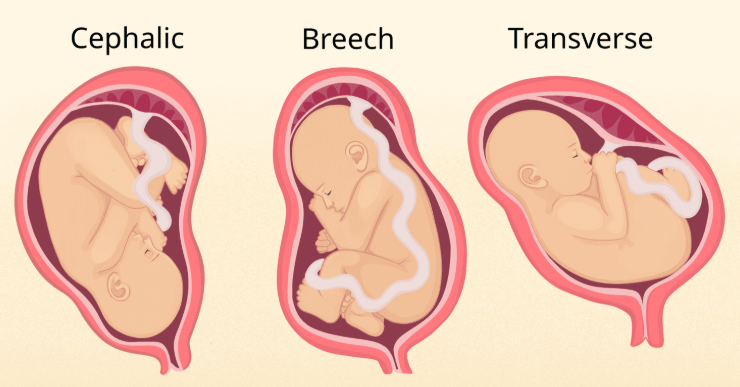
As your due date approaches, your baby usually settles into one position. Some baby positions support a smooth delivery, while others may require closer monitoring or medical support.
1. Anterior Baby Position (Best Position for Birth)
This is the most common and safest baby position for delivery. In this position, your baby’s head is down, and they are facing your back, which allows smoother movement through the birth canal.
Key Points
Supports smoother and faster labor
Because the baby is well aligned with the pelvis, contractions help move the baby down more efficiently, which can shorten labor time.Reduces need for medical intervention
This position lowers the chances of needing tools or a C section, as the baby can pass through the birth canal more easily.Helps baby descend naturally
The baby’s position allows gravity and uterine contractions to work together during delivery.
Stats
Around 90 to 96 percent of babies are in a head down position by full term
This position is linked to the highest rate of normal vaginal deliveries
Why this baby position happens
Gravity and the natural shape of the uterus guide the baby downward into this stable position as pregnancy progresses.
2. Posterior Baby Position
In this baby position, your baby is head down but facing your stomach instead of your back. This position can make labor longer and sometimes more uncomfortable.
Key Points
May slow down labor progress
The baby may need to rotate during labor, which can delay how quickly the cervix opens and the baby moves down.Often causes stronger back discomfort
Pressure from the baby’s head can lead to noticeable lower back pain during contractions.Can still result in normal delivery
Many babies turn naturally during labor, allowing for a safe vaginal birth in most cases.
Stats
Around 10 to 20 percent of babies are in this position at the start of labor
A large number of these babies rotate to anterior before delivery
Why this baby position happens
This may occur if the baby has not yet rotated fully or due to posture habits like prolonged reclining in late pregnancy.
3. Breech Baby Position
In a breech baby position, your baby’s bottom or feet are facing downward instead of the head. This can make vaginal delivery more complex and less safe.
Key Points
Head is positioned last during delivery
Since the head is the largest part, delivering it last can increase the risk of complications.Higher chance of planned C section
Doctors often recommend a C section to reduce risks associated with breech delivery.May require early decision making
Your doctor may discuss options like turning the baby or planning delivery ahead of time.
Stats
About 3 to 4 percent of babies remain breech at full term
Breech position is more common earlier in pregnancy but usually corrects it
Why this baby position happens
Factors such as uterine shape, fluid levels, or limited space can affect how the baby settles.
4. Transverse Baby Position
In this baby position, your baby lies sideways across the womb instead of head down. This position is not suitable for vaginal delivery.
Key Points
Prevents entry into the birth canal
The baby’s position blocks proper alignment, making vaginal delivery impossible.Requires planned delivery approach
Doctors usually recommend a C section to ensure safety for both mother and baby.Needs close monitoring in late pregnancy
This position is carefully observed as the due date approaches.
Stats
Occurs in less than 1 percent of pregnancies at full term
Most babies move out of this position before labor begins
Why this baby position happens
This may be due to placenta placement, excess amniotic fluid, or multiple pregnancy.
5. Oblique Baby Position
In this baby position, your baby lies at a diagonal angle between head down and sideways. This is usually a temporary stage before settling.
Key Points
Transitional position before settling
This position often appears when the baby is still adjusting and has not yet moved into a stable position.Usually does not affect final delivery
Most babies move into a head down position before labor begins.Rarely remains at term
If it persists, doctors monitor closely to decide the next steps.
Stats
Considered a temporary position with no fixed percentage
Most cases resolve naturally before delivery
Why this baby position happens
This occurs when the baby is still adjusting and has not yet settled into a stable position.
Can Baby Position Change Before Birth?
Yes, your baby position can still change, especially before 36 weeks. Many babies naturally move into a head down position as the due date approaches.
Simple ways to support better baby position
Regular walking helps gravity guide your baby downward into a head down position and supports natural movement.
Sitting with a straight posture and avoiding slouching helps create space in your pelvis and encourages better alignment.
Spending time on your hands and knees can help your baby rotate, especially if they are facing forward.
Gentle movements on a birthing ball can open your pelvis and support the baby in finding a better position.
Sleeping on your side improves blood flow and creates a supportive environment for your baby to settle head down.
Medical option to change baby position
If your baby is not head down after 36 to 37 weeks, your doctor may suggest External Cephalic Version.
A trained doctor gently applies pressure on your abdomen to turn the baby into a head down position. This procedure has a success rate of around 50 to 60 percent and is performed under medical supervision.
Always consult your healthcare provider before trying any techniques.
What Happens If Baby Position Does Not Change?
If your baby remains in a non head down baby position near your due date, your doctor will recommend the safest delivery plan based on your condition.
This may include planning a C section for breech or transverse baby position, attempting to turn the baby using medical methods, or closely monitoring the situation if it is safe to wait.
The goal is always to ensure a safe delivery for both the mother and the baby.
Frequently Asked Questions
1. When should my baby be in the correct baby position
Most babies move into a head down position between 32 and 36 weeks of pregnancy as space becomes limited.
2. Can I know my baby position at home
You may notice where you feel kicks, but only a healthcare provider can accurately confirm baby position through examination.
3. Is breech baby position risky
It is not always dangerous, but it often requires a C section because it can make vaginal delivery more difficult.
4. Can baby position change at the last moment
Yes, some babies can still turn in the final weeks, although it becomes less common as the due date approaches.